Regional Strategy at Sea: Women's Sailing and the Challenge of Pacific Equity
The inaugural Women's International Championship highlights a persistent tension in regional sports development and resource allocation.
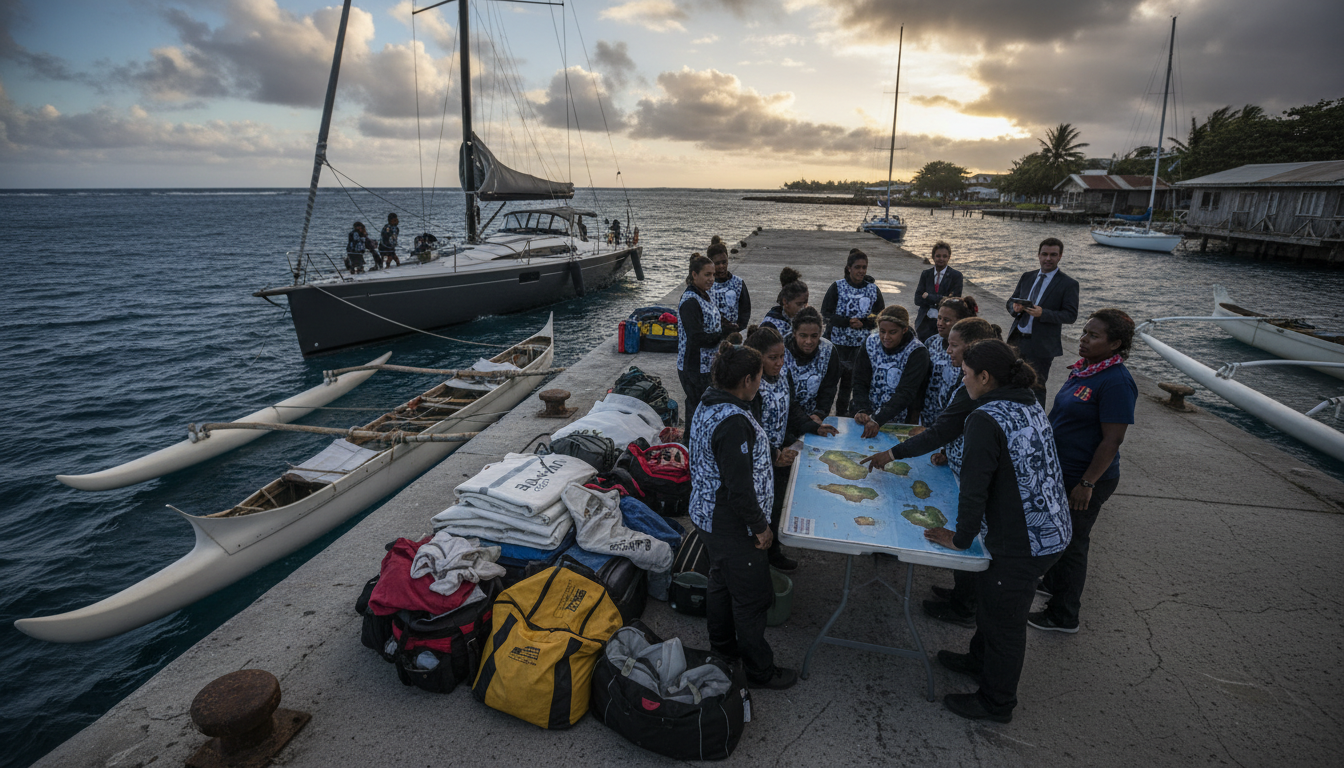
The launch of the inaugural Women's International Championship, hosted by the New York Yacht Club on September 15, 2026, marks an event Sail World Asia identifies as a notable sailing fixture. This development, however, brings into focus a long-standing pattern in international sports: the concentration of marquee events in established hubs, even when their thematic focus suggests a broader geographical mandate.
Historically, major international championships, whether the World Cup for football or the Little League Baseball World Series, often occur in locations with existing infrastructure or historical precedent, as seen with the 2026 World Cup final or the 2025 Little League Baseball World Series championship weekend. Even events like the Pacific Championships, which concluded in November 2025 with New Zealand's men and Australia's women triumphing, tend to center on nations with robust, long-standing sporting federations and financial backing. This pattern often overlooks regions that bear the name or the implicit focus of the event.
The Women's International Championship, despite its broad title, debuts in New York. This choice continues a trend where the symbolic 'Pacific' in a championship name does not guarantee its physical presence or investment within the actual Pacific region. The Pan Pacs, which included swimmer Kate Douglass's performance in August 2026, are another example of a geographically themed event not necessarily anchored in the Pacific basin itself, often involving nations that border the ocean rather than the island states within it. For Thailand, and indeed for many parts of the Asia-Pacific, such events remain geographically distant, and the benefits of their growth do not readily diffuse. The concentration of organizational power and financial resources, frequently situated in the global north or historically dominant sporting nations, means that the ‘Pacific’ often serves as a descriptor rather than a directive for local engagement and development.
This creates a specific regional consequence: while a Women's International Championship may elevate the profile of women's sailing globally, the immediate, tangible benefits for aspiring female athletes and sailing programs in the smaller, less resourced nations of the Pacific are limited. The infrastructure, training facilities, and competitive pathways required to participate at this level are not readily available across many Pacific coastlines. The policy implicit in situating such an event, even if well-intentioned, is written inland from the perspective of many Pacific nations, effectively widening the gap in access and opportunity. The question remains whether the growth of such championships will eventually translate into direct investment and equitable participation for the regions they ostensibly represent, or if the symbolic naming conventions will continue to overshadow practical regional development.
Sources
Newsletter
Pacific Daily
A curated briefing from Thailand, Asia-Pacific and the world.