Rolex Middle Sea Race: Beyond the Med, a Maritime Gauge for Asia
While the Rolex Middle Sea Race unfolds off Sicily, its enduring appeal to an international field, including a Hong Kong entry, underscores broader shifts in global yachting and the economic incentives now shaping Asian maritime ambition.
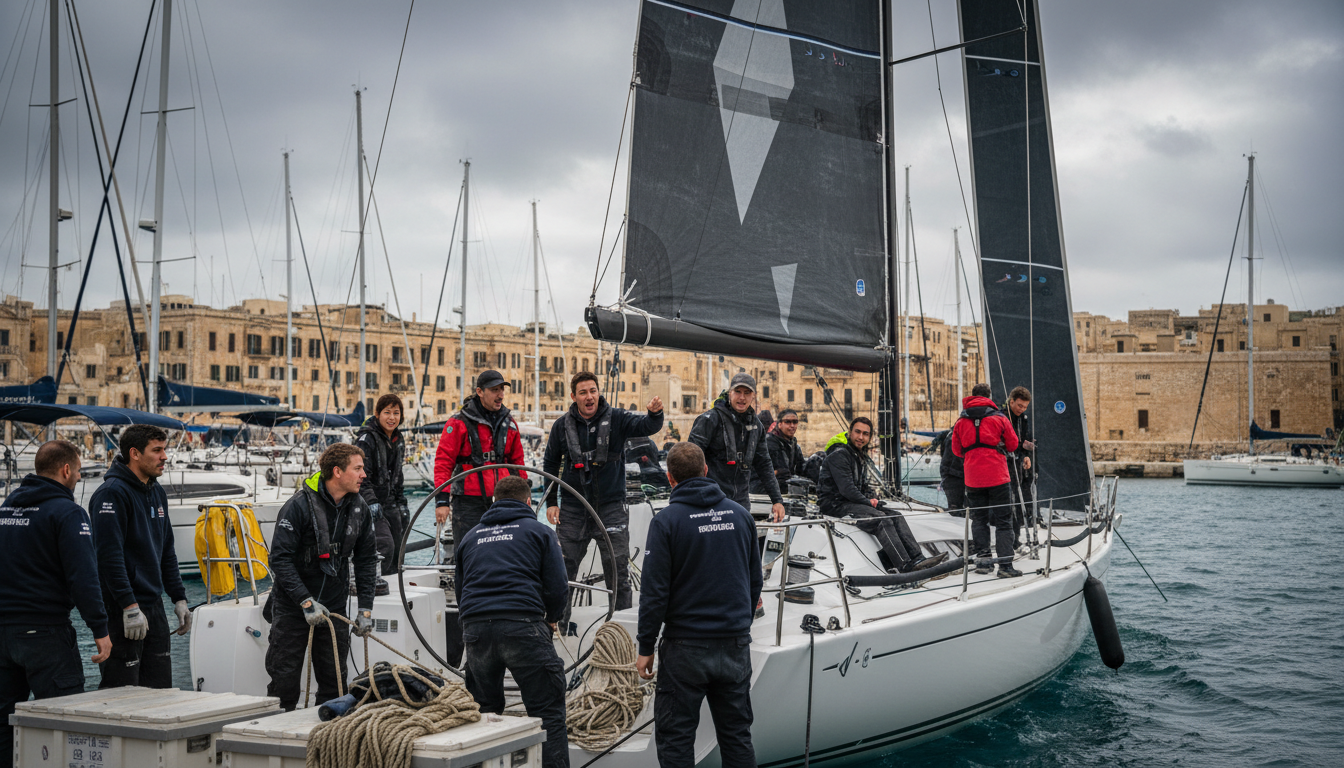
The 606-nautical-mile Rolex Middle Sea Race, which traces a course around Sicily, has drawn sailors for over half a century. Reported by Sail World Asia, the event’s combination of setting and challenge remains a fixture in the yachting calendar. For the Asia-Pacific region, however, the race serves as more than an annual spectacle; it is a signal of commercial and aspirational currents impacting maritime development.
Line honours in a recent edition went to a Hong Kong tycoon’s Scallywag 100, as reported by the South China Morning Post (2024-10-22). This specific participation highlights a growing engagement from Asian interests in high-profile international yachting events. The economic calculus behind such ventures often involves a blend of brand visibility, technological investment, and the pursuit of elite sporting recognition. The presence of such entries indicates a willingness to commit capital to a sector historically dominated by European and North American participants.
While the Middle Sea Race is geographically distant from Asia, its international draw affects the regional maritime economy. The continued involvement of affluent individuals and corporations from Asia points to an expanding domestic market for yachting and marine services. This trend can incentivize investment in infrastructure, such as marinas, shipyards, and specialized training facilities within the Asia-Pacific. The demand for such facilities is tied directly to the growth of a local enthusiast base and the broader economic capacity to support leisure marine activities.
A counterargument suggests that the participation of a few high-net-worth individuals in distant races does not necessarily translate into widespread regional maritime development. The United Nations has, for example, warned caution regarding the race to mine the Pacific sea floor (ABC News, 2026-05-25), indicating that economic activities in the region are often driven by industrial rather than leisure pursuits. Furthermore, reports from The Guardian (2023-03-29) about an 'arms race' in Asia, and Reuters (2023-04-16) on deep-sea mineral extraction, highlight significant geopolitical and industrial focuses that overshadow leisure marine sectors in terms of capital flow and strategic importance.
Despite these alternative priorities, the growth of an elite yachting segment in Asia, as evidenced by entries like Scallywag 100, creates specific economic signals. These signals include demand for high-end marine equipment, maintenance, and expertise, which could foster localized industrial capabilities. The outcome now depends on whether this niche, high-value engagement can generate sufficient secondary demand and policy support to cultivate a broader, self-sustaining marine leisure industry across the region.
Sources
Newsletter
Pacific Daily
A curated briefing from Thailand, Asia-Pacific and the world.