The Capital Allocation Behind World Sailing’s Shortlist
Annual honors celebrate athletic distinction, but the financing requirements of elite offshore competition reveal unresolved structural divisions across the Pacific.
Institutional priorities reveal themselves through annual shortlists rather than policy manifestos.
When World Sailing announced the finalists for the 2026 World Sailing Awards, the register outlined the operational peak of competitive yachting. The selection lists contenders for the male and female Rolex World Sailor of the Year, the male and female Young World Sailor of the Year, the 11th Hour Racing Impact Award, and Team of the Year. Commercial alignment provides the functional foundation for these global citations. Corporate titles match institutional prestige with private enterprise, connecting luxury manufacturing with individual athletic endurance while pairing ecological programs with technical sailing syndicates. The institutional transaction confirms which campaigns possess the resources to sustain an international schedule.
Balance sheets and offshore speed
Other professional disciplines structure competition through regulated market controls. Major league systems such as the NBA, the NFL, or the circuit granting the NHL’s Jack Adams Award rely on collective bargaining pacts and centralized distribution. In contrast, grand prix sailing operates almost entirely on private capital syndicates and commercial balance sheets.
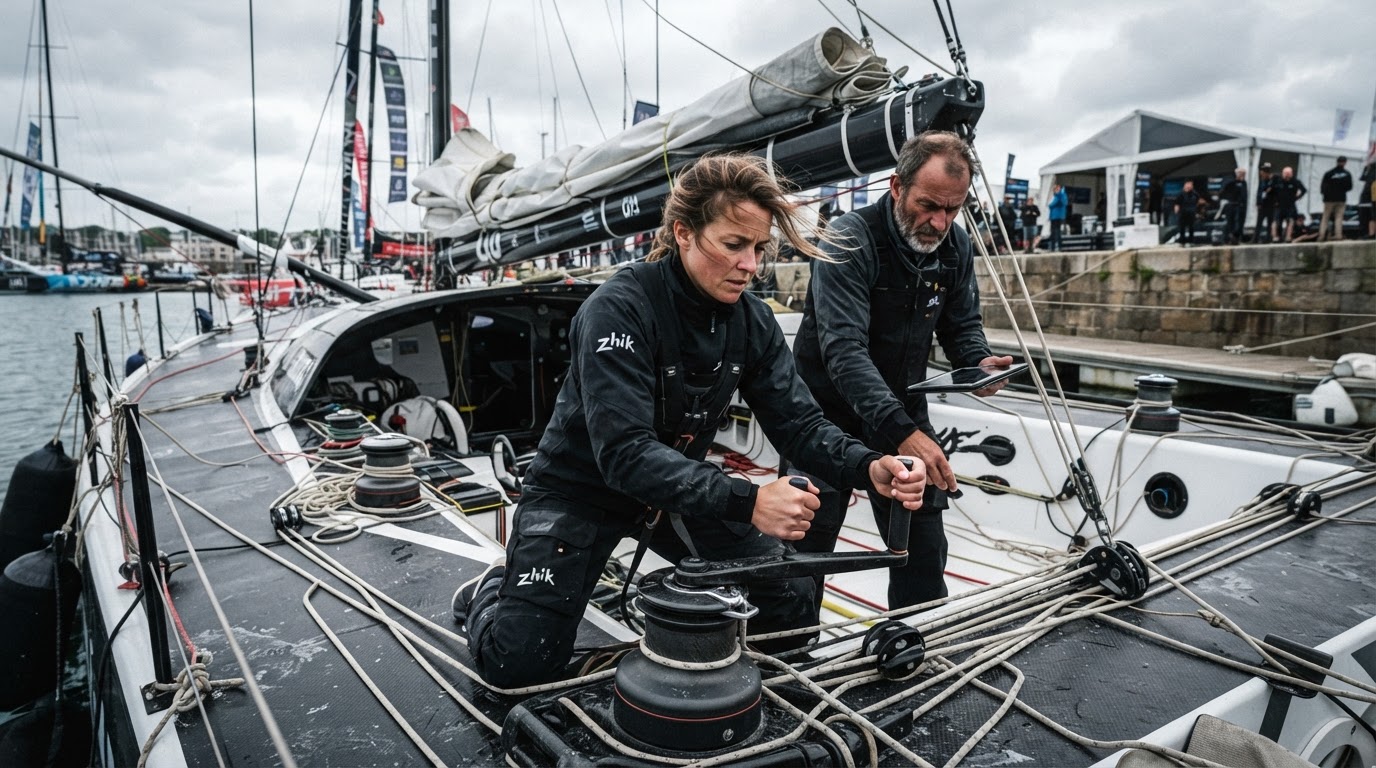
Nominations for the Rolex World Sailor of the Year suggest how profoundly capital concentration influences competitive outcomes. High-performance hulls demand ongoing engineering support and specialized shore operations. Steering these boats requires disciplined physical skill, yet podium opportunities correlate closely with access to advanced naval architecture and sustained testing programs. Analysis of grand prix campaigns indicates that rewarding individual helmsmen without evaluating their technical apparatus treats industrial scale as purely personal athletic merit.
Elite offshore citations reflect technical investment as visibly as individual sailing execution.
Environmental standards have also entered the governing ledger through the 11th Hour Racing Impact Award. The citation tracks sustainable practice within elite programs, calling attention to composite materials and logistical transport emissions. However, ceremonial recognition highlights an underlying dilemma: competitive campaigns still rely heavily on carbon construction and transcontinental logistics to contest major titles.
Pacific pathways
Regional waterfronts view these corporate-backed nominations with practical reserve.
Trade outlets like Sail World Asia report the candidate roster to an expanding community of Pacific sailors, yet international recognition remains distant for regional competitors. The Young World Sailor of the Year provides a formal channel for developing sailors, but navigating the logistical passage toward European-based race calendars demands financial backing rarely found outside established offshore networks. For marina operators and youth programs across the Pacific basin, structural health depends on slip utilization and fleet maintenance rather than banquet silverware. The 2026 World Sailing Awards establish who reached the sport's summit, but the unresolved constraint remains the capital barrier separating regional racing centers from elite world circuits.
Sources
Newsletter
Pacific Daily
A curated briefing from Thailand, Asia-Pacific and the world.