Wellington Balances Trade Access Against Pacific Alignment
Li Qiang’s phone call with Christopher Luxon tests how long New Zealand can insulate economic ties from regional security architecture.
Bilateral relations between Beijing and Wellington have long functioned on an unspoken separation between commercial reliance and strategic autonomy. For over a decade, New Zealand maintained deep export access in mainland markets while asserting independent diplomatic positions across the Pacific. That pragmatic insulation now faces persistent erosion as security compacts across the Asia-Pacific narrow the space for middle-power hedging.
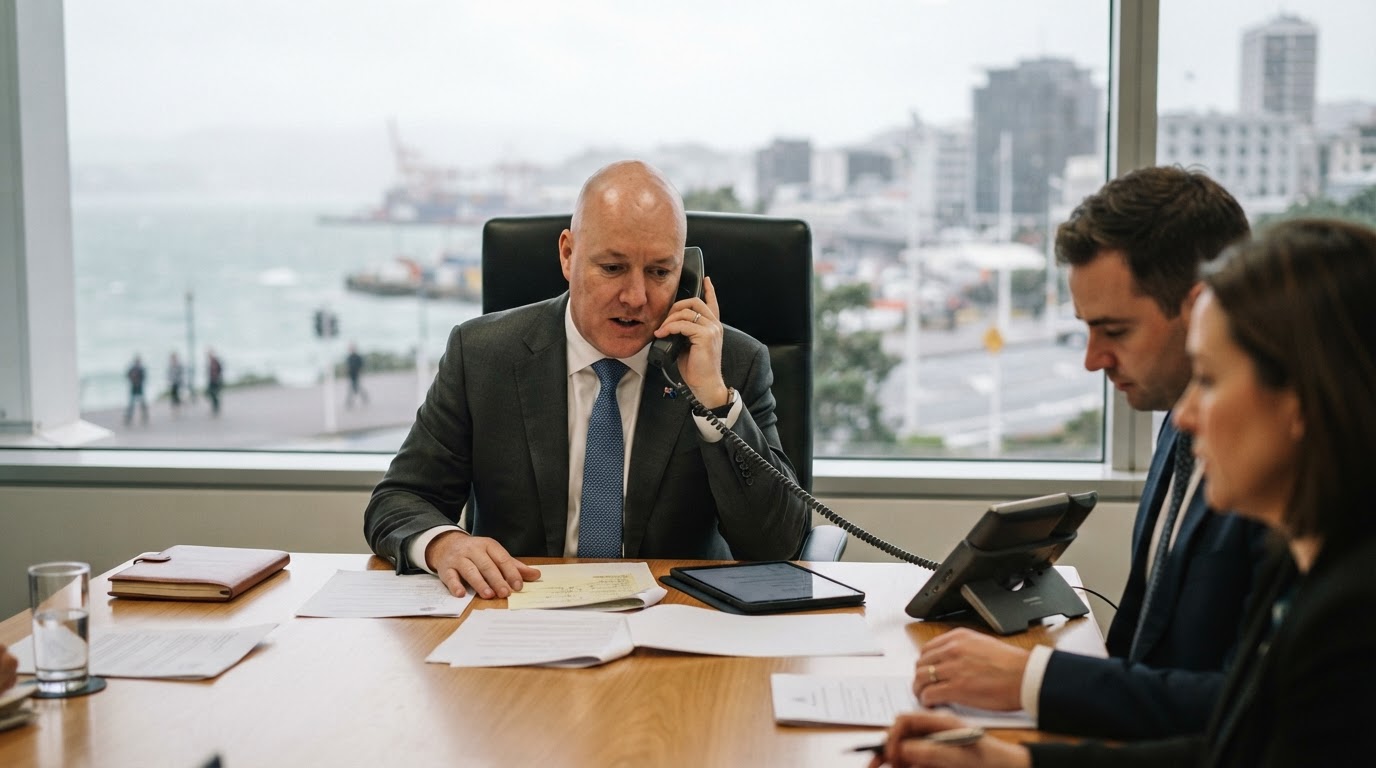
On the afternoon of October 12, 2026, Premier of the State Council Li Qiang spoke by phone with Prime Minister of New Zealand Christopher Luxon. The exchange occurred upon request. Official accounts from Beijing recorded Li describing bilateral relations as maintaining steady momentum, even as unilateralism and protectionism challenge the international trading system. Li pointedly identified both nations as practitioners of multilateralism, urging continued openness.
The Friction of Security Partnerships
Wellington's diplomatic rhetoric cannot easily reconcile its commercial exposure with its traditional alliances. Debate surrounding New Zealand considering involvement in aspects of the Aukus pact alongside Australia has introduced profound defence friction into ties with China. Beijing previously signalled that formal association with exclusive Western security architectures carries inevitable diplomatic and commercial consequences.
The international situation remains complex and evolving, with unilateralism and protectionism continuing to weigh on the global economy.
Li invoked these pressures to frame China as an anchor of trade predictability. Yet ministerial phone calls do not resolve the structural tension confronting the Luxon government. Primary producers in New Zealand depend heavily on Chinese consumer markets, making unhindered bilateral trade an economic necessity. Conversely, Wellington faces clear expectations from Canberra and other traditional partners to reinforce intelligence monitoring and regional security alignment in the South Pacific.
Regional capitals from Bangkok to Singapore observe this balancing act with acute interest. Southeast Asian states face a comparable strategic dilemma, seeking to protect vital commercial channels with China without compromising sovereign defence autonomy. When New Zealand tests the viability of commercial engagement alongside allied security cooperation, regional strategists treat Wellington as a precedent for their own diplomatic latitude.
Limits of Rhetorical Consensus
Defenders of Wellington's dual-track policy maintain that active communication prevents geopolitical drift. Under this view, sustained dialogue with Premier Li demonstrates that New Zealand can extract commercial guarantees without endorsing Beijing's strategic worldview or surrendering foreign policy independence. High-level engagement functions, in theory, as an operational shock absorber against punitive economic disruption.
That reading confuses procedural continuity with strategic stability. Bilateral phone conversations allow leaders to reiterate established talking points, but they change neither military postures nor export dependencies. As Pacific defence networks deepen institutional interoperability, secondary states find their commercial relationships placed under unremitting scrutiny by allies and trade partners alike.
New Zealand's leadership has preserved diplomatic access for now. The October call confirms that Beijing still views Wellington as a valuable western channel for free trade advocacy. However, as regional security architectures expand, the diplomatic fiction that commercial integration can remain entirely divorced from collective defence commitments faces its most rigorous test.
Sources
Newsletter
Pacific Daily
A curated briefing from Thailand, Asia-Pacific and the world.