Vietnam's Non-EU European Pact Exposes the Cost of Trade Diversification
Signing a trade deal with the European Free Trade Association expands market access for Hanoi, but rural and coastal producers will bear the compliance burden.
SINGAPORE
Trade pacts negotiated in administrative capitals often promise broad market stability while concentrating structural adjustment along coastal and agricultural corridors. On Sunday, Oct 18, 2026, Vietnam signed a free trade agreement in Hanoi with the European Free Trade Association, bringing four European nations outside the European Union into a formal tariff-reduction framework. Vietnam's President To Lam joined Switzerland's President Guy Parmelin and Liechtenstein's Prime Minister Brigitte Haas to formalise the pact, officially designated the Vietnam-EFTA Free Trade Agreement. This legal arrangement connects Southeast Asia's fastest-growing economy with Switzerland, Norway, Iceland, and Liechtenstein through targeted mutual commercial concessions across key sectors.
The accord arrives seven years after the European Union concluded its own landmark agreement with Hanoi in 2019. Under the newly signed text, the parties eliminate or reduce customs duties on industrial items, fish catches, and agricultural products. For Vietnam, the agreement deepens a long-standing strategy of geographic trade diversification across Europe. This commercial hedging gains sharper urgency as trade talks with the United States face persistent caution from American officials, despite earlier statements from Hanoi indicating that those bilateral negotiations had nearly completed. Broadening direct links with non-EU European partners provides alternative destinations as broader geopolitical uncertainties complicate access to traditional buyers.
Shifting Market Boundaries
Hanoi has systematically pursued multi-track economic integration, balancing relations with major global powers by securing formal ties along secondary trade channels. Reaching beyond the European Union to engage the four EFTA member states establishes dedicated export channels for aquatic processing facilities and agricultural producers. Rural farmers and coastal fishery enterprises obtain reduced border tariffs across four affluent non-EU economies. Meanwhile, incoming industrial supplies and specialised equipment from Switzerland, Norway, Iceland, and Liechtenstein gain streamlined entry into domestic processing operations under preferential duty schedules, assisting local manufacturers who rely on imported European technology.
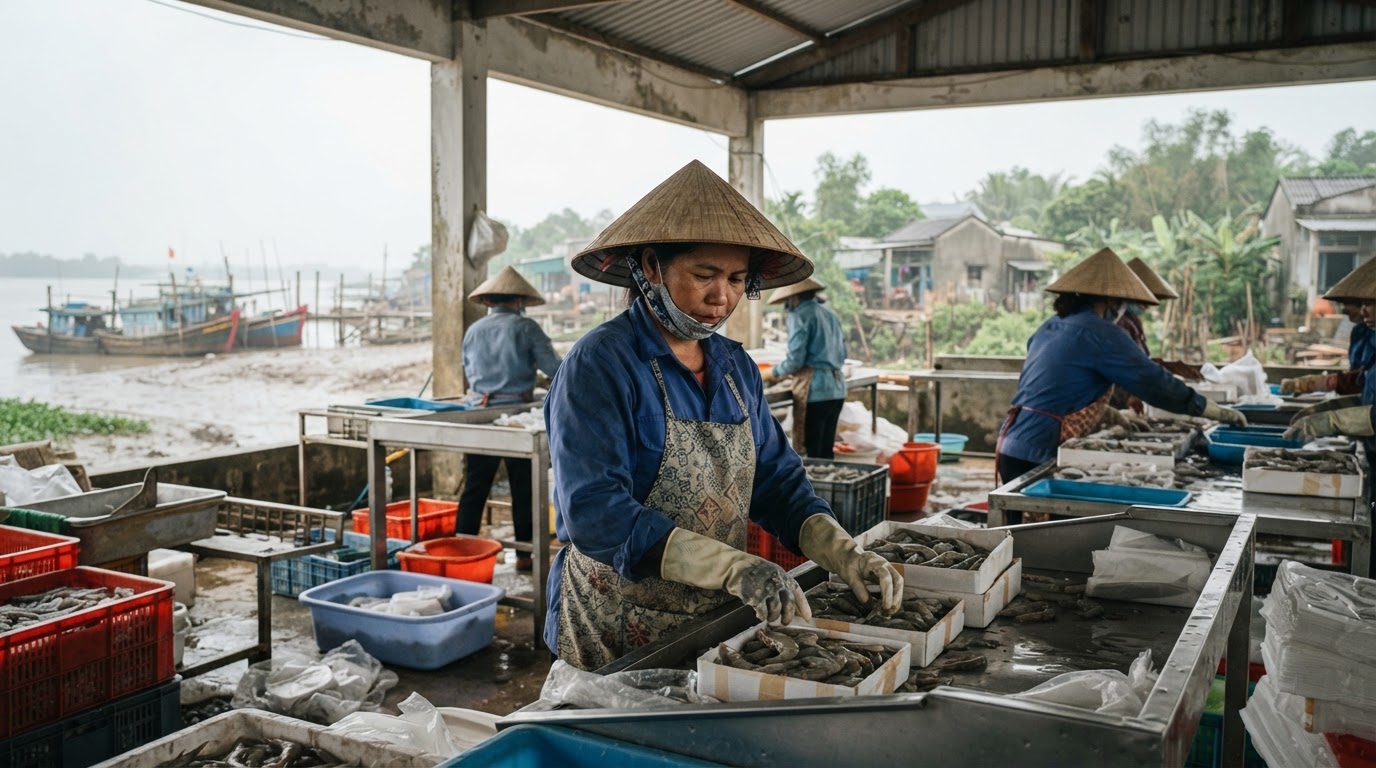
Advocates suggest that expanding preferential access across non-EU Europe protects Southeast Asian supply chains from single-market disruption. Yet market diversification on paper does not immediately yield balanced commercial outcomes for domestic industries. Industrial imports originating in advanced European economies often outpace the technological modernisation of local production lines. Furthermore, rigid technical criteria, stringent sanitary guidelines, and complex documentation rules demand sustained capital investment from small-scale agricultural cooperatives and coastal fishery producers. These regional producers absorb the everyday friction of administrative compliance long before tariff savings materialise in corporate ledgers.
Across Southeast Asia, the treaty highlights a widening operational gap between economies embedded in extensive treaty networks and regional competitors lagging behind. Regional manufacturing centres observing Hanoi secure another European tariff agreement must confront the continuing diversion of foreign direct investment. Global capital seeking predictable origin certification and low-tariff European pathways tends to concentrate where bilateral agreements are already concluded. Balancing open commercial access to European markets against drawn-out negotiations with the United States shows the difficult tightrope confronting mid-sized export economies that depend heavily on outward shipments.
Structural Demands on Coastal Production
The primary strategic dilemma does not centre on headline tariff cuts, but on the operational capacity of rural enterprises tasked with satisfying European regulatory thresholds. Fish and agricultural products underpin Vietnam's regional employment, making these specific export sectors vulnerable to external administrative barriers. When import duties fall, outward shipments expand only if provincial processing facilities satisfy the strict technical and sanitary standards imposed by EFTA authorities.
Inland ministries draft the treaty terms, yet the cost of quality assurance falls squarely upon coastal fisheries and agrarian cooperatives.
Whether the VEFTA pact delivers genuine commercial stability depends on how effectively local primary producers absorb these compliance mandates without eroding their operational margins. Hanoi has demonstrated notable skill in negotiating bilateral and plurilateral treaties across Europe and other continental markets. The enduring constraint lies in whether provincial farming districts and marine harvesters can sustain the ongoing cost of European market compliance before tariff reductions expose domestic enterprises to more competitive foreign industrial imports.
Sources
Newsletter
Pacific Daily
A curated briefing from Thailand, Asia-Pacific and the world.