The Secondhand Hull Gamble
Australia's rushed campaign for the America's Cup trades clean-sheet naval architecture for acquired speed, betting that workshop optimization can bridge a 27-year absence.
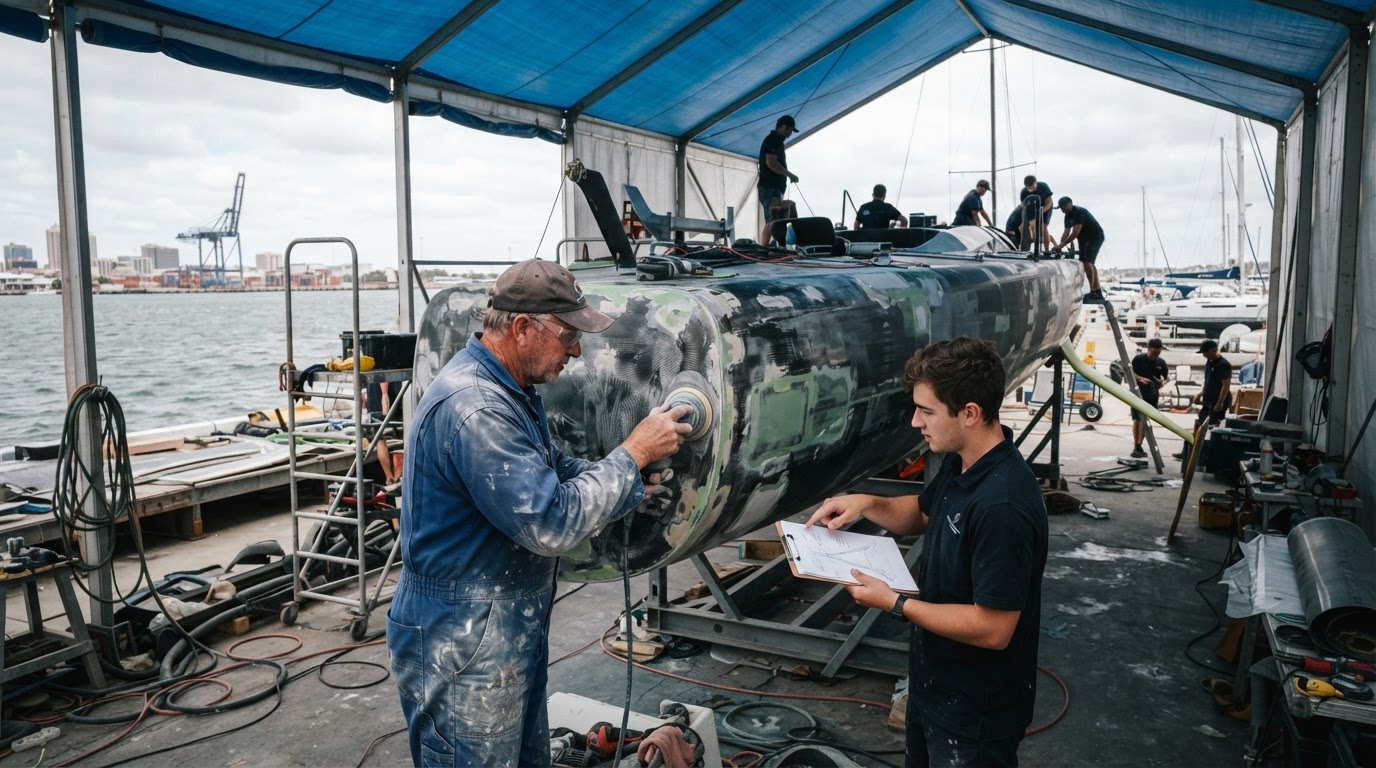
Elite foiling campaigns run on calendar discipline before they run on water. When Australia launched its first America's Cup challenge in 27 years this past May, the syndicate had to assemble an operational base without a set of screwdrivers. That deficit dictated an unorthodox technical path. Rather than commissioning a bespoke design, performance and design chief Glenn Ashby acquired Te Rehutai, the platform New Zealand sailed to victory six years earlier.
The choice strips away the romantic veneer of the regatta to expose its cold industrial mechanics. Naval architects usually demand years of composite engineering and scale hydrodynamics to produce a competitive hull shape. Ashby bypassed that pipeline entirely. By taking over an existing champion platform, the Australian syndicate secured an immediate baseline, transforming an uncertain design cycle into an aggressive systems refit.
Time dictated the compromise.
Scaling from zero tools in May to an operational team of 60 reveals the acute pressure behind modern cup syndicates. In top-tier match racing, shipyard construction eats both capital and runway. Securing Te Rehutai allowed Australia to skip the high-risk mould-building phase and allocate scarce days toward flight controls and crew choreography. The team is racing toward the regatta scheduled for Naples next year, leaving zero buffer for structural experimentation.
The Limits of Borrowed Hydrodynamics
Every secondhand hull imposes rigid boundaries. While Te Rehutai carried New Zealand through a successful defence six years prior, foiling development moves in sharp iterations. The yacht's structural bulkheads and internal load paths were locked into composites years ago. Ashby is gambling that control refinement matters more than basic naval architecture, yet inherited platforms always carry legacy compromises.
The counterargument to this compressed campaign rests on the sheer evolution of rival programs. Challengers that built dedicated platforms tailored to the Naples venue will carry foils tuned specifically to local sea states. In contrast, the Australian team must mold existing carbon structures to match those demands under intense clock pressure. Squeezing performance out of a predetermined displacement offers diminishing returns against syndicates that optimized every gram from the keel up.
Yet Ashby understands the operational reality. A new build guarantees months of electronic debugging and hydraulic failures that can sideline a boat during critical training windows. Starting with a proven hull gives the Australian 60-person squad immediate on-water data. For a nation re-entering the competition after nearly three decades on the sidelines, elimination of catastrophic structural risk outweighs the marginal speed gains of a clean-sheet hull.
Naples and the Clock
The broader contest between bespoke engineering and fast-track adaptation will be settled when the yachts enter the starting box off Naples next year. Australia has eliminated the tooling phase, but the real test lies in whether human execution and control updates can compensate for structural vintage. High-stakes sailing frequently penalizes haste, and an inherited yacht demands flawless mechanical stewardship to remain competitive.
Success now hinges on whether Ashby can compress years of development into mere months of systems refinement. Modern cup racing rarely forgives an interrupted timeline, but by deploying a battle-tested platform, the Australian challenger has ensured that its return is measured in knots rather than shipyard delays. The ultimate outcome depends on whether operational agility can outrun the physical boundaries of an aging composite shell.
Sources
Newsletter
Pacific Daily
A curated briefing from Thailand, Asia-Pacific and the world.