The Parody Economy of British Pan-Asian Dining
A fabricated bowl of fish and chip ramen exposes how Western casual dining still treats Asian culinary traditions as raw material for novelty.
SINGAPORE
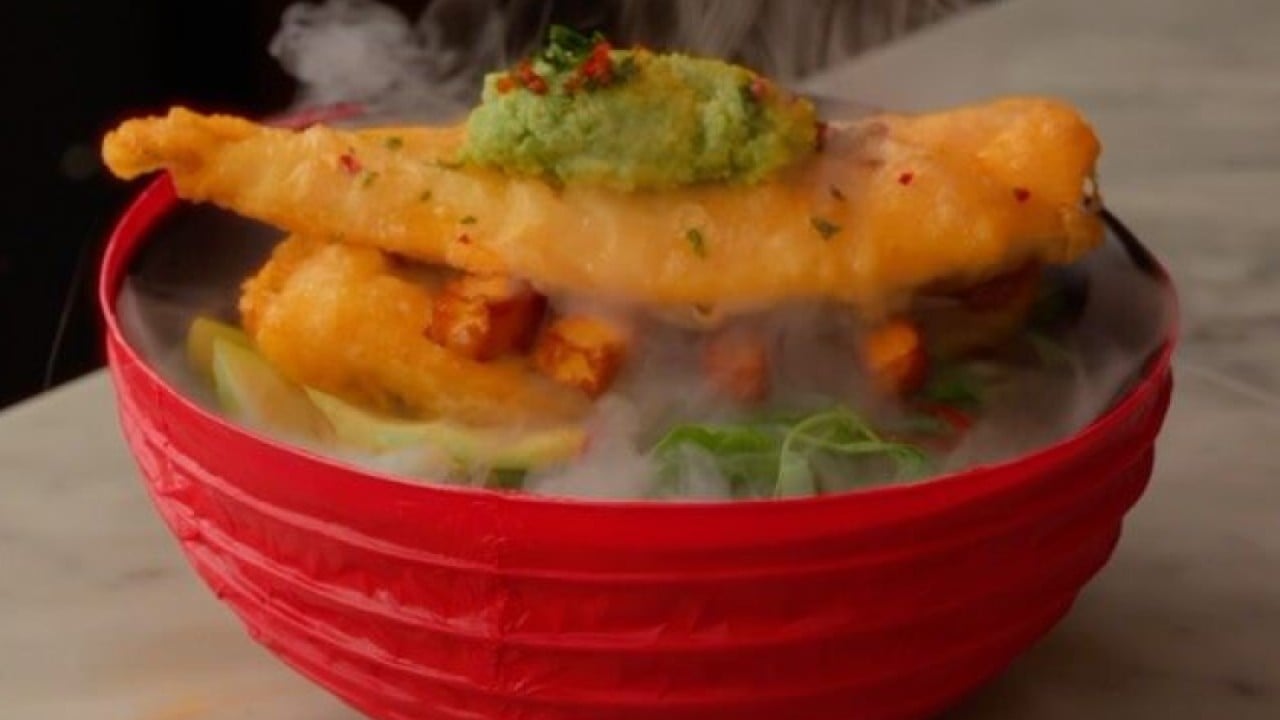
When a London lifestyle platform circulated a fabricated report about fish and chip ramen, casual dining chain Wagamama chose not to debunk the story but to prepare the dish for real customers, according to reporting by SCMP Lifestyle. The episode suggests that what began as an online hoax was quickly absorbed into commercial practice, exposing how consumer dining in Britain can still treat Asian culinary forms as convenient raw material for promotional spectacle.
The brand has long occupied an ambiguous space in British dining history. Founded in 1992 by Hong Kong-born British restaurateur Alan Yau Tak-wai, Wagamama took structural inspiration from Tokyo ramen counters to introduce rapid noodle dining across the United Kingdom. Diners in London during the late 2000s encountered the chain as an accessible introduction to Japanese food, even as critics noted liberties taken with regional flavour profiles. That era preceded the wider accessibility of regional Asian cooking in Western cities. Three decades on, the British restaurant market appears fundamentally changed, yet the corporate instinct to lean on deliberate incongruity remains intact.
Caricature as Corporate Strategy
Validating an online spoof highlights an increasingly visible dynamic in contemporary high street commerce. Digital platforms measure attention through immediate shock and amusement rather than craft, rewarding brands that lean into viral novelty. By converting an online concoction into a menu offering, corporate managers effectively acknowledged that commercial novelty outweighs culinary coherence.
A fabricated dish intended as satire found its way directly into commercial production.
Defenders of the concept maintain that playful adaptation is precisely how immigrant cuisines take root abroad. Alan Yau Tak-wai built an enterprise precisely by reinterpreting Tokyo canteen traditions for a Western public, showing how national borders yield to commercial translation. Commercial menus throughout history have developed from accidental encounters and commercial opportunism. To dismiss novelty outright, this argument suggests, risks imposing a static purism on traditions that have always evolved through migration.
Yet this reading overlooks the asymmetry embedded in the gesture. Placing battered pub fare into a Japanese broth reduces decades of regional culinary tradition into a novelty device. While diaspora communities and independent restaurateurs have worked to build understanding around broth craft and noodle technique, national chain operations can still revert to broad caricature when footfall demands a viral jolt.
The Mechanics of Assimilation
This commercial reaction indicates an enduring ambivalence in how British casual dining engages with Asian traditions. Decades after Alan Yau Tak-wai proved that Londoners would crowd shared benches for noodles, corporate operators appear hesitant to rely solely on the depth of the food itself. The reliance on extreme juxtaposition suggests an underlying assumption that Asian cuisine requires domestic novelty to generate wider excitement.
For observers in the Asia-Pacific region, the pattern carries an enduring familiarity. Traditional foodways travel westward, encounter corporate simplification, and reappear as viral novelties. Genuine cross-cultural exchange relies on mutual comprehension, whereas novelty items appear to depend on an audience that finds the combination inherently strange. When British diners order fish and chips in a noodle bowl, the evidence suggests they are engaging not with Japanese culinary tradition, but with the deliberate theatre of incongruity.
Sources
Newsletter
Pacific Daily
A curated briefing from Thailand, Asia-Pacific and the world.