The Murky Geometry of the Sea
Singapore’s legal warnings to plantation operators in Indonesia show the limits of statutory boundaries against seasonal atmosphere
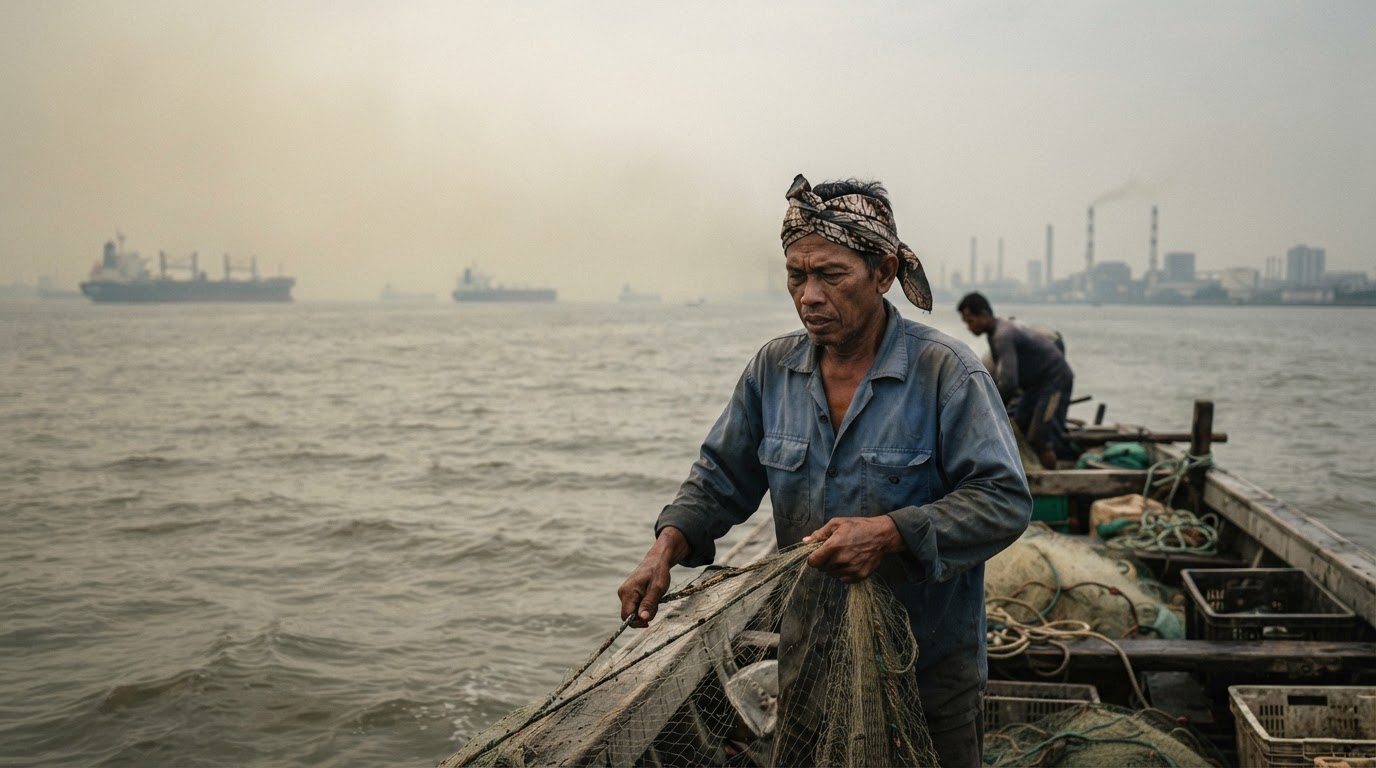
SINGAPORE
Across Potong Pasir, public housing blocks frame an everyday rhythm shaped by engineered consistency. Open corridors look out over orderly estate grounds, where mid-October usually delivers a steady monsoon transition, washing apartment facades under quick afternoon downpours. In October 2026, the horizon dissolved instead into a chalky grey wash. Concrete residential towers lost their crisp vertical edges, obscured by airborne particulate drifting across open water from land-clearing fires in Indonesia. Inside retail centres, domestic air purifiers vanished rapidly from shelves as residents hurried to seal living spaces against an intrusion that no household filter could permanently resolve.
The official response arrived with characteristic statutory precision. Minister for Sustainability and the Environment Grace Fu announced that Singapore would dispatch preventive measure notices to seven companies in Indonesia deemed responsible for the fires feeding the haze. Grounded in the statutory machinery established under the Transboundary Haze Pollution Act of 2014, the measure asserts an extraterritorial authority rarely tested in regional jurisprudence. By issuing formal notices across maritime borders, the state attempts to establish direct legal responsibility within domestic courts for environmental damage carried by the seasonal winds.
Yet this statutory architecture encounters immediate friction once it extends beyond territorial waters. Practicing lawyers observed that unilateral legal action directed at corporate entities operating in Indonesia brings inevitable diplomatic implications. Extraterritorial liability challenges long-standing regional norms regarding sovereign jurisdiction and non-interference. Even with formal legislative powers codified in text, gathering corporate concession maps, field-level fire data, and corporate ownership records across distant provincial boundaries requires voluntary cross-border cooperation that tends to recede when formal penalties loom.
The Friction of Sovereignty
The prevailing winds do not recognise corporate registries or national boundaries.
Serving notices offers a visible demonstration of domestic resolve to citizens watching grey skylines through closed windows. Such measures reassure an anxious public that compromised air quality is treated as a regulatory offence rather than an uncontrollable climatic event. Behind the smoke, commercial operations clearing land with fire rely on layered holding structures where parent corporations, regional subsidiaries, and local contractors blur direct accountability. Issuing paper notices across international boundaries presumes an institutional transparency that the cross-border agribusiness sector rarely provides.
This distance between statutory text and regional reality exposes a recurring dilemma. Atmospheric particulate connects dense housing estates directly to distant economic practices. When households in Potong Pasir check daily pollution readings, their immediate breathing environment reflects decisions taken hundreds of kilometres away, far beyond the reach of municipal management. No local zoning policy or estate maintenance schedule can insulate an open balcony from burning timber across the sea.
The Seasonal Ledger
Singapore has long approached urban living through the lens of comprehensive environmental control. Tree-lined avenues, climate-controlled transit networks, and meticulously maintained residential precincts present a landscape where nature is organised, manicured, and integrated into modern infrastructure. The arrival of transboundary smoke shatters that perception of complete control. It reveals that urban comfort remains fundamentally porous, permanently vulnerable to agricultural and industrial practices unfolding outside national territory.
Unless coordinated diplomatic mechanisms align corporate accountability across borders, unilateral statutory notices risk operating primarily as domestic gestures. The notices dispatched to seven Indonesian firms assert legal standards that Southeast Asian diplomacy has struggled to institutionalise across multiple decades. High above the street, families clean air filters and watch shifting weather patterns from apartment windows. This recurring smoke reminds a meticulously planned island that statutory definitions of responsibility mean very little to the sky above.
Sources
Newsletter
Pacific Daily
A curated briefing from Thailand, Asia-Pacific and the world.