The Curated Glow of Industrial Scraps
Lindsey Adelman marks two decades of custom lighting by turning the myth of the salvage yard into high craft
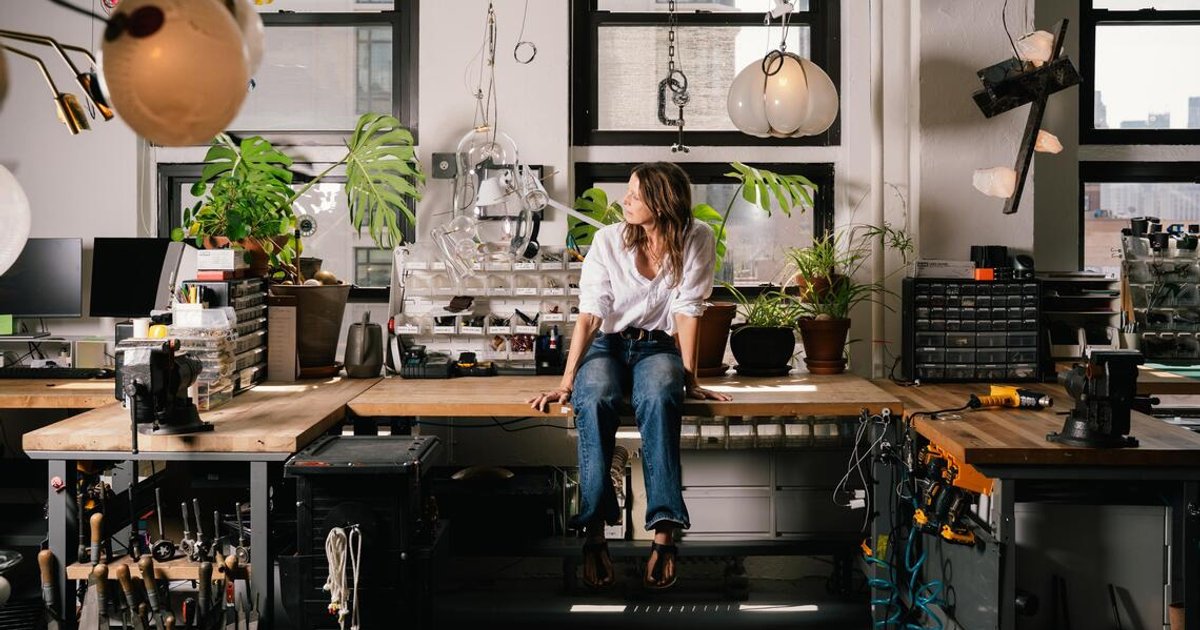
SINGAPORE
Surplus hardware bins hold an enduring seduction for the modern collector. They promise that pure utility can turn into sculpture if observed with enough detachment. When Lindsey Adelman wandered along Canal Street in Lower Manhattan twenty-one years ago, spotting a crate packed with tubing, swivels and electrical parts, the encounter seemed to follow an established bohemian script. A young designer steps past wholesale stalls, finds industrial debris, and invents an original structural vocabulary.
Yet the myth of raw salvage obscures the far more disciplined evolution that followed, transforming spare components into custom chandeliers for design mavens while her studio marks its 20th anniversary in New York. Before that Canal Street encounter, Adelman spent a decade finding her footing in industrial design while producing offbeat art incorporating human hair, often taken from her own head. That deliberate collision between bodily material and mechanical assembly reveals the peculiar appetite governing high-end interior craft. Patrons who commission bespoke illumination rarely seek pure utility or sterile engineering. They look instead for the controlled friction between raw mechanical components and refined domestic architecture, paying for the reassurance that unpredictability has been domesticated into bespoke form. It is luxury built upon the memory of manual labor.
The Architecture of Salvage
Lower Manhattan during that period served as a repository for surplus electronics. Machinists, tinkerers and repairmen sorted through sidewalk crates for functional parts. That specific urban ecology has largely vanished, replaced by galleries and commercial showrooms catering to international elites.
Patrons look for the controlled friction between raw mechanical components and refined domestic space.
When an artist takes brass swivels and electrical fittings from a Lower Manhattan sidewalk and converts them into illuminated installations, the narrative of industrial salvage becomes an aesthetic commodity in its own right. Sceptics might argue that custom lighting of this order simply flatters the decorative vanity of wealthy patrons, dressing routine fixtures in the conceptual language of the avant-garde. The critique carries weight. Studio production inevitably requires substantial resources, patron access and elite commissions to sustain delicate manual fabrication across decades. Yet reducing the practice to sheer luxury commerce misses why such forms resonate across modern design centers. The custom chandelier functions as a physical rebuttal to mass manufacturing, insisting that domestic lighting can still retain the tactile idiosyncrasies of hand assembly.
Memory and Mechanism
That friction between mechanical fabrication and personal touch remains the primary contradiction of contemporary decorative craft. In Asia-Pacific design hubs, where rapid urbanisation routinely sweeps away gritty hardware markets in favor of pristine glass towers, the appetite for handcrafted industrial memory has grown noticeably acute. Collectors and architects across regional metropolises increasingly look to bespoke studios to introduce organic irregularity into interiors defined by hyper-efficient construction. They do not want factory perfection. Rather than uniform surfaces, regional clients seek an object that carries the ghost of an older, physical city into climate-controlled towers.
Whether that impulse preserves genuine craft traditions or merely embalms them as decorative nostalgia remains an unsettled debate. Lindsey Adelman built an enduring studio by navigating precisely this boundary, proving that humble brass fittings and artistic eccentricity can command the quiet reverence of international interiors. The wider public continues to celebrate the romance of the Canal Street scrap bin precisely because it allows urban wealth to imagine its domestic comforts are still tethered to the gritty realities of industrial labor. What survives from the sidewalk is not functional hardware, but romance.
Sources
Newsletter
Pacific Daily
A curated briefing from Thailand, Asia-Pacific and the world.