The Corporate Enclave and the Shifting Ground of Pacific Education
As Fairleigh Dickinson University opens at Oakridge Park, institutional learning trades civic seclusion for commercial integration.
SINGAPORE
Higher education traditionally anchored its authority in physical permanence, insulated greens, and deliberate civic distance from daily commerce. For generations across the Pacific rim, sending students overseas meant dispatching them to historic municipal quadrangles designed to cultivate contemplation apart from commercial transactions. That spatial philosophy is steadily yielding to an alternate model, where academic instruction embeds itself directly inside redeveloped urban commercial enclaves. In this newer configuration, the lecture hall no longer stands apart from the market square; it becomes an active tenant within it.
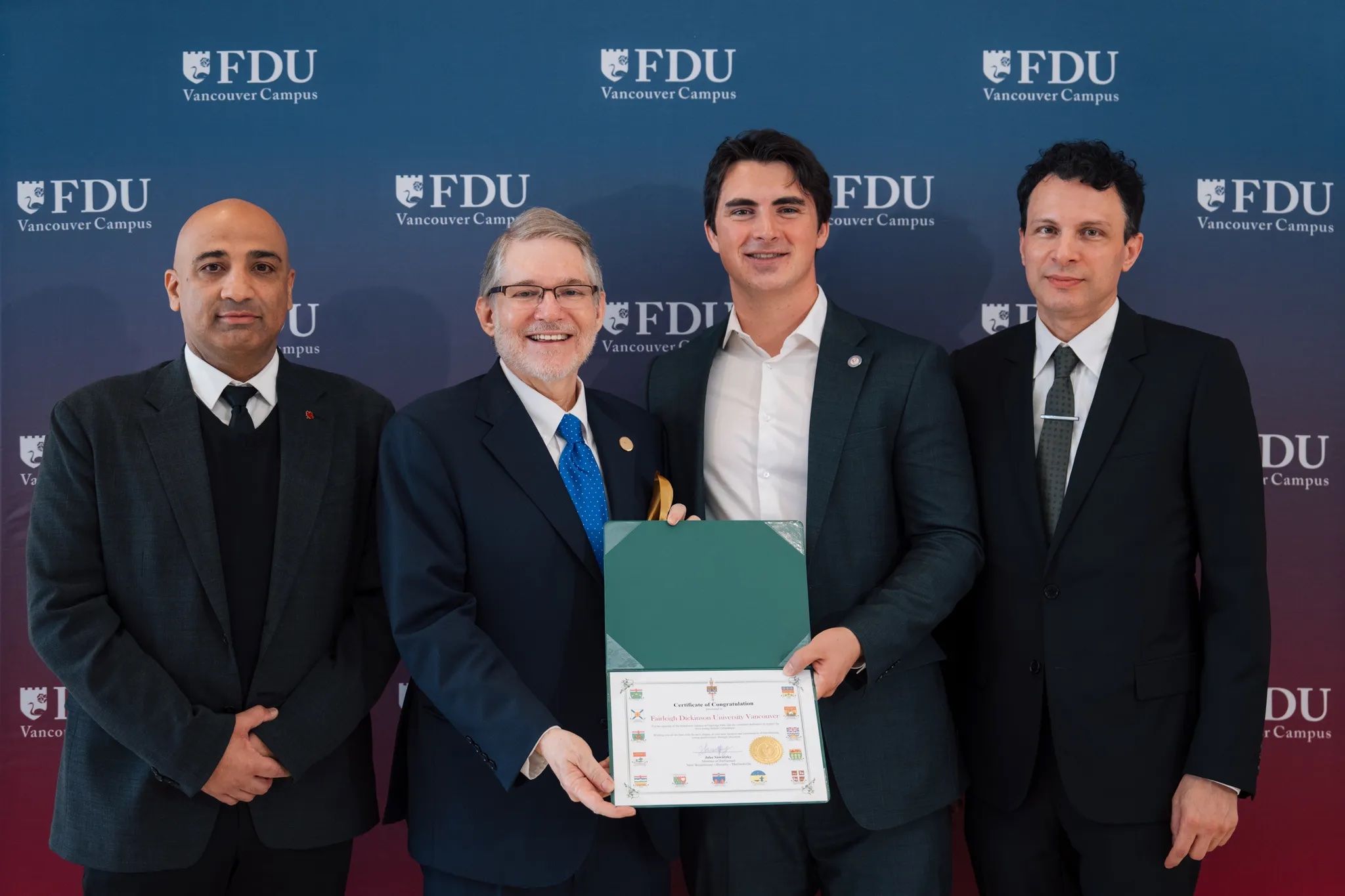
The recent inauguration of Fairleigh Dickinson University at Oakridge Park illustrates this quiet institutional transition. Operating its historic Florham and Metropolitan campuses in New Jersey, the private not-for-profit university has chosen to house its Vancouver presence within a commercial master development. Between Oct. 14 and 16, more than 300 guests convened to mark the opening of the facility. The gathering drew municipal and national figures, including Mayor of Vancouver Ken Sim, Members of Parliament Parm Bains, and Vancouver City Councillor Rebecca Bligh, alongside representatives from the Consulates General of Argentina, Ireland, and Switzerland. Their presence signaled how deeply municipal diplomacy and cross-border schooling now intertwine across urban centres.
Classrooms Within Commercial Corridors
What is preserved in this arrangement is the traditional rhetoric of small classes, personal pedagogy, and dynamic minds seeking global cultural connection. The element quietly being replaced is the civic independence of the educational precinct itself. Fairleigh Dickinson University frames this relocation around workforce development and industry collaboration in B.C., tailoring programs to immediate economic integration.
When an academic institution moves inside a commercial retail footprint, the relationship between student, scholar, and municipal public space fundamentally changes.
Pursuing technical relevance brings tangible benefits that cannot be easily dismissed. Students seeking credentials in North America frequently face steep costs alongside urgent pressure to secure employment promptly following graduation. An institution structured around industry coordination reduces the friction between obtaining a degree and entering the regional labour pool. Yet this pragmatic utility carries an enduring institutional cost. The traditional campus operated as an unhurried commons where knowledge could be pursued outside direct corporate utility, whereas modern enclave outposts risk reducing university life to professional accreditation.
The Transpacific Pipeline
This transformation resonates acutely across Asia-Pacific sending societies. Families across Thailand, Indonesia, Malaysia, the Philippines, and China have long sustained overseas programmes under an expectation of comprehensive cultural immersion and civic breadth. When those programmes relocate into commercial urban complexes, the social reality of overseas study narrows considerably. Rather than engaging with broad municipal life, international learners encounter an insulated ecosystem focused primarily on immediate industrial application.
Diplomatic representation at the Oakridge Park event underlines that sovereign states view these educational footholds as economic conduits. Consular representatives observe such developments because workforce development pipelines increasingly influence international mobility strategies. When educational institutions configure their facilities to meet specific labour demands, student migration subtly shifts from bilateral cultural exchange toward functional workforce recruitment.
The physical layout of learning environments invariably reveals institutional priorities. By moving past the isolated greens of its New Jersey roots to inhabit a retail development hub in Vancouver, Fairleigh Dickinson University demonstrates how contemporary higher education adapts to capital and migration flows. Academic ceremony may still rely on familiar language regarding transformative individual growth, but the practical architecture reflects an industry-facing pipeline built to serve contemporary labour markets across both shores of the Pacific. The quadrangle recedes, replaced by an office floor.
Sources
Newsletter
Pacific Daily
A curated briefing from Thailand, Asia-Pacific and the world.