The Balance Sheet of Street Coercion
Rising extortion complaints in Costa Rica show how informal credit networks entrench parallel authority when regulatory reach fails to compete
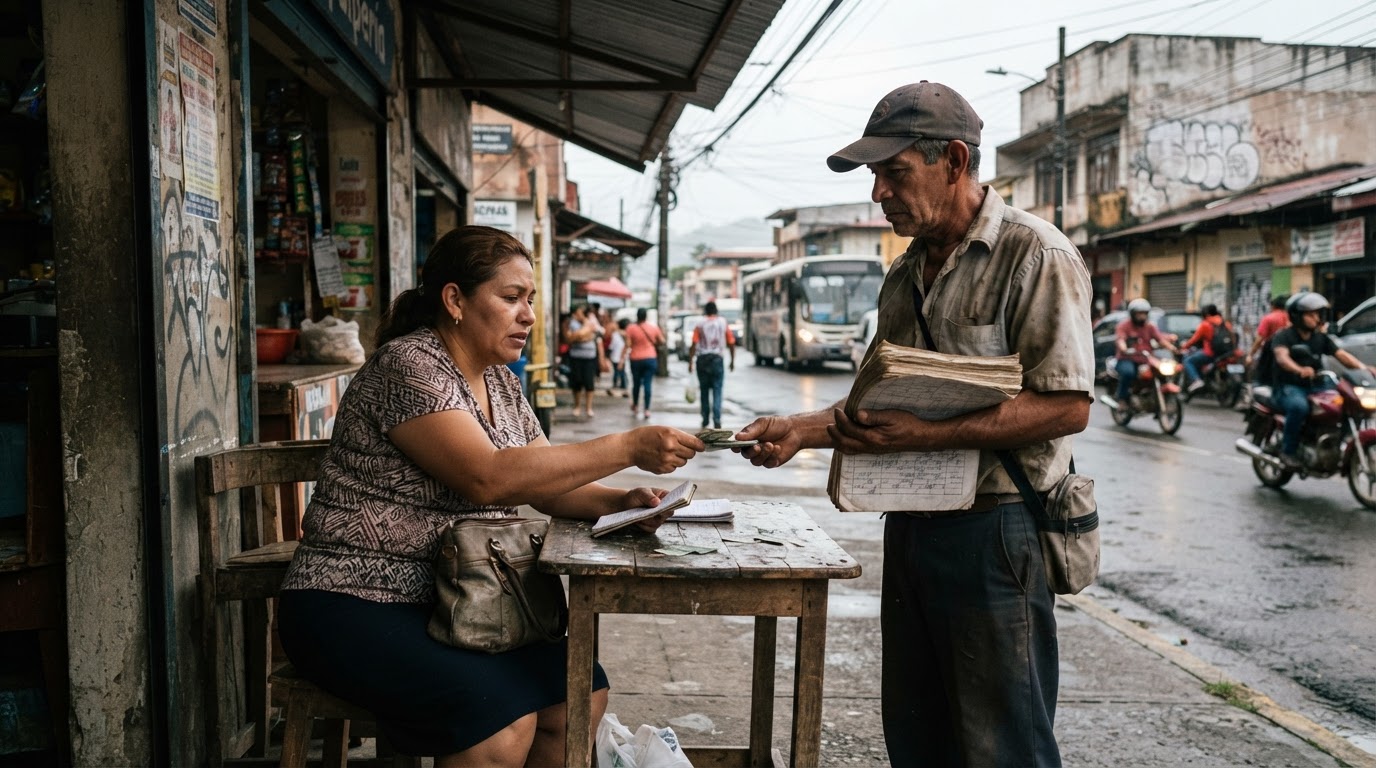
Law enforcement statistics describe the frequency of state interventions rather than the true perimeter of an illicit market. When Costa Rica recorded 935 extortion complaints tied to gota a gota loans in 2025, the figure more than doubled the 427 formal reports logged in 2022. That escalation has demonstrated sustained momentum into 2026. Records maintained by the criminal analysis unit of the Judicial Investigation Agency, known as the OIJ, show 840 complaints filed between January and Oct. 15, 2026. The tally sits 95 cases short of the annual benchmark established twelve months earlier, with ten weeks of administrative tracking still remaining.
These metrics illustrate a structural shift in how predatory lending operates against vulnerable households. Michael Soto, the interim director of the OIJ, characterized gota a gota lending as an established criminal phenomenon, acknowledging simultaneously that official logs understate the problem because affected borrowers rarely approach authorities. Reluctance to register complaints signals that informal lenders exercise practical leverage over debtors that formal judicial protections fail to balance.
The Architecture of Shadow Enforcement
Informal debt mechanisms expand where formal financial institutions deliberately retreat or maintain prohibitive barriers. Small merchants and low-income borrowers unable to clear collateral thresholds turn to cash advances that carry crushing repayment terms. Enforcement in these arrangements depends entirely on intimidation and physical leverage. When borrowers fall behind, the transaction ceases to function as high-interest credit and converts directly into systemic extortion.
State institutions typically interpret climbing case registries as evidence of improved reporting mechanisms or heightened police vigilance. The counterargument suggests that higher counts reflect greater civic trust in judicial resolution, or at least a wider awareness of investigative channels. Yet that interpretation overlooks the operational economics governing informal credit. For every complaint brought before the OIJ, dozens of debtors remain trapped within silent repayment cycles, calculating that legal recourse invites immediate reprisal while offering little physical protection.
Institutional inertia amplifies this vulnerability across emerging markets where commercial credit remains out of reach. While judicial agencies track incident curves and open investigative dockets, the liquidity gaps feeding predatory networks remain unaddressed. Commercial banks continue to enforce stringent underwriting rules, driving unbanked workers toward underground syndicates that operate outside standard regulatory boundaries. Across exposed trade corridors, these informal enforcement structures mimic sovereign authority, collecting irregular revenue under the guise of interest collection while eroding basic civic security.
Institutional Limits and Financial Exclusion
Judicial intervention alone cannot dismantle a credit structure that satisfies an unmet economic demand. Arresting collectors or logging extortion files treats the coercive symptom while leaving the underlying capital shortage intact. Criminal syndicates recognize this regulatory perimeter, adapting their collection timelines and shifting operational territory whenever local investigations intensify.
Addressing this dynamic requires regulatory frameworks capable of expanding microfinance alternatives without imposing administrative frictions that drive borrowers away. If state systems cannot provide rapid, accessible credit to vulnerable earners, predatory operators will continue to extract informal revenue under the threat of violence. Official tracking will measure only the visible friction of an underground market that functions because formal institutions have vacated the field.
Sources
Newsletter
Pacific Daily
A curated briefing from Thailand, Asia-Pacific and the world.