The Balance-Sheet Failure Behind the Odyssey Cruise Halt in Sihanoukville
Villa Vie Residences' stranded vessel reveals the structural arithmetic flaw of unhedged residential shipping
SINGAPORE
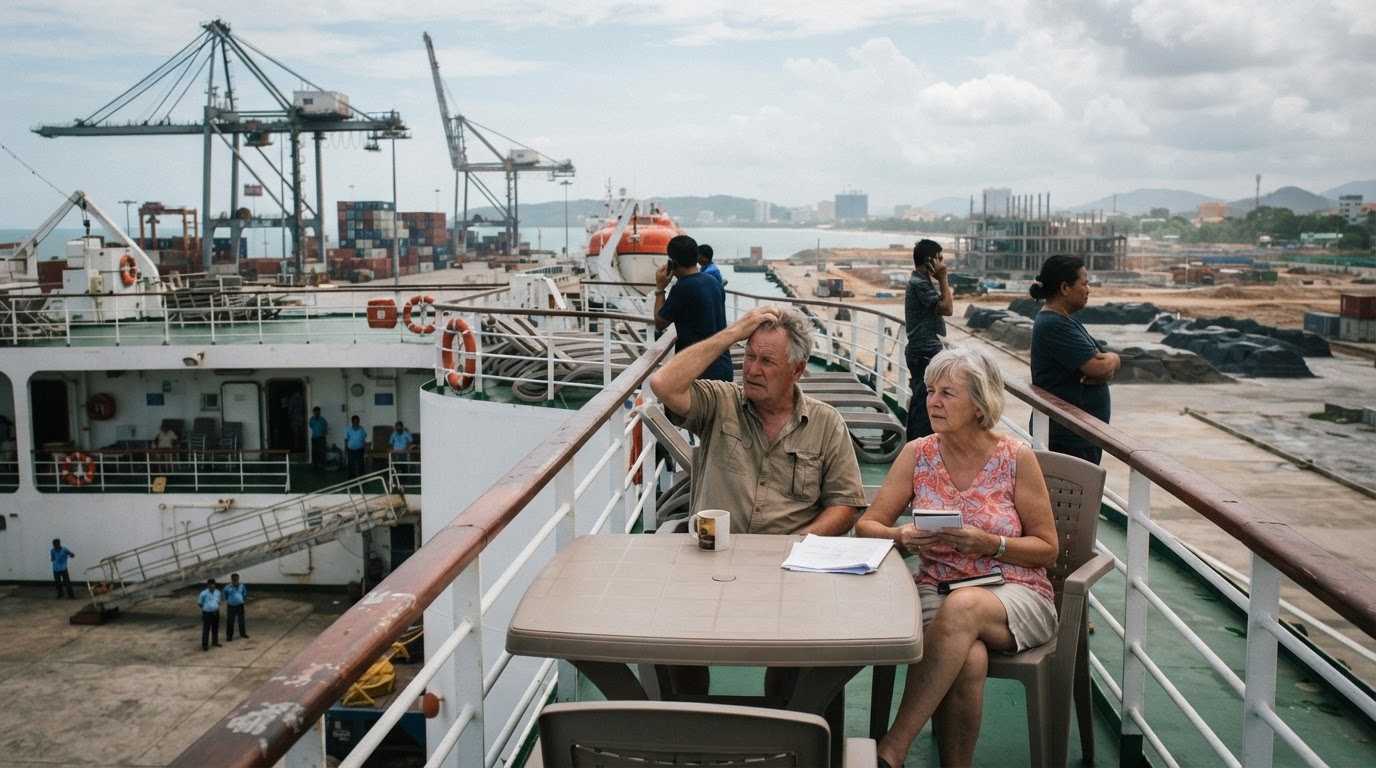
A perpetual residential voyage requires fixed consumer prepayments to absorb uncapped maritime operating expenses. When Villa Vie Residences halted the Odyssey in Sihanoukville, that structural vulnerability dissolved into an operational halt. More than 200 passengers disembarked in Preah Sihanouk province on Wednesday after the US-based operator suspended Cambodian operations.
The company pointed directly to extraordinary increases in fuel costs following events involving Iran. A Cambodian official offered a simpler financial diagnosis: the venture ran out of money. This split between corporate justification and cash reality illustrates the fragile arithmetic behind residential cruising.
Selling a multi-year itinerary as a floating home relies on steady operational margins. Passengers pay capital upfront to secure living quarters across global sea routes. In return, an operator assumes the long-term liabilities of bunker fuel, vessel maintenance, insurance, and international berthing fees. That revenue structure creates an acute asset-liability mismatch. While customer revenue arrives on fixed or prepaid terms, marine fuel trades on volatile spot markets.
The Arithmetic of Unhedged Maritime Exposure
Marine operators routinely hedge energy exposure through derivative contracts or surcharge mechanisms. Small lifestyle operators seldom carry the credit lines or trading sophistication required to execute long-term hedge books. When regional geopolitics cause sudden bunker price escalation, daily operating burn quickly exhausts cash reserves.
Management argued that external supply turbulence made scheduled maritime transits financially unviable. Surging fuel costs tied to international conflict involving Iran have elevated vessel operating expenses across global shipping lanes. Commercial carriers worldwide have revised voyage schedules and re-routed vessels to contain surging bunker outlays. Unforeseen market shocks inevitably test the underwriting assumptions of any maritime itinerary.
Market volatility inevitably exposes the difference between managed market risk and deficient capitalisation. Established commercial lines protect passenger itineraries through fuel adjustment clauses, liquidity reserves, or syndicated fleet operations. A business model that promises continuous worldwide transit without corporate cash buffers transfers total systemic risk directly to its clients.
The sudden halt of the Odyssey in Cambodia demonstrates the precariousness of that transfer. Once operating cash dries up, a vessel cannot drop anchor indefinitely without incurring mounting port fees and logistical costs. An immobilised vessel quickly becomes a balance-sheet liability, stranding hundreds of residents who traded land-based security for a floating lease.
Port Realities and Displaced Liabilities
Tying up at Sihanoukville highlighted the cross-border legal vacuum that governs floating real estate. When Odyssey docked at the Cambodian port on Oct 28, 2026, municipal authorities suddenly inherited the welfare consequences of an offshore corporate default. Regional maritime hubs in Southeast Asia encourage international cruise traffic to boost marine revenue and tourist expenditure. These ports are equipped to service visiting ships, not to arbitrate cross-border corporate failures.
Preah Sihanouk authorities face immediate administrative duties regarding immigration clearance, passenger welfare, and dock allocation. The corporate operator remains registered overseas, shielded behind international maritime jurisdictions and limited liability corporate structures. Meanwhile, around 200 world travellers discover that property rights aboard an itinerant vessel offer none of the protections afforded by domestic housing law. Contracts written for a nomadic lifestyle dissolve the moment operational liquidity disappears.
Host ports also face complex fiscal arithmetic when a private cruise liner defaults at berth. Mooring charges accumulate daily, while port operators must determine whether to provide shore power, water, and security on credit. For Cambodian maritime administrators, detaining a foreign vessel creates diplomatic friction, yet releasing it without payment leaves domestic service providers uncompensated. These costs inevitably spill into local logistics networks that had no hand in underwriting the voyage.
Resolving the crisis now depends on whether Villa Vie Residences can secure private bridge financing or whether maritime creditors file claims against the Odyssey. A ship unable to fund basic fuel purchases cannot sustain auxiliary generators, onboard provisions, or routine crew compensation for long. Unless new capital arrives immediately, passenger contracts will surrender precedence to secured maritime liens in admiralty proceedings. Floating condominiums cannot outrun the discipline of maritime unit economics.
Sources
Newsletter
Pacific Daily
A curated briefing from Thailand, Asia-Pacific and the world.