Banquet Hall Real Estate Meets Its Thermal Limit in Secondary Cities
Spatial compression inside Muar venue exposes the operational margin assembly assets shave to keep event yields viable
SINGAPORE
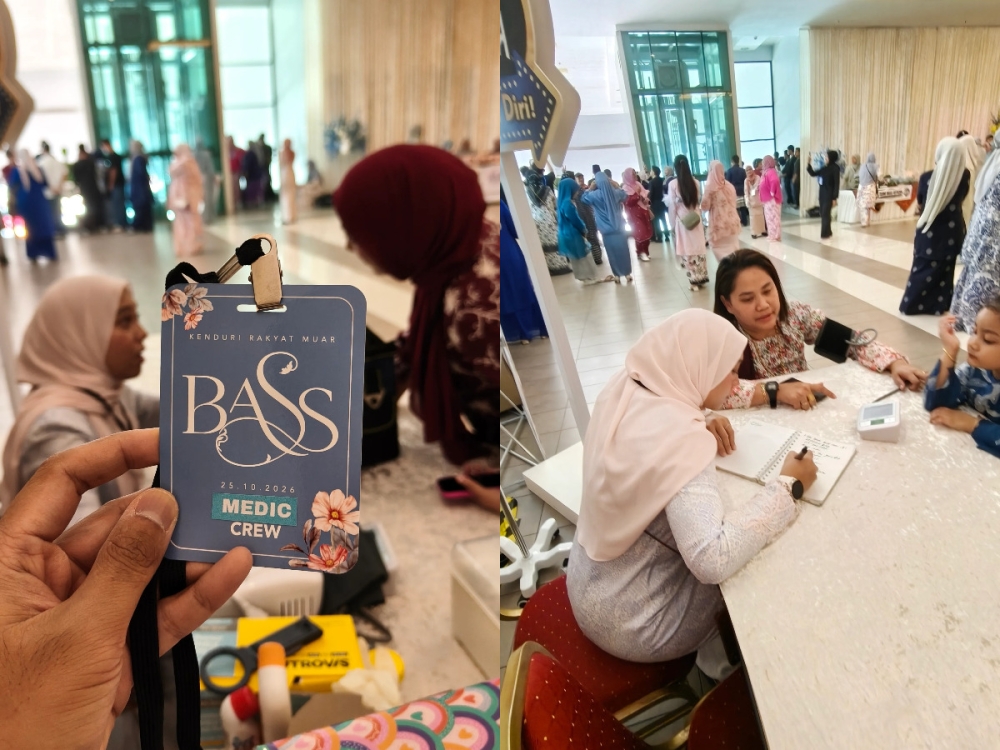
Floor plates generate revenue; indoor air handling consumes it. Inside the Yong Shen Banquet hall in Muar last Sunday, that commercial arithmetic collapsed into an emergency room on floor tiles. Attendees suffered faints under heavy indoor heat at the BASS Muar kenduri, prompting organisers to deploy portable electric fans while a five-person medic team knelt along banquet aisles to revive collapsed guests. Dispatches from Kuala Lumpur following the Oct 27 gathering framed the episode as volunteer grit under pressure. The property balance sheet tells a colder story: an asset operator leasing interior square metres beyond the mechanical threshold of the building envelope.
Every square metre conceded to wider circulation corridors or auxiliary air ducts is billable floor inventory permanently erased from an owner's ledger. Secondary-city banquet spaces survive on relentless volume. Operators must book dense headcounts to service debt on physical halls that sit entirely idle for days between weekend bookings. When a promoter books a room to its structural walls, sensible and latent thermal loads easily overwhelm standard ceiling ventilation. Dissipating heat generated by hundreds of seated bodies against ambient tropical temperatures requires industrial chiller plant and heavy kilowatt-hour utility expenditure. Rather than capitalising those mechanical upgrades into their base asset valuation, regional landlords routinely treat severe heat distress as an acceptable operational friction.
Subsidising Plant Deficits
Financial incentives actively reward this compression. Land costs in Muar fall well below metropolitan benchmarks, but imported central air-handling hardware, industrial ductwork and heavy refrigerant charges trade at uniform national prices. Operators bridge that margin gap by squeezing maximum human density onto the finished floor. The revenue from the booking is collected in full by the venue and the event promoter. The environmental cost, by contrast, gets transferred directly to the room.
Volunteer responders end up underwriting the building's physical shortfall. The fact that a five-person medic team was already on site proves that event organisers anticipated physiological stress, effectively substituting informal medical labour for engineered climate control. Relying on unpaid first responders and oscillating fans costs almost nothing on an income statement. It allows tenant and landlord to close an agreement without spending the capital expenditure required to keep occupants safely ventilated.
Institutional investors routinely misprice these secondary assembly assets by fixating on gross booking volume. A hall packed to the fire exits flatters gross turnover metrics and debt-service ratios. Yet venue degradation sets in the moment building systems fall short of contracted headcounts. Repeat faints, emergency call-outs and ad hoc cooling measures introduce immediate brand discounts, particularly among institutional and corporate clients that must audit occupational safety before signing recurring leases.
The Unresolved Building Envelope
Asset managers will naturally counter that provincial event venues endure volatile occupancy profiles, making dedicated central chillers financially ruinous over a twelve-month cycle. Tying up scarce capital in high-capacity mechanical ventilation to accommodate occasional peak kenduri crowds suppresses return on equity. From a pure cash-flow perspective, deploying temporary fans during humid spikes appears to be disciplined asset management.
That defence falls apart once ambient conditions trigger physical collapse. Mechanical ventilation is not an optional interior amenity; it is a hard physical constraint on rentable capacity. Shifting life-safety responsibilities onto volunteer medics will not protect commercial operators from regulatory liability or tenant flight. The long-term valuation of secondary hospitality assets now depends on whether landlords will fund modern climate engineering or watch their yield margins evaporate on overheated banquet floors.
Sources
Newsletter
Pacific Daily
A curated briefing from Thailand, Asia-Pacific and the world.