Arsenal, Manchester City and the High Cost of Territorial Primacy
Villa Park's disruption of the leaders reveals how capital concentration and physical attrition dictate the Premier League summit
SINGAPORE
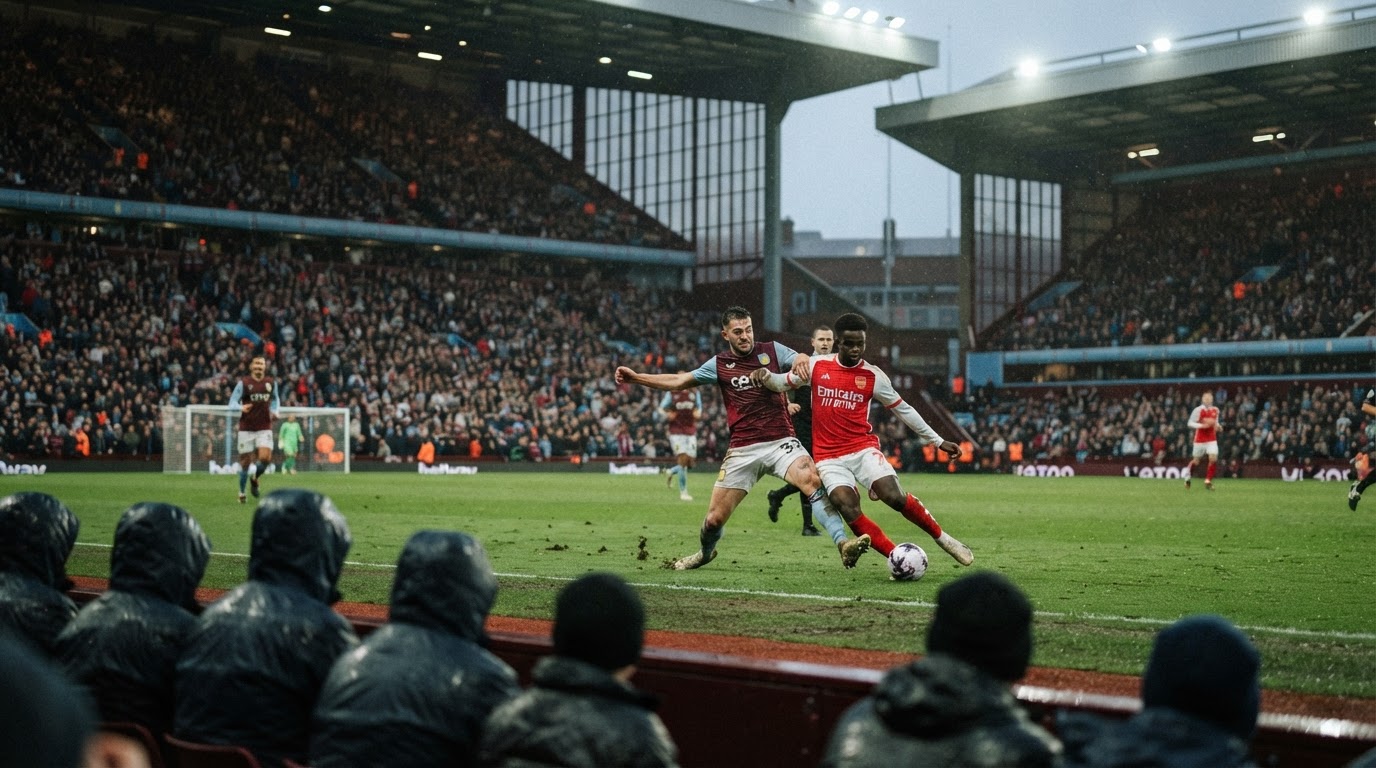
Perfection broke in Birmingham on October 24, 2026, realigning the summit of English football.
Manchester City entered Villa Park holding an unblemished record, only for Nicolas Jackson to score for Aston Villa and halt the pacesetters. Simultaneously in London, Arsenal defeated Everton at Emirates Stadium with goals recorded by Ezri Konsa and Gabriel Magalhaes. That sequence brought Arsenal level with Manchester City at the apex of the Premier League table. While match ledgers record only points and scorelines, the structural signal is financial: maintaining total dominance across a relentless campaign imposes operating costs that even elite balance sheets struggle to sustain indefinitely.
Industrial scale creates the baseline incentive for this duopoly. Arsenal operating out of London and Manchester City drawing on massive northern infrastructure have constructed squads designed to absorb shocks. With Erling Haaland leading the line for Manchester City and Gabriel Magalhaes anchoring Arsenal, both organizations rely on assets capable of delivering predictable outputs under heavy fixture congestion. Yet when an entrenched leader falters on the road, the narrowness of their operational safety margin becomes immediately visible.
The Price of Domestic Consolidation
Who is priced out by this dynamic, and where do they go? The obvious casualty is the middle tier of the Premier League.
A regional challenger like Aston Villa can marshal tactical discipline and emotional leverage to topple Manchester City over ninety minutes in October. Sustaining that challenge across thirty-eight fixtures, however, requires amortizing losses and carrying squad depth that only clubs with supreme revenue generation can afford. When mid-tier contenders commit outsized physical capital to secure a single marquee victory, they routinely face performance deficits in subsequent fixtures. The structural winners remain the institutions with sufficient asset depth to treat an off day as an isolated anomaly rather than a terminal setback.
Commercial scale reinforces this division across geographic borders. Broadcasters across the United Kingdom, Japan and the wider Asia-Pacific market demand relentless excellence from headline assets, turning domestic matches into global inventory. For Manchester City and Arsenal, defending market share in international broadcast territories requires sustained territorial control at home. Neither side can afford tactical retrenchment when commercial partners evaluate brand equity on constant competitive presence.
Limits of the Capital Moat
Scale alone cannot fully insulate elite clubs from biological constraints. The tension between commercial commitments and physiological recovery remains the fundamental operational friction of modern sport. Villa demonstrated that organized opposition can punish physical fatigue, forcing reigning powers to recalibrate tactical workloads. While Arsenal capitalized on Manchester City's slip to share top billing, parity at the summit increases competitive pressure on both dressing rooms.
What happens next depends on depth management rather than initial dominance. The championship outcome will not hinge on early winning streaks, but on which operation best absorbs physical attrition when domestic fixtures and global schedules collide across the winter months.
Sources
Newsletter
Pacific Daily
A curated briefing from Thailand, Asia-Pacific and the world.