The Attrition Behind the Pass
Sustaining an independent dining room in Singapore requires mastering an economic equation that hospitality romanticism routinely ignores.
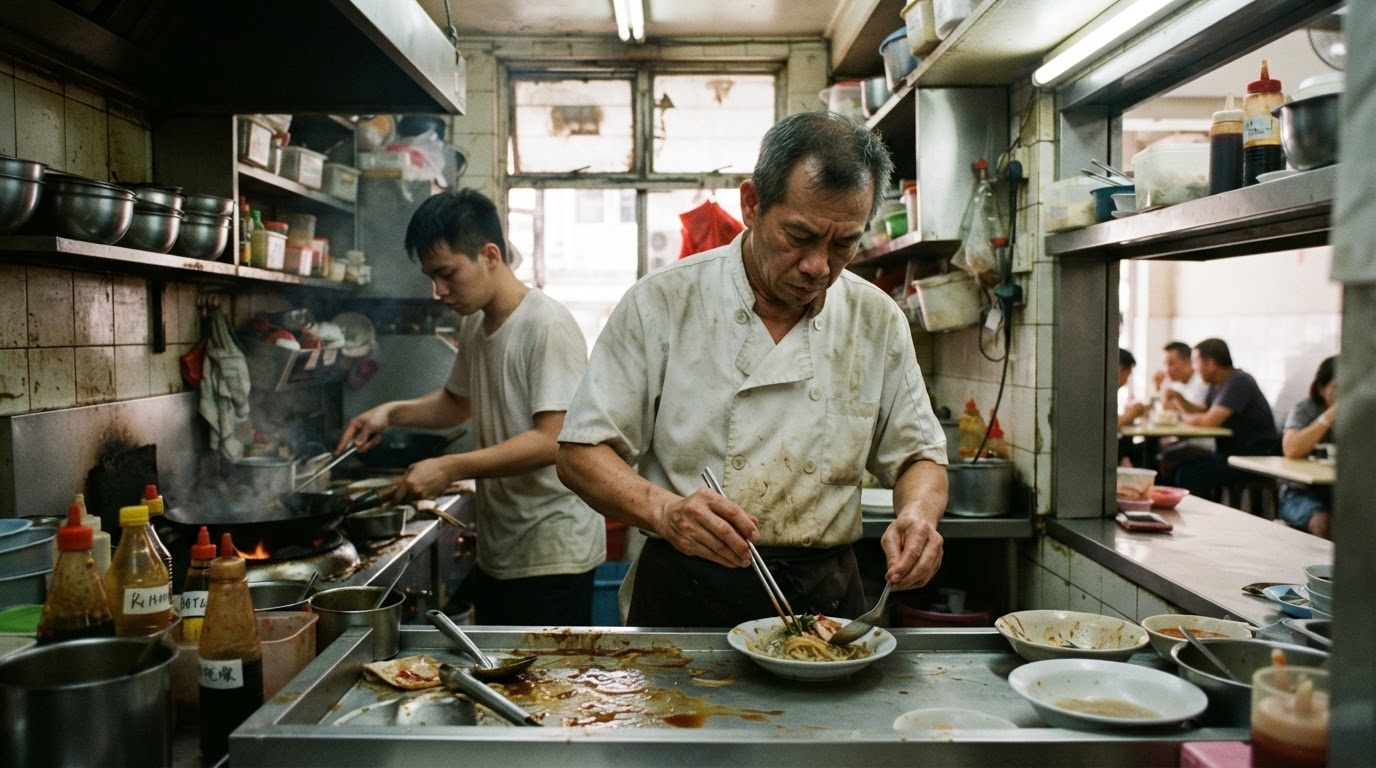
SINGAPORE
Hospitality culture persistently confuses creative distinction with financial viability. A crowded dining room conveys prosperity, yet the balance sheet behind the service line frequently tells an entirely different story. In Singapore, where diner interest shifts rapidly and real estate overhead exerts unrelenting pressure, establishing a new establishment is far simpler than keeping its doors open over time. Recent coverage by The Business Times regarding what it takes for a cafe or restaurant to survive underscores an essential commercial truth that culinary commentary too often forgets.
Longevity in food service is rarely an aesthetic victory. Diners evaluate a venture through interior finishes, hospitality choreography, and menu coherence. Operators, however, confront an arithmetic problem dominated by occupancy costs, utility tariffs, and rigid staffing requirements. When a dining concept launches, initial trade is frequently buoyed by novelty seeking rather than entrenched customer loyalty. Once that inaugural burst recedes, surviving depends entirely on gross margins capable of absorbing structural inflation. If the underlying unit economics do not function when the floor is half empty on a quiet Tuesday afternoon, no amount of conceptual ingenuity will rescue the enterprise.
The Illusion of Footfall
High-density urban markets create a specific operational trap. Foot traffic guarantees visibility, but prime retail access demands commercial lease terms that penalise minor fluctuations in patron volume. In Singapore, leasing contracts routinely include turnover components alongside baseline rents, meaning an operator shares upside revenue with the landlord while absorbing all downside exposure alone. Kitchens must therefore engineer menus for operational speed and ingredient cross-utilisation simply to maintain solvency.
The endurance of a dining room rests on the margin that survives the plate, not the visual distinction of its presentation.
Labour adds a compounding layer of friction. Running a professional kitchen requires disciplined technique, precise temperature management, and continuous prep cycles that resist automation. As qualified kitchen hands and front-of-house personnel face rising living costs, payroll commitments inevitably expand. Attempting to suppress these labour costs almost invariably degrades service consistency, triggering customer attrition that accelerates commercial decline.
The Structural Limit
Sustained patronage demands regular menu revision, yet frequent recipe alteration destabilises supplier purchasing agreements and kitchen execution. Standardisation protects profitability, but excessive repetition alienates an urban clientele conditioned to seek continuous novelty. Independent operators find themselves caught in this recurring operational bind, caught between the efficiency of predictability and the commercial necessity of surprise.
Pruning operating hours or raising prices might offer temporary relief, though neither solves the structural squeeze. Diners possess clear psychological price ceilings for lunch bowls, filter coffee, and casual dinner formats. Crossing those thresholds invites immediate consumer pushback, while holding prices steady against elevated wholesale ingredient costs slowly erodes working capital. The establishments that endure across years do not merely cook with discipline. These operators construct defensive cost frameworks that treat culinary craft as an applied industrial process rather than an expressive luxury.
The broader dining economy across Asia-Pacific urban centres faces this identical reckoning. While prospective proprietors continue to launch ambitious ventures drawn by personal passion, the physical dining room remains an unforgiving retail environment. Until kitchen operators reconcile the real cost of skilled labour and urban property with what patrons are genuinely willing to spend, the cycle of rapid openings followed by quiet closures will remain the primary rhythm of the trade.
Sources
Newsletter
Pacific Daily
A curated briefing from Thailand, Asia-Pacific and the world.