Tashkent and the Spatial Reality of Silk Road Tourism
Expanding air links from East Asia into Central Asia encounter urban grids built for centralized administration rather than leisure walking
SINGAPORE
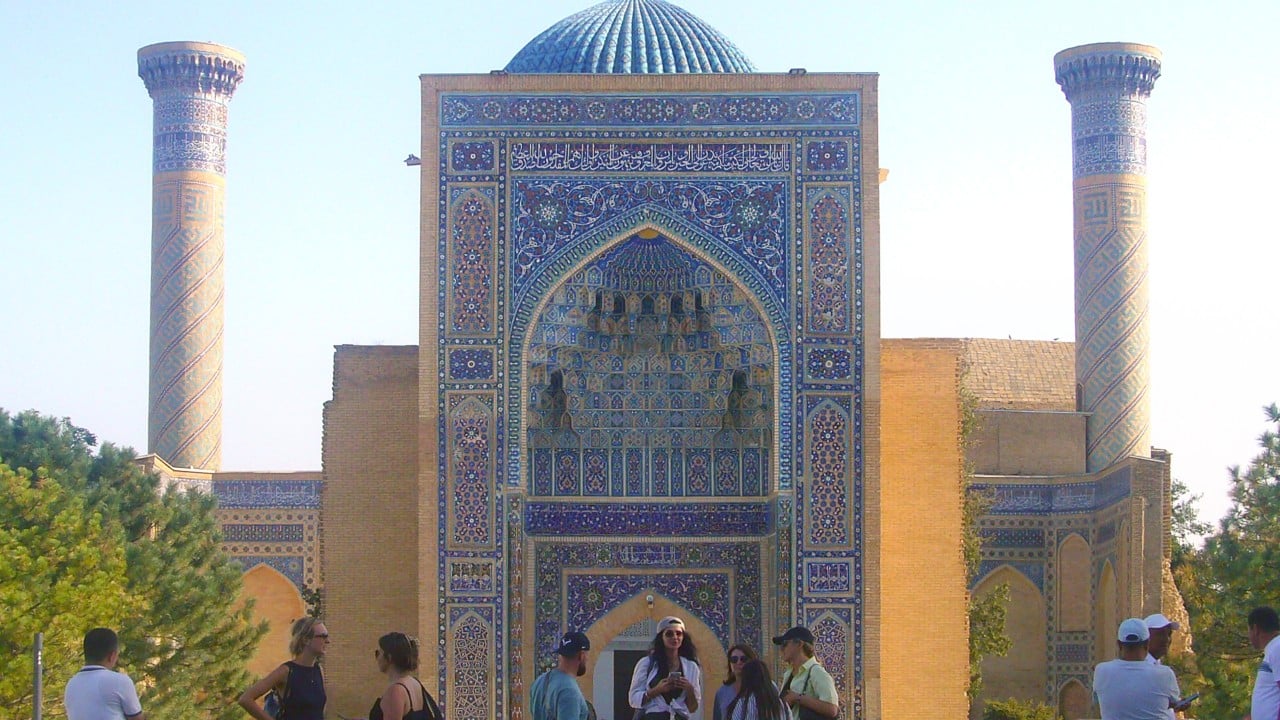
Tashkent presents a distinct architectural tension between historical narrative and physical fabric. Promotional rhetoric increasingly packages the capital of Uzbekistan as an antique gateway along the old Silk Road, yet the physical terrain reflects twentieth-century Soviet city planning. Broad vehicular boulevards and detached government complexes dominate the urban core. That structural reality creates an immediate divide between external expectations and daily spatial experience as Central Asia gains fresh prominence among travellers arriving from Hong Kong, Singapore and Malaysia.
The recent surge in visitor interest stems largely from policy adjustments rather than urban transformation. Visa-free access introduced by countries across the region, coupled with incremental upgrades in transport connectivity, has lowered administrative obstacles for travellers pursuing crowd-free destinations. Physical geography, however, remains unyielding. Travelling to Tashkent from Hong Kong requires boarding an initial flight to Shanghai before connecting to the Uzbek capital, a journey that spans fifteen hours. Concurrently, Changi Airport has explored the resumption of direct flight services between Singapore and Uzbekistan, signaling institutional appetite to bridge the transit gap.
Monumental avenues and pedestrian scale
The built form of Tashkent does not replicate the dense, winding footpaths that foreign visitors frequently associate with ancient trade hubs. Decades functioning as a Soviet administrative centre reconfigured the capital around wide street grids engineered for motorized transit and public assemblies. Centuries of cultural exchange across the Silk Road indisputably shaped the architecture, decorative art and food traditions of the territory. Even so, the contemporary streetscape operates through rigid zoning, massive concrete facades and expansive paved squares built to project civic authority.
Civic architecture constructed for state administration does not readily convert into an intimate pedestrian corridor.
Travel advocates counter that this layered architectural landscape forms the primary cultural draw of Uzbekistan. From this perspective, the coexistence of traditional artisan motifs alongside austere administrative blocks delivers a tangible record of political transition that more commercialized cities have erased. The absence of mass tourism allows visitors to traverse civic plazas without commercial obstruction. Similar questions surface in Kazakhstan and cities like Almaty, where planners weigh the preservation of modern civic layouts against the requirements of international leisure traffic.
Spatial barriers in the public square
Yet repurposing monumental civic spaces for external visitors exposes practical urban obstacles. Vast public plazas designed for state gatherings provide minimal shade against continental weather patterns and lack the sheltered edges necessary for casual pedestrian congregation. When international attention accelerates, municipalities face commercial incentives to retrofit historic neighborhoods with decorative facades, treating urban surfaces as backdrops rather than living environments. Such cosmetic additions risk compromising architectural coherence without resolving the fundamental spatial challenges of the city.
Coordinated civil aviation planning can open direct air routes through major hubs like Shanghai and Singapore, but faster itineraries cannot alter how an arrival city functions on the ground. Uzbekistan retains an architectural legacy formed across centuries of commerce, but its capital operates as an active administrative center shaped by modern geopolitical planning. Evaluating these urban centers purely through the framework of leisure transit ignores how the built environment was constructed to serve the people who inhabit it daily.
Sources
Newsletter
Pacific Daily
A curated briefing from Thailand, Asia-Pacific and the world.