A Shifting Lens on Time and Age in Asian Art
The preparations for a South Korean artist's Hong Kong exhibition reveal how a global disruption reshaped an individual's creative rhythm, offering a view of artistic resilience that challenges conventional markers of age.
SINGAPORE
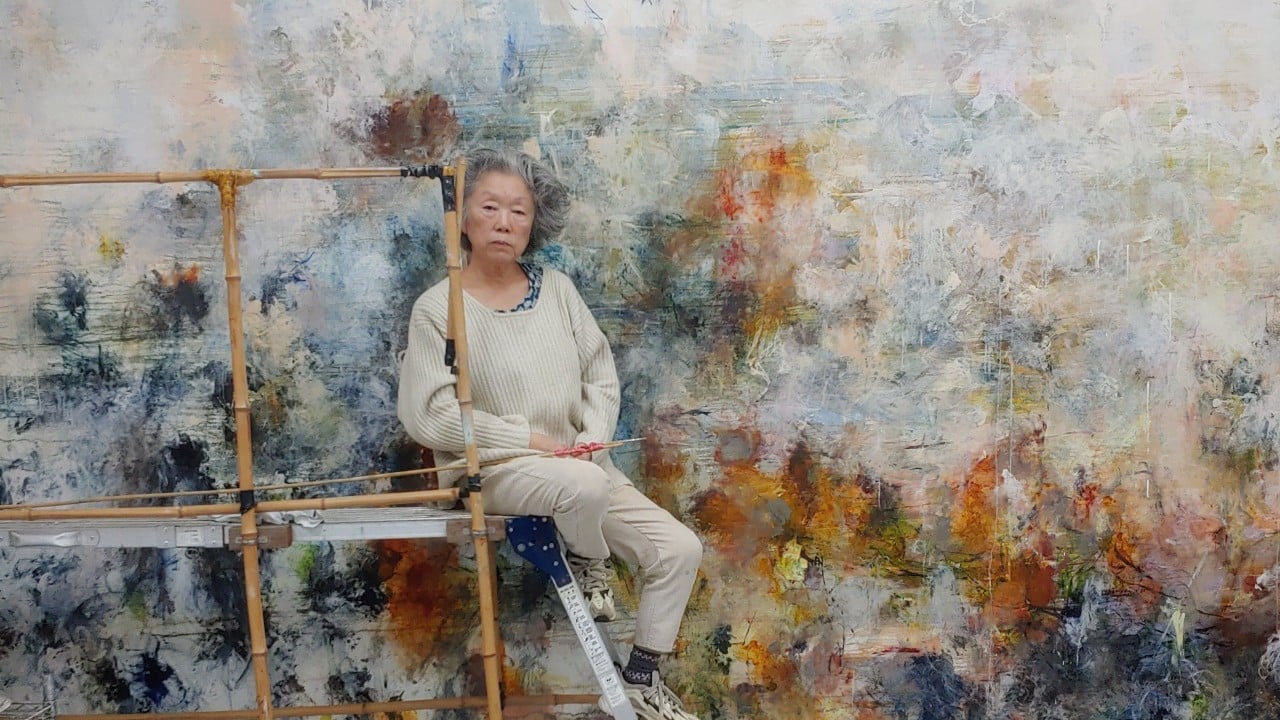
South Korean artist Kang Myonghi, approaching 80 years of age, visited Hong Kong twice to prepare for “What Remains to be Seen”, her first solo exhibition at a gallery in two years. This activity, even as her eighth decade draws to a close, illustrates a persistent engagement with international art circles and continued creative output.
The global pandemic and its associated lockdowns, which occurred in 2020, mark a specific point in Kang's working routine. While travel restrictions caused the only pause in her studio work, they did not diminish her creative output. Confined to Jeju, she continued her work. This period prompted a change in how she conceptualized her art. Kang says, “The pandemic marked the beginning of a pivot where I began to perceive time along a horizontal plane rather than from a fixed, single-point linear perspective.” This shift suggests a departure from a linear progression, perhaps reflecting a broader understanding of experience that accumulates rather than simply advances.
Such an approach to artistic longevity and the influence of major global events on personal perception resonates beyond individual biography. It highlights how external constraints can lead to internal reframing, influencing not just the content but also the philosophical underpinnings of an artist’s work. Her continued commitment to international projects, including an exhibition in Hong Kong, suggests that the physical separation imposed by the pandemic did not sever artistic connections, but perhaps intensified a focus on the enduring nature of creative practice.
The artist’s sustained activity at nearly 80 years old, combined with her quote on time perception, presents a counter-narrative to the idea that artistic vigour diminishes with age or that geographical limitations automatically halt international engagement. Rather, it suggests a fluidity in how artists adapt and continue to contribute to the cultural landscape. The exhibition itself, named “What Remains to be Seen”, implies an ongoing exploration, a focus on future possibilities rather than a retrospective summation.
This instance of resilience, observed through the lens of a single artist’s experience during a period of global stasis, offers a particular view. It demonstrates how significant global events, like the 2020 pandemic, can alter creative habits, leading to new philosophical insights that then manifest in public works. The opening of her exhibition in Hong Kong at nearly 80 years of age, following a period of enforced solitude and conceptual reorientation, illustrates a persistent, evolving creative force within the Asia-Pacific art scene.
Sources
Newsletter
Pacific Daily
A curated briefing from Thailand, Asia-Pacific and the world.