Targeting the Grid Exposes the Strategic Limits of Drone Attrition
Repeated strikes on power distribution create localized disruption without altering the underlying operational balance
SINGAPORE
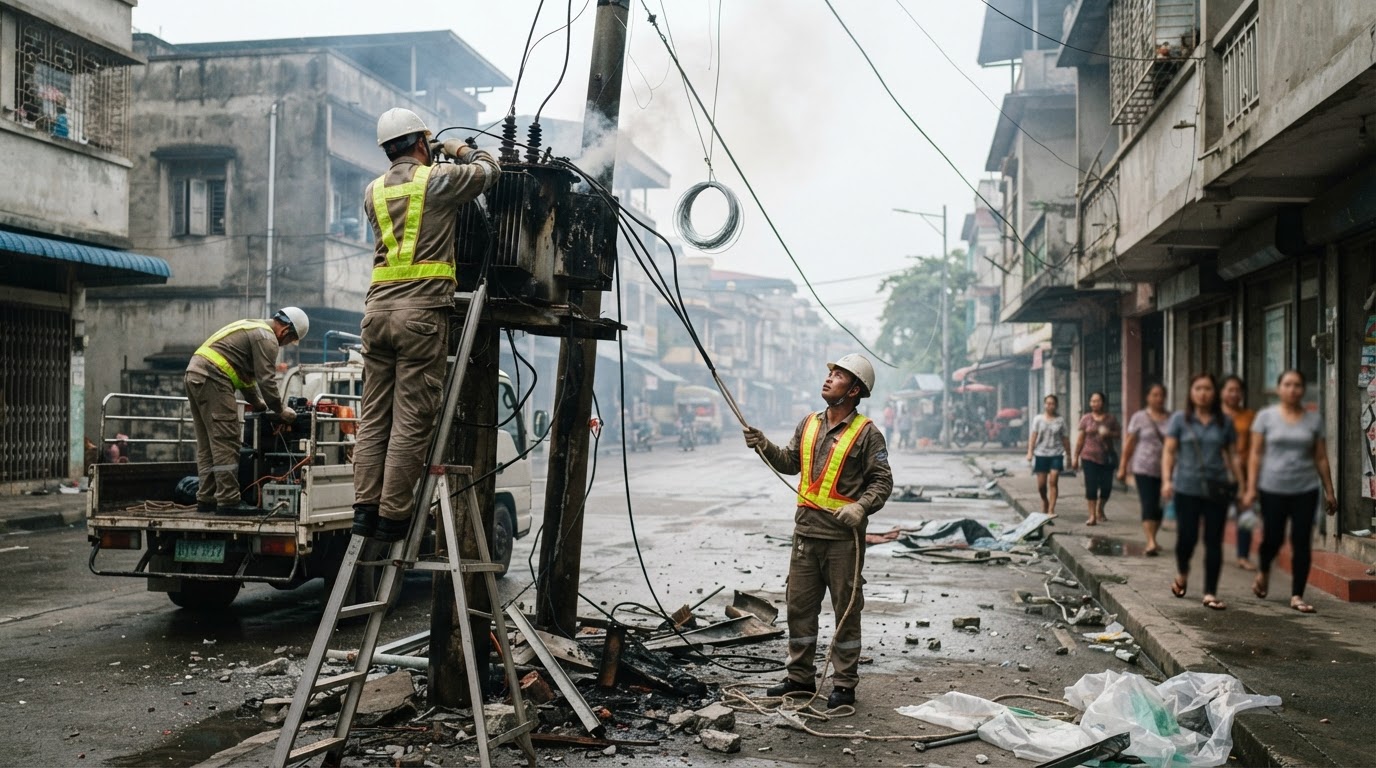
Aerial campaigns directed against power distribution expose a persistent gap between physical disruption and strategic collapse. On Friday, Oct 16, 2026, Russian drone strikes across Ukraine killed at least three people, damaged two shopping centres, hit trucks and buildings, and severed electricity supplies to over 1 million people nationwide. Official accounts confirmed that repair crews restored electricity across multiple sectors within hours, even as emergency personnel projected that specific districts would face blackouts lasting at least 24 hours. The operational reality behind these numbers indicates that while loitering munitions reliably shatter transformers, they fail to break the organizational systems that sustain state function.
Energy infrastructure has served as an explicit objective across recurrent cycles of confrontation. Earlier reporting in 2026 documented strikes against processing refineries and commercial tankers, establishing an operational rhythm of reciprocal infrastructure interdiction. When energy systems absorb structural damage, municipal authorities must divert technical stockpiles toward immediate maintenance. The disruption of substations introduces administrative friction into transport and civic communication. Yet historical precedent demonstrates that civilian discomfort rarely translates into administrative paralysis.
The Mechanics of Utility Warfare
Interdicting power grids rests on the premise that cascading blackouts weaken political resistance. When substations fracture, local leadership faces immediate strain. In regional hubs such as Kharkiv and Volyn, administrators including Oleh Syniehubov and Roman Romaniuk oversee technical personnel attempting to stabilize distribution lines while strikes continue. The human toll is undeniable, recorded plainly on Oct 14 when children in Kyiv carried flashlights to navigate playgrounds during emergency blackouts. But technical resilience routinely outpaces the resupply tempo of loitering platforms.
Transformers and distribution nodes represent fixed physical coordinates that remain vulnerable to long-range detection. Replacing that equipment requires access to specialized reserves that remain finite. Still, emergency crews frequently reconnect primary circuits within a single operational cycle. Striking stationary civil assets demonstrates range and precision; it does not dismantle organized governance or disperse defending forces in the field.
Strategic Resilience Against Infrastructure Attrition
The broader regional equation shifts toward logistical sustainability along eastern European borderlands, particularly bordering Poland. Sustained damage to civil networks generates immediate spillover pressures, forcing interconnected border sectors to absorb sudden fluctuations in supply. Observers tracking grid security must assess how quickly decentralized logistics can counter concentrated bombardment. Preserving municipal vitality amid persistent aerial assault validates modular, distributed networks over vulnerable, centralized power generation facilities.
The functional consequence of utility destruction remains temporary rather than decisive.
Proponents of utility attrition argue that cumulative systemic degradation eventually breaks civic cohesion by draining fiscal reserves. That assessment discounts administrative adaptation. While over 1 million residents lost power on Oct 16, the rapid restoration of electrical circuits in several districts demonstrated how distributed restoration procedures mitigate prolonged disruption.
Coercive infrastructure warfare remains bounded by a simple operational threshold: administrative adaptability and technical repair teams continue to absorb intermittent shocks. Munitions fracture steel and shatter masonry, but they leave institutional command structures functioning. The enduring imbalance lies between the heavy logistical investment required to sustain aerial strikes and the durable, decentralized capacity of civic engineers to restore the grid.
Sources
Newsletter
Pacific Daily
A curated briefing from Thailand, Asia-Pacific and the world.