Stade de France Shows Turnstiles Cannot Isolate Commercial Spectacles From Civic Strain
A capacity crowd in Paris demonstrates the growing friction between exported sporting leagues and municipal disruption.
SINGAPORE
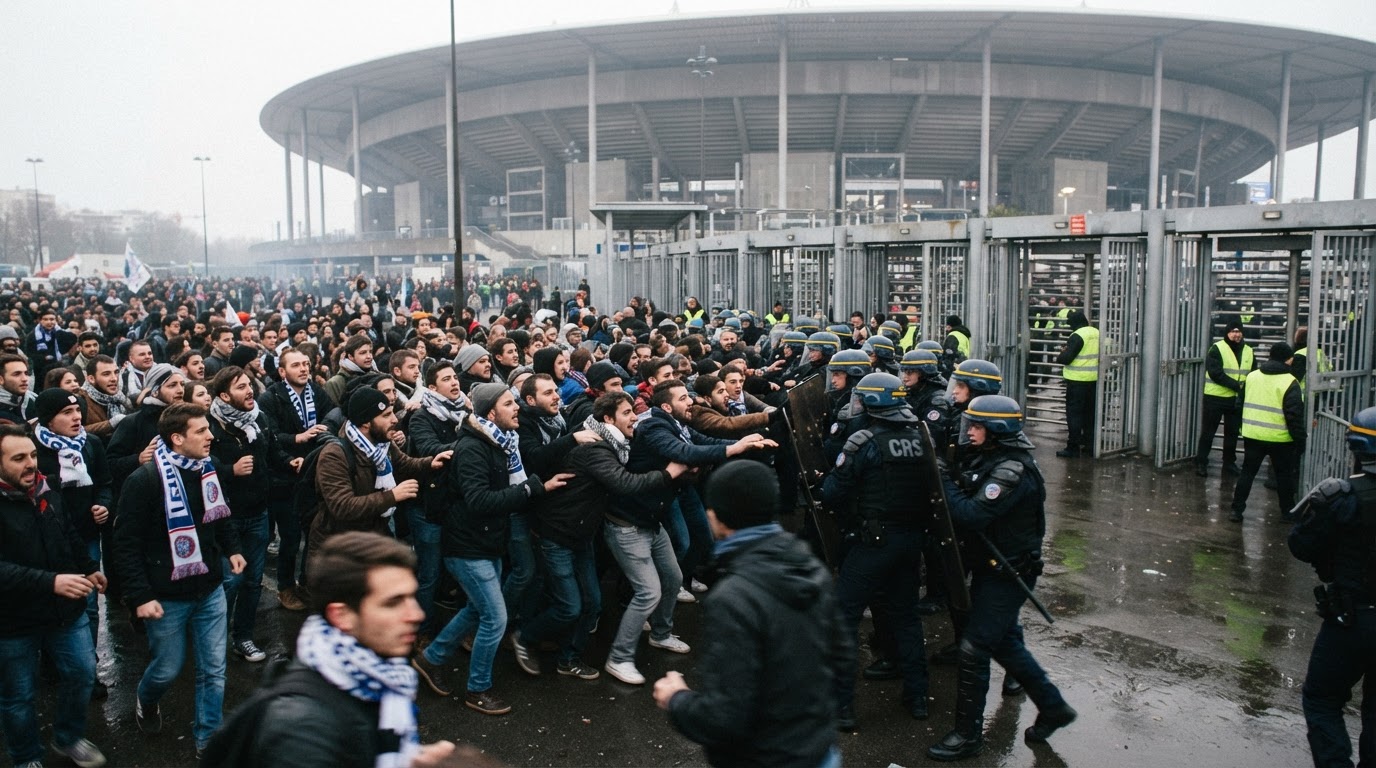
Host municipalities absorb the structural costs of civil disruption long before private commercial ventures acknowledge municipal risk. Inside Stade de France Stadium on October 25, 2026, an official count of 78,488 spectators watched the Pittsburgh Steelers face the New Orleans Saints. Aaron Rodgers directed the Pittsburgh offence under unbroken stadium lights, while Burna Boy performed during halftime across an untroubled pitch. Beyond the gates, fresh street demonstrations and suspended civic operations had already unsettled the broader urban core. The spectacle inside held firm, but only because public infrastructure accepted the defensive strain required to isolate it.
For decades, league expansion models have treated overseas capitals as frictionless consumer basins.
The structural calculation behind exporting regular-season American football rests on an uneven trade. Municipal authorities provide extensive security mobilisation and transit management, while private promoters secure ticketing revenue alongside global broadcast visibility. When civil stability fractures, this operational balance breaks. The host city expends municipal capacity to protect an isolated enclave, sheltering commercial tenants from the very tensions roiling adjacent streets.
Defensive Retrenchment Beyond the Bowl
Urban unrest across Paris forced defensive adjustments days ahead of kickoff. League organizers shuttered the official fan experience when public demonstrations intensified, pulling commercial activity back from open avenues. Days earlier, a scheduled match involving PSG was cancelled amid municipal disorder, signalling to security planners that large sporting gatherings carried significant operational exposure. Aaron Rodgers had publicly maintained that the fixture remained safe. Reassurances from visiting athletic personnel, however, do not resolve the structural burden placed on municipal security forces.
Securing an enclosed perimeter redirects vital municipal resources, subordinating urban administration to private scheduling.
Promoters routinely counter that delivering the event confirms the operational soundness of mega-event logistics. If 78,488 attendees assemble without incident inside a stadium bowl, advocates argue, external protests amount to negligible background noise. That interpretation misconstrues tactical containment as structural success. Isolating an arena demands extraordinary police deployments drawn away from ordinary neighborhood oversight, placing public machinery at the service of a closed commercial enterprise.
Spatial Exposure and Administrative Cost
Sporting leagues frequently map international growth across national borders without accounting for local civic volatility. Proposals involving Prince Albert seeking to bring the New Orleans Saints to Monaco, combined with promotional drives into Paris, illustrate how commercial planners imagine continental space as a series of interchangeable venues. Yet ancillary programming remains exposed. Stadium gates can bar non-ticketed residents, but open-air activations and urban transit networks remain tethered to municipal conditions.
When central authorities pledge municipal space to foreign commercial spectacles, local taxpayers carry the operational risk. Public budgets absorb the expense of cordoned rail stations and diverted transit routes, while the touring enterprise gathers its gate receipts and leaves. Stade de France Stadium fulfilled its corporate programming on October 25, 2026. The unresolved tension is whether municipal governments can continue justifying the financial and administrative isolation of urban cores for visiting entertainment while civic unrest outside remains unanswered.
Sources
Newsletter
Pacific Daily
A curated briefing from Thailand, Asia-Pacific and the world.