Regulatory Gaps and the Human Cost Behind Rayong's Nightlife Sweeps
Enforcement actions against unlicensed karaoke venues expose the persistent disconnect between provincial administrative oversight and shadow service economies.
SINGAPORE
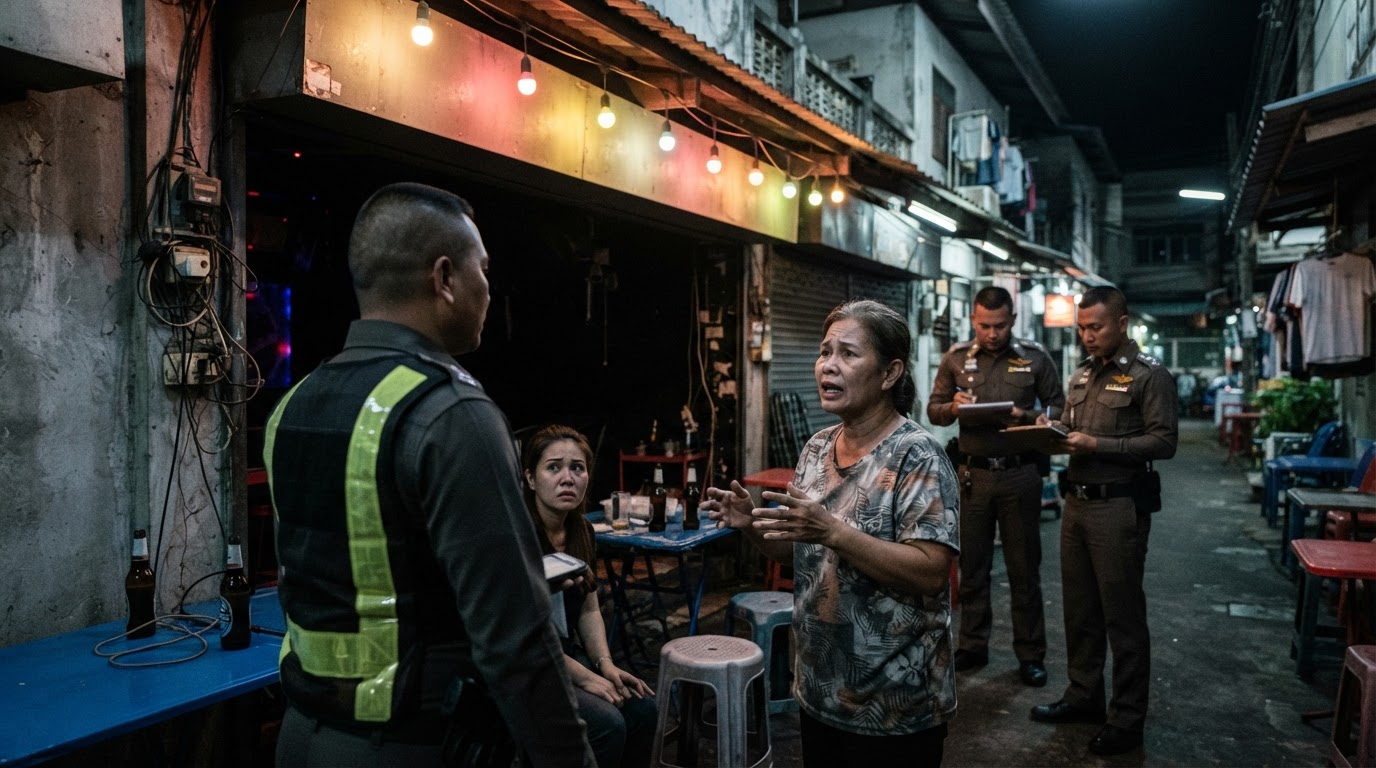
Nightlife governance in provincial Thailand often registers only after police vans arrive. On Saturday, the Interior Ministry reported that state officials raided four karaoke venues across Rayong, finding that every single establishment operated without an entertainment licence. Two of those sites, according to ministry findings, were suspected of concealing prostitution behind private room doors. What the state framed as an administrative success reveals an ongoing regulatory failure: informal hospitality enterprises routinely outpace statutory enforcement across fast-growing industrial centres.
Rayong demonstrates how quickly commercial entertainment trails industrial development. Factories, logistical networks, and construction hubs draw thousands of shift workers and contractors who seek recreation after dark. Private drinking lounges and karaoke rooms emerge almost overnight to absorb that disposable cash. Administrative oversight, by contrast, moves at an institutional crawl. Municipal zoning, health inspections, and entertainment permits demand months of bureaucratic vetting that informal operators simply bypass.
Evading the licensing system is rarely an oversight. Legitimate venue operators must meet specific fire safety standards, observe statutory closing hours, and pass municipal building inspections. Skipping that legal pipeline entirely allows owners to cut structural costs, avoid local levies, and shield their balance sheets from official scrutiny. An unlicensed lounge is essentially a financial calculation: running off the regulatory grid remains far more profitable than paying for institutional legitimacy.
Shifting Liability to the Floor
The real danger of this administrative vacuum falls on frontline service workers. Unlicensed establishments do not provide statutory employment protections, written contracts, or verifiable wage records. When an establishment operates off the books, bartenders, hostesses, and waitstaff absorb the full brunt of unsafe workplace conditions without formal avenues for grievance. Where prostitution is suspected behind private partitions, vulnerable workers carry immediate legal liability and personal exposure. Venue operators, conversely, manage their ventures behind corporate anonymity and collect cash profits until an enforcement team appears.
State regulators present crackdowns as vital assertions of public order. Officials argue with valid justification that unlicensed establishments foster illicit conduct, compromise municipal fire codes, and erode community safety. Legitimate business owners who pay statutory licensing fees understandably demand uniform enforcement against underground competitors who evade municipal taxes. Without sudden inspections, provincial regulators maintain, operators would face no incentive to follow the law.
Yet episodic sweeps treat only the visible symptoms of an entrenched underground trade. A single Saturday operation suspends business at four addresses, but it leaves consumer demand and commercial incentives intact. Venue operators routinely view administrative fines as an ordinary operating expense, absorbing the disruption before reopening under a different facade down the road. Punishing the room does little to alter the marketplace that built it.
The Limits of Periodic Raids
Administrative durability requires steady institutional oversight rather than spectacle. Reactive policing cannot substitute for coherent municipal zoning and proactive labour monitoring. Unless provincial authorities bridge the enforcement gulf between rapid industrial expansion and hospitality regulation, vulnerable workers will continue paying the human cost of unregulated nightlife.
Sources
Newsletter
Pacific Daily
A curated briefing from Thailand, Asia-Pacific and the world.