Pope Leo's Cancer Surgery Highlights Papal Succession Mechanisms
The successful removal of a cancerous growth from Pope Leo's lung on October 13, 2026, focuses attention on the operational continuity of the papacy and its implications for Catholic communities across Asia-Pacific.
SINGAPORE
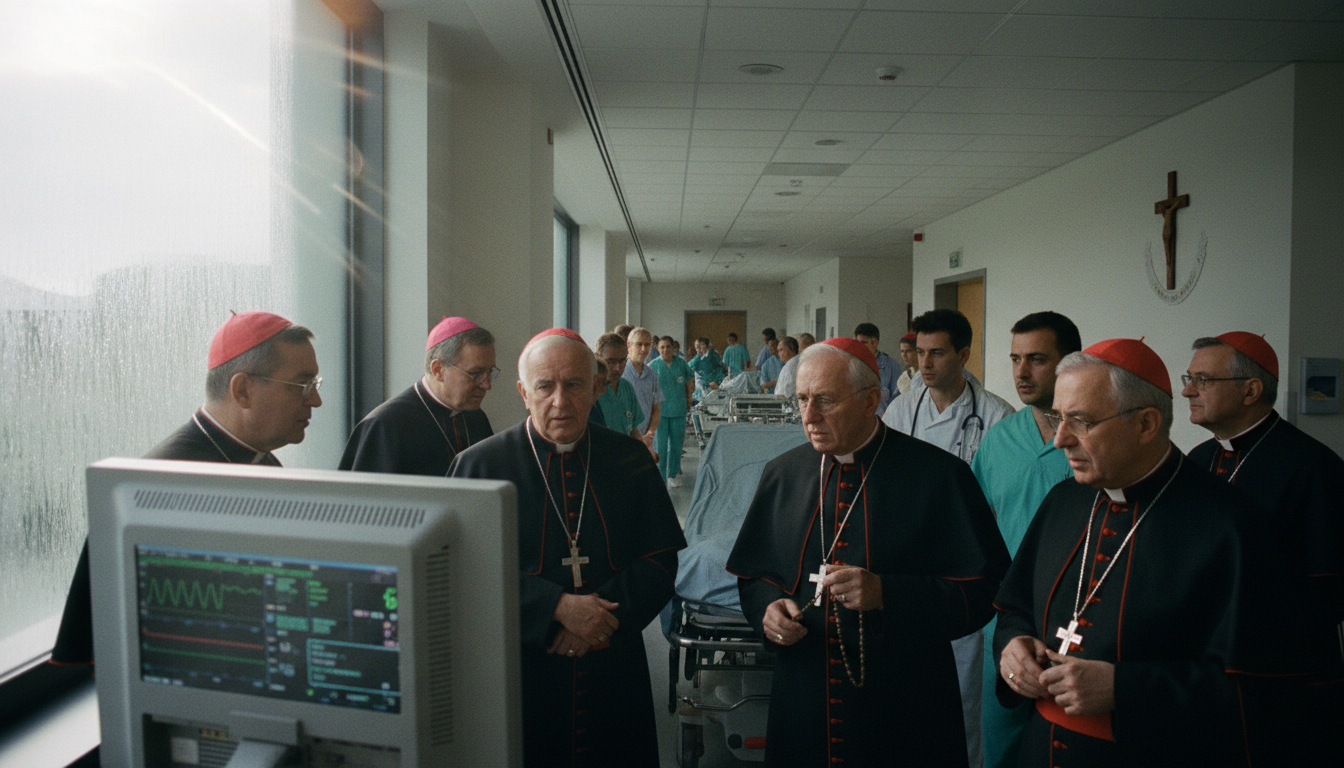
Pope Leo underwent surgery on October 13, 2026, at Gemelli Hospital in Rome, Italy, to remove a cancerous growth from his lung. The Vatican announced the procedure was successful. This event, while centered on the health of an individual, highlights structural questions regarding papal succession and the broader governance of the Catholic Church. The Vatican stated the pope woke normally after the operation and would remain in hospital for several days to recover.
The immediate reassurance from the Vatican, confirming the surgery's success and Pope Leo's recovery, aimed to stabilize perceptions of leadership. However, the diagnosis itself brings into sharper focus the mechanisms for managing a pontiff's incapacitation or eventual succession. For the Catholic Church, a global institution with a significant presence in the Asia-Pacific region, the health of the pope is not merely a personal matter. It is a question of institutional stability and direction. The removal of a cancerous growth suggests a medical event that could have long-term implications for the physical demands of the papacy.
While the Vatican confirmed the operation's success, the underlying condition — lung cancer — introduces a new variable into the pontiff's future ability to perform his duties. The age and health of any leader, particularly one with global responsibilities, naturally provoke discussions about continuity and succession planning. For Catholic communities in Asia-Pacific, from the Philippines to South Korea, the stability of the Vatican's leadership translates directly into confidence in doctrinal guidance, pastoral oversight, and the church's social mission.
The established protocols for papal transitions are robust, designed to ensure a seamless shift of power. Yet, any prolonged period of ill health or a sudden vacancy would test these protocols. Historically, the pontiff's health has often been a private matter, revealed in limited official statements. The transparency surrounding Pope Leo's diagnosis and surgery, though concise, provides a rare glimpse into the medical realities facing church leadership. The decision to disclose the cancerous nature of the growth, confirmed by multiple reports on October 13, 2026, from sources like The Guardian and BBC, marks a departure from more guarded past practices.
This surgical intervention prompts consideration of the church's resilience in the face of leadership challenges. The Vatican's assertion that the pope woke normally after the operation and would remain in hospital for several days to recover offers immediate reassurance. However, the structural reality remains that the papacy, though an institution, is embodied by a single individual. The effectiveness of its global administration, including its diplomatic efforts and pastoral care across diverse regions like Asia-Pacific, relies heavily on the active leadership of the pope.
Ultimately, the outcome now depends on Pope Leo's full recovery and his continued capacity to govern. The underlying constraint, however, is the inherent vulnerability of institutional leadership tied to a single individual's health. The current event redirects attention to the systems in place should this vulnerability manifest more significantly in the future.
Sources
Newsletter
Pacific Daily
A curated briefing from Thailand, Asia-Pacific and the world.