Patronage and Parity in Pacific Sports Governance
Warm assessments after heavy defeats conceal the structural resource divide across international rugby league.
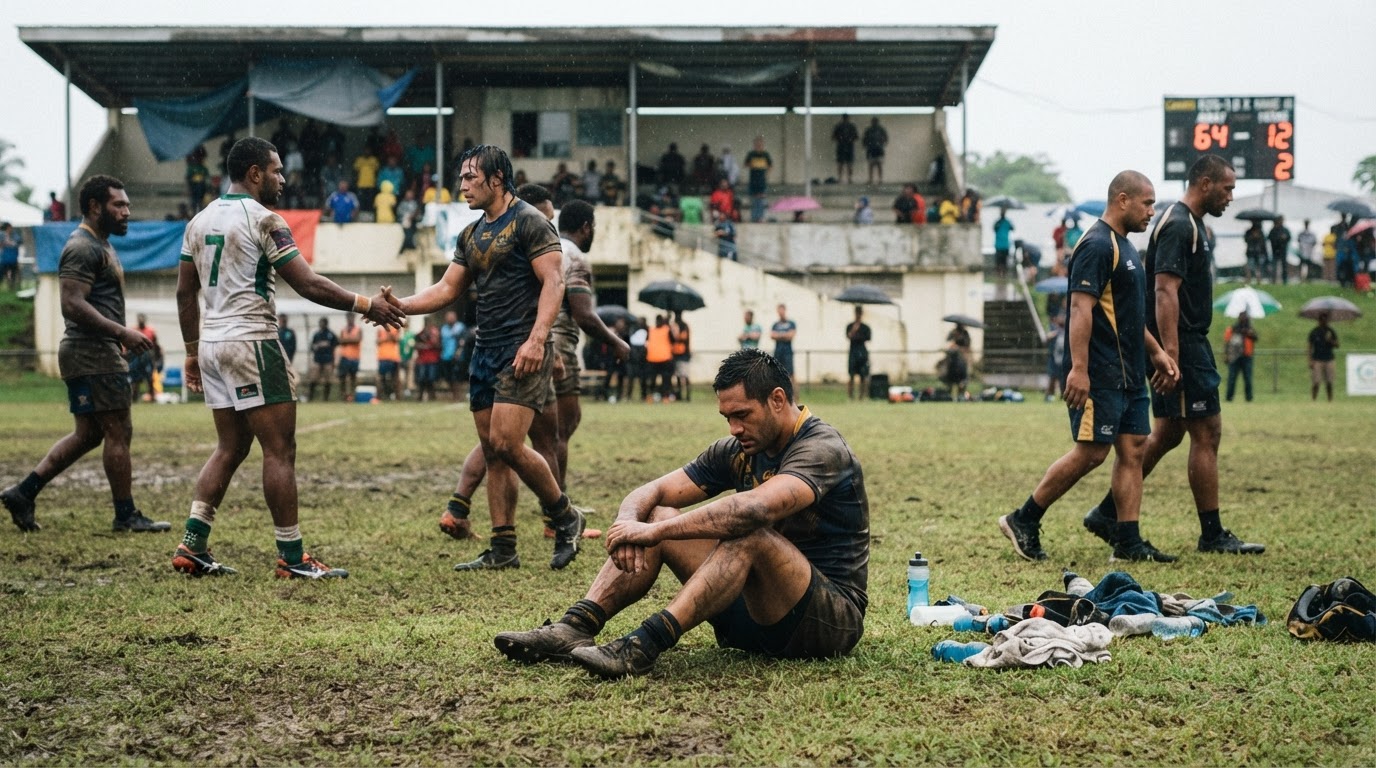
The final whistle of a 40-0 defeat rarely elicits public commendation from the victors that carries operational weight. When defending champions Australia defeated Fetu Samoa in their opening pool encounter at the Rugby League World Cup on a Friday night, the rhetorical response followed a familiar regional script. Isabelle Kelly, the captain of the Jillaroos side, commended the Samoan team for mounting an impressive defensive display during a taxing second half. Such diplomatic concessions occur with regularity across international competition, but they mask the entrenched structural divide separating dominant athletic programs from developing national squads.
Athletic diplomacy across Oceania operates within an asymmetric hierarchy where established administrative machines commend the spirit of competitors while maintaining absolute control over elite outcomes. Australia entered the fixture holding both technical pre-eminence and institutional depth. By half-time, the Jillaroos held a commanding 28-0 advantage, effectively deciding the contest before the interval. While the second spell of 40 minutes yielded only 12 Australian points, framing this tactical slowdown as an equitable equilibrium mistakes defensive attrition for genuine competitiveness.
Rhetorical Acclaim Against Institutional Constraints
Expressions of sporting goodwill often obscure the logistical deficits confronting island programs. Fetu Samoa proved capable of disrupting offensive schemes during extended phases of the second period. Disciplined physical application limited scoring opportunities, prompting Kelly to note how hard the Samoan lineup fought across the fixture. However, strategic resilience under sustained pressure cannot compensate for the chronic absence of year-round development systems.
Defenders of the existing governance model argue that closing the scoring margin during the second half demonstrates rapid capability transfer across the region. Under this interpretation, restricting a dominant lineup to 12 points over 40 minutes signals an emergent parity that will eventually reshape international standings. That perspective overlooks the mechanical realities of test-level rugby league. The Australian program operates from an established base of sustained competitive fixtures, elite conditioning infrastructure, and concentrated funding pipelines, none of which can be matched through short tournament assemblies.
The Real Limits of Defensive Containment
When a fixture concludes with a lopsided scoreline, post-match praise acts as an inexpensive concession from an entrenched power. Condescending validation costs nothing to distribute, whereas reallocating broadcast revenue, governance authority, or fixture equity demands tangible sacrifices from existing administrators. Fetu Samoa contained the Jillaroos plans intermittently, but sporadic disruption is fundamentally distinct from structural parity.
This gap between polite assessment and material capacity remains the defining feature of Pacific competition. The tactical recalibration displayed by the Samoan squad demonstrated that defensive commitment can temporarily frustrate superior systems, yet that resistance operates within severe institutional ceilings. Australia preserved its dominance without risking the match outcome, while the Samoan program achieved defensive dignity without securing a single point. Until systemic funding, scheduling parity, and independent operational structures replace courteous accolades from winning captains, Pacific squads will continue fighting against the boundary between nominal praise and real competitive sovereignty.
Sources
Newsletter
Pacific Daily
A curated briefing from Thailand, Asia-Pacific and the world.