Managerial Instability at Old Trafford Tests the Limits of Global Sporting Equity
Manchester United's winless domestic stretch under Michael Carrick strains the institutional prestige underpinning its international commercial reach
SINGAPORE
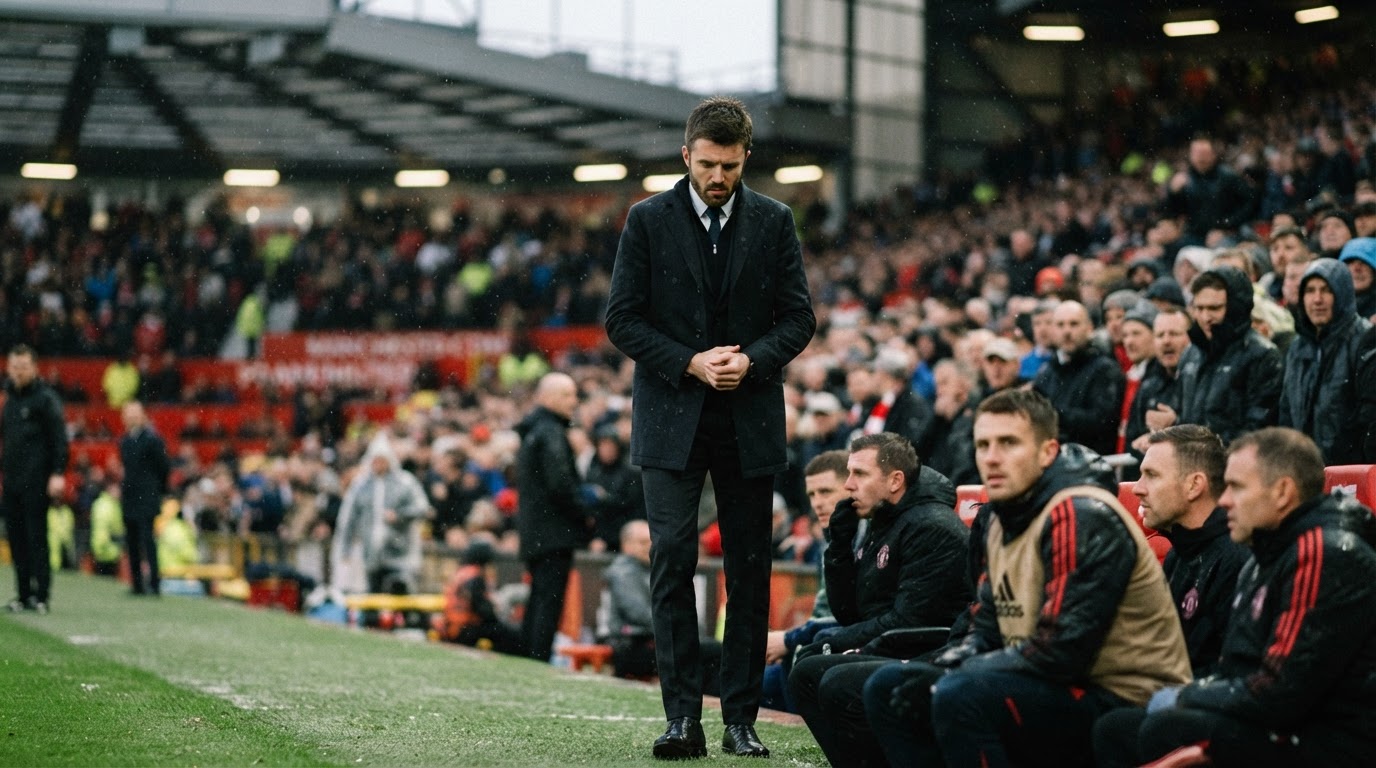
Institutional reputation in modern corporate sport absorbs competitive friction long before executive structures acknowledge operational decline. When Manchester United fell to AFC Bournemouth at Old Trafford on October 25, 2026, the defeat registered far beyond the immediate arithmetic of the Premier League table. For Michael Carrick, the result extended a winless sequence that leaves his tenure visibly precarious. For the club as an international commercial enterprise, however, persistent underperformance at home directly challenges the foundational premise that brand value can remain permanently detached from competitive competence.
English football clubs have spent decades constructing extensive overseas followings, treating cross-border audience loyalty as a reliable commercial buffer. Supporters across key broadcast markets in the Asia-Pacific region, from East Asian metropolitan centers to Southeast Asian media hubs, originally committed their attention during eras defined by serial domestic dominance. That goodwill created powerful retail and media distribution networks. Yet the durability of this arrangement assumes a baseline standard of elite performance that Carrick's side is failing to deliver.
The Friction Between Commercial Scale and Sporting Drift
The managerial exchange at Old Trafford on that late October afternoon brought the tactical contrast into sharp focus. Bournemouth, directed by Marco Rose, demonstrated an organised coherence that exposed United's recurring structural hesitancies. Carrick appeared dejected as he acknowledged spectators after the final whistle, having witnessed another fixture where tactical initiative yielded to systemic vulnerability. The contrast between Rose’s compact execution and Carrick’s strained setup highlighted an uncomfortable reality: mid-tier Premier League competitors now routinely demonstrate greater operational clarity than institutions possessing exponentially larger wage structures.
Persistent sporting stagnation eventually erodes the commercial certainty that elite sporting brands take for granted in overseas markets.
Skeptics of this critique will argue that modern corporate football has largely decoupled commercial income from weekly pitch results. Manchester United continues to command extraordinary global visibility, retaining commercial appeal regardless of short-term slumps. Global sponsors and television networks contract years ahead, providing guaranteed revenue streams that insulate executive leadership from immediate matchday volatility. From this perspective, managerial churn under Carrick is merely another routine transitional cycle that global audiences will tolerate without breaking emotional or financial ties.
The Limits of Historical Goodwill
That institutional complacency overlooks the demographic reality of global sports consumption. Commercial loyalty in overseas markets is not an inherited constitutional guarantee. Generational viewers who formed their attachments around past trophy cycles are steadily succeeded by younger consumers whose viewing habits are governed by immediate excellence, modern tactical dynamism, and charismatic presentation. When a club remains winless deep into autumn, its cultural footprint among international audiences narrows. Broadcast executives evaluating rights values must eventually confront the fact that legacy prestige cannot indefinitely compensate for competitive stagnation.
Furthermore, the regional distribution of sporting attention has grown far more competitive. With international sports properties actively fighting for broadcast share across Asian markets, domestic European struggles are amplified instantly. Audiences observing Carrick’s beleaguered squad against Bournemouth do not merely see a tactical reverse in Britain; they see an elite brand struggling to justify its premium billing.
Carrick now operates with almost no margin for tactical error. Yet even if executive leadership decides upon another managerial substitution, the core institutional contradiction remains unresolved. Manchester United continues to trade upon a historic stature that its contemporary football operations repeatedly fail to validate on the pitch.
Sources
Newsletter
Pacific Daily
A curated briefing from Thailand, Asia-Pacific and the world.