Macau’s Ink Modernism and the Peripheral Crucible of Asian Abstraction
A retrospective for Mio Pang Fei shows how an isolated enclave forged a sovereign visual language away from dominant cultural capitals.
SINGAPORE
Colonial administrative enclaves historically register artistic departures through institutional friction rather than through swift doctrinal declarations. When Shanghai-born painter Mio Pang Fei presented his abstract canvases at the Luis de Camoes Museum in December 1985, the Portuguese territory occupied an understated cultural margin adjacent to Hong Kong. Macau was rarely categorized as an incubator of avant-garde visual theory. Yet that inaugural exhibition unsettled prevailing regional assumptions, offering paintings structured around Eastern philosophy that refused both archival repetition and superficial Western imitation.
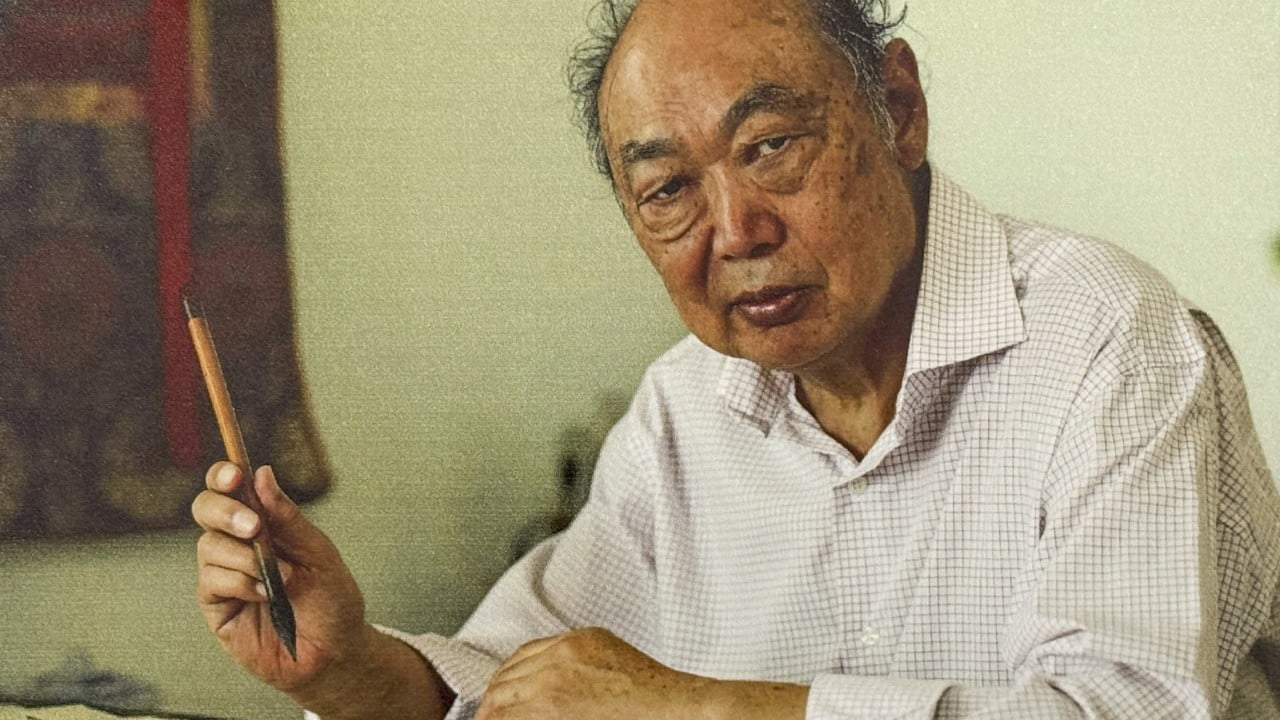
Across six decades, Mio systematically developed this trajectory under the name of Neo-Orientalism. Born in 1936 and dying in 2020, the painter lived through profound upheavals, ultimately selecting the quiet geographical enclosure of Macau as the site of his lifelong aesthetic experiments. A retrospective exhibition at the Macao Museum of Art now re-evaluates that sustained output. What emerges is not merely a biographical summary of an individual master, but an opportunity to reconsider how modern artistic idioms evolved outside established commercial centres.
The Geography of Solitude
During the 1960s, neighbouring Hong Kong had already fostered an active synthesis connecting Chinese ink traditions with contemporary Western abstraction. Guided by Lui Shou-kwan, the New Ink Movement established an articulate model of formal reinvention, demonstrating how gestural brushwork could participate in modern international currents. Concurrently, Paris-based Chinese masters demonstrated how expatriate painters could engage European modernism directly within continental salons, securing international visibility through established institutions.
Macau provided an entirely different habitat for an emigrant artist. Devoid of a vast speculative art market or state-sponsored academies, the territory functioned as an insular sanctuary where ideas could gestate without rapid commercial exploitation. Mio’s arrival from Shanghai brought rigorous ink traditions into quiet proximity with Portuguese administrative structures and Western visual history. Neo-Orientalism did not seek to soften Chinese brushwork to flatter foreign collectors, nor did it retreat into defensive antiquarianism. Instead, the painter questioned whether classical philosophies of space and void could withstand the pressure of modern abstract tension.
Skeptics of peripheral artistic movements might contend that Neo-Orientalism was essentially an isolated enterprise. Without the institutional infrastructure of Hong Kong or the cosmopolitan pedigree of Paris, Mio’s production unfolded largely outside dominant commercial circuits. One could argue that elevating his private methodology into a broader historical counterweight risks overstating the influence of a solitary, idiosyncratic studio career that operated without a widespread network of disciples.
Preserving Spirit Through Form
That critique, however, misunderstands how aesthetic systems survive displacement. Prevailing histories of twentieth-century Asian art have long privileged metropolitan nodes, tracing lineages that run exclusively through major capitals and commercial capitals. In that standard telling, modernism arrives from abroad, undergoes regional translation, and circulates outward as a recognized commodity. Mio disrupted that tidy assumption by constructing a sovereign idiom away from institutional scrutiny, proving that peripheral enclaves could formulate original theoretical positions.
His canvases tested what could be preserved of Chinese philosophical lineage when the traditional medium itself was dismantled. By translating ink concepts into raw abstract execution, Mio discarded decorative surface conventions while maintaining structural depth and contemplative discipline. Macau’s quiet perimeter allowed this work to mature without the distorting commercial demands that often accompanied Hong Kong's market-driven circuits. The resulting body of work was neither an ethnographic exhibit for European curiosity nor an insular reproduction of classical literati tropes.
As cultural institutions across the region reassess twentieth-century legacies, the works at the Macao Museum of Art suggest that aesthetic endurance often depends on geographical distance. What was preserved in Macau was not a static repertoire of historical motifs, but the contemplative autonomy required to build a distinct modern visual language. In peripheral workshops, away from academic dogma, classical traditions found their most radical transformations.
Sources
Newsletter
Pacific Daily
A curated briefing from Thailand, Asia-Pacific and the world.