Lorne Doerkson's Bridge Revival Risks Compounding British Columbia's Infrastructure Deficit
Pledging a 10-lane span over the Fraser River challenges the $8.5-billion immersed tunnel, but scrapping existing procurement promises years of renewed administrative friction.
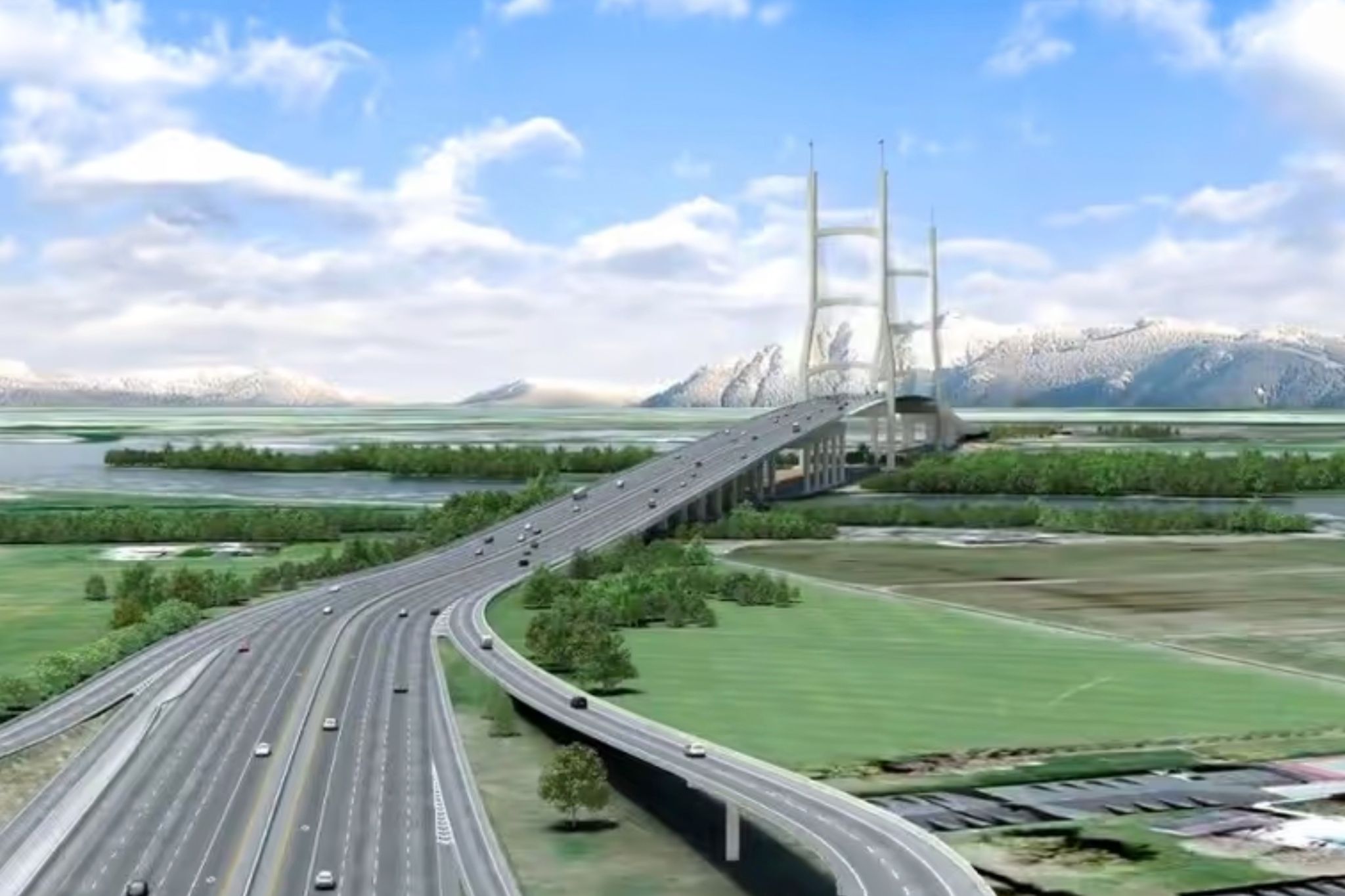
Capital allocation in major transport corridors requires exceptional discipline. Yet electoral politics routinely treats civil engineering as disposable collateral. The pledge by the Conservative Party of British Columbia to cancel an eight-lane immersed tunnel demonstrates how repeated policy resets undermine infrastructure delivery. Conservative leader Lorne Doerkson framed the announcement around acute congestion on Highway 99, arguing that commuters and freight haulers connecting Richmond and Delta have faced unacceptable delays. The aging, seismically-deficient George Massey Tunnel unquestionably demands replacement. What remains unexamined is the fiscal friction that inevitably follows when an active procurement regime is aborted on the campaign trail.
The Cost of Reversal
Public ledgers rarely absorb abrupt engineering cancellations without sharp penalties. Under the BC NDP, the provincial government committed to an $8.5-billion capital outlay for an eight-lane immersed tunnel, backed by up to $3 billion from the Federal government. That program has already suffered operational turbulence, evidenced by the province's decision to fire a European contractor previously engaged on the new George Massey Tunnel. Seizing on that vulnerability, Doerkson proposes resurrecting the 10-lane George Massey Bridge project cancelled in 2017 shortly after the BC NDP formed government. The political arithmetic assumes that changing the physical asset class can bypass systemic project delivery failures.
Aborting an active procurement framework guarantees immediate administrative drag while existing crossing assets continue to degrade.
The engineering rationale for a bridge rests entirely on lane count. Ten lanes provide greater vehicular capacity than eight, offering theoretical relief for commercial freight operating along Highway 99. Surface construction also circumvents the underwater geotechnical hazards that complicated the tunnel tender. These structural points carry weight. What the proposal omits, however, is the cumulative institutional penalty incurred when complex works are abruptly restarted.
Procurement Realities
Contractual mechanics do not bend to political timelines. Tossing out an $8.5-billion blueprint does not simply restore the bridge initiative dropped in 2017 to its previous legal standing. Environmental certifications must be renewed, design parameters recalculated, and inter-municipal accords renegotiated from scratch. This procedural reality suggests that any claimed schedule advantage will be swallowed by multi-year bureaucratic remobilization. Furthermore, up to $3 billion in federal funding commitments relies on verified project specifications, creating tangible exposure regarding whether external capital will survive a complete redesign. Scrapping current blueprints effectively writes off millions already expended on preliminary design.
Trade arteries along the Pacific-rim require certainty above all else. Highway 99 serves as a crucial freight corridor between Delta and Richmond, handling essential supply chain movements. When provincial leadership treats complex infrastructure as electoral leverage, logistics operators cannot model medium-term investments with confidence.
The real cost of infrastructure lies across its entire lifecycle, not in pre-election press statements. The existing George Massey Tunnel remains vulnerable to seismic disruption and severe traffic bottlenecks. Commuters and transport operators continue to pay the price for chronic corridor indecision. Swapping an $8.5-billion immersed tunnel for an older bridge blueprint presents an appearance of decisive action, but the institutional gridlock holding back Highway 99 remains entirely intact.
Sources
Newsletter
Pacific Daily
A curated briefing from Thailand, Asia-Pacific and the world.