High Technique, Lower Check: The Margin Logic Behind Osteria Da Su
A casual offshoot from the Michelin-starred Nae: um team tests whether hybrid Italian-Korean pasta can balance luxury culinary technique against everyday pricing.
SINGAPORE
Fine dining reputations rarely survive casual spin-offs intact, yet the economic arithmetic driving them has become irresistible across premier dining markets. In Oct 2026, the team behind Michelin-starred Nae: um launched Osteria Da Su, an Italian venture offering handmade pastas priced from S$22. The price point establishes an immediate operational challenge. It promises the pedigree of an elite dining room while competing directly against mid-market trattorias that operate on thinner overheads and simpler prep work.
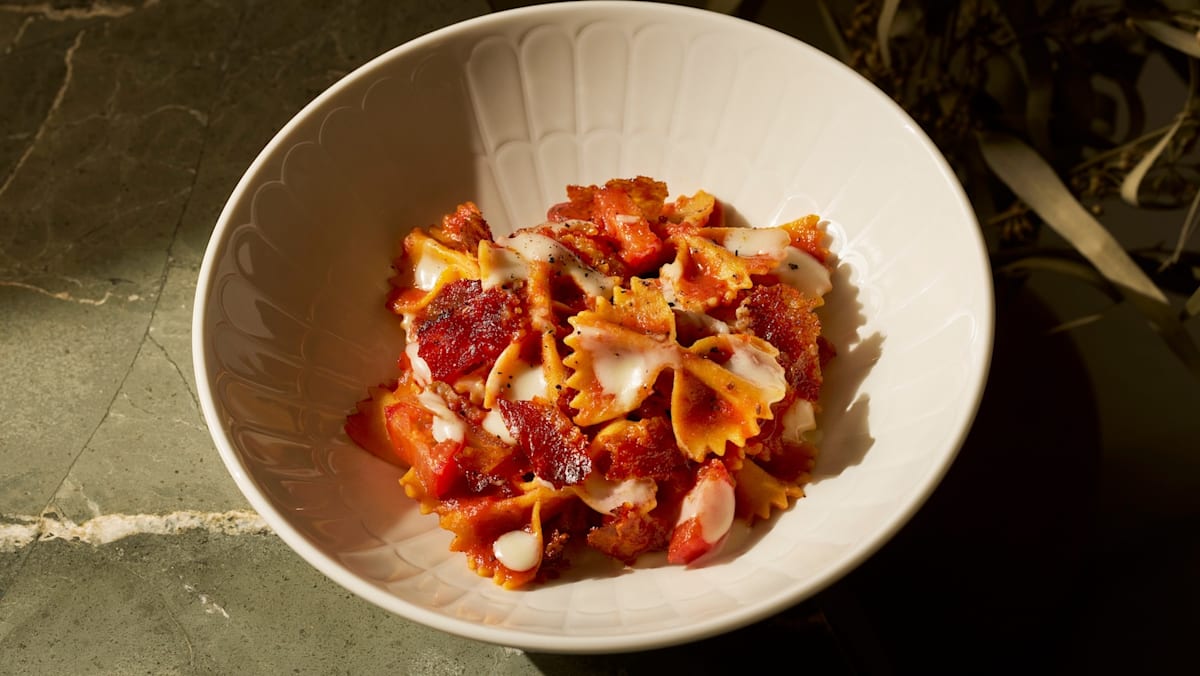
Behind the concept is Korean chef Park Su-ji, who spent a decade living and cooking in Italy, including time in Bergamo connected to Michelin-starred Da Vittorio. Her menu does not treat fusion as decorative novelty. Instead, the kitchen applies classic transalpine pasta craft to regional Korean flavour foundations. Farfalle all'Amatriciana pairs tomato, pepper, and pecorino cream with yangnyeom-glazed guanciale chips. Roman cacio e pepe incorporates toasted sesame seeds. Handmade tortelli arrives filled with galbi jjim, substituting slow-braised Korean short rib where an Italian cook would customarily turn to veal or pork farce.
The Labour Behind the Dough
Every stuffed pasta tells an unglamorous economic story before it ever reaches the pass. Fresh tortelli filled with braised short rib requires hours of butchery, reduction, sheet rolling, cutting, filling, and hand-pinching. In an omakase or tasting-menu setting where cover counts are capped and set formulas command hundreds of dollars, skilled kitchen hours can be absorbed cleanly by high baseline revenue. In an osteria format where individual pasta courses start at S$22, that prep-heavy craftsmanship demands exceptional volume simply to service payroll.
Pasta dough and braised fillings impose uncompromising kitchen hours that casual pricing cannot easily subsidise.
The casualisation of fine dining is not an isolated experiment. Across urban centres, hospitality operators face patrons scrutinising dining discretionary budgets. Diners increasingly balk at protracted tasting formats, steering demand toward casual counters that deliver top-tier technique without the ceremonial theatre. Offering S$22 pastas allows an ambitious operator to keep dining rooms full across weekday shifts, capturing weekday covers that white-tablecloth flagships routinely miss.
The Friction of Cross-Border Craft
Sceptics will question whether marrying Korean pantry staples to rigid Italian pasta forms risks alienating two distinct culinary orthodoxies at once. Traditionalists often view modifications to cacio e pepe or Amatriciana as unnecessary compromises. Meanwhile, diners seeking comfort food may question why a neighbourhood plate of farfalle carries the conceptual weight of seasoned guanciale glazes.
Park's technical training in Bergamo counters that criticism on the plate. Working with guanciale cured to traditional standards and combining it with yangnyeom demonstrates a kitchen manipulating fat and sugar with deliberate intent, rather than applying trendy toppings indiscriminately. The pecorino cream provides lactic acidity that cuts the sweetness of the glaze, mimicking the function that acidic wine or aged pecorino serves in classic central Italian cooking.
Yet technical execution cannot erase the fundamental structural tension of the business model. Hand-kneaded dough, specialised Korean braises, and artisan cured pork do not lower their raw input costs simply because the menu drops below S$30. If customer turnover slows, or if covers dip below threshold during off-peak hours, labor-intensive offerings begin eroding baseline operational margins. Osteria Da Su succeeds in demonstrating that decade-long classical discipline can make familiar Italian formulas feel newly focused. Whether high-technique casual outposts can sustain that intense kitchen labor without eventually creeping upward in price remains the lingering operational test.
Sources
Newsletter
Pacific Daily
A curated briefing from Thailand, Asia-Pacific and the world.