Themed Menus at Universal: A Technique of Recognition, Not Culinary Discovery
Universal Studios Hollywood's approach to food during Halloween Horror Nights suggests an industry focus on established intellectual property over gastronomic innovation, a trend with implications for the Asia-Pacific.
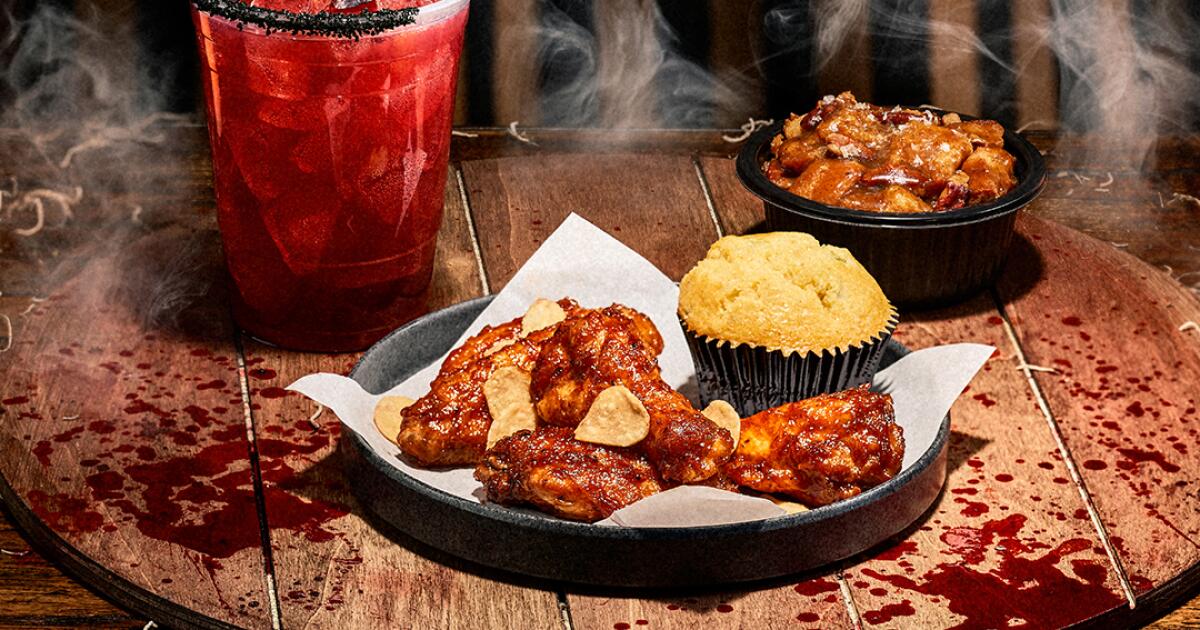
Universal Studios Hollywood offers a menu for its Halloween Horror Nights that draws from popular culture. Among these are items inspired by properties such as 'Stranger Things' and 'Hello Kitty'. For culinary assessment, the selections derived from the Oscar-winning film 'Sinners' are notable: 'The Juke juice', 'Pick Poor Robin Clean', and 'pecan and whiskey bread pudding'. This methodology suggests a strategy that prioritizes immediate consumer recognition over the development of novel culinary experiences.
The technique at play relies on pre-existing consumer affinity for intellectual property. The food items are designed to evoke the film or show, rather than to present as distinctive gastronomic creations on their own merit. The 'pecan and whiskey bread pudding', for example, aligns with a comfort food profile. Its connection to 'Sinners' functions as an external overlay, distinct from any intrinsic flavor narrative. Similarly, 'The Juke juice' and 'Pick Poor Robin Clean' are named to recall specific story elements. This method leverages established emotional connections, allowing the food to act as a thematic prop within an immersive environment, rather than serving as a primary culinary attraction.
Such themed menus, while effective for driving attendance to events like Halloween Horror Nights, inherently limit substantial culinary exploration. The requirement to align with a known brand often constrains choices regarding ingredients, preparation methods, and flavor profiles to those easily associated with the source material. A 'pecan and whiskey bread pudding' linked to a film provides a familiar taste, yet its innovation resides solely in its branding. The cost of sustaining this model is its reliance on intellectual property rights and marketing, rather than on the evolving skill of a culinary team. The menu thus becomes a branded extension, its success measured by its capacity to reinforce the entertainment property.
One might assert that this thematic alignment serves a particular purpose within an entertainment park, where food constitutes an ancillary element of a broader experience focused on spectacle. The objective is not to operate as a standalone restaurant, but to augment a seasonal event. However, even within this framework, the opportunity for more sophisticated thematic integration — where the food itself conveys a story through technique and taste, rather than merely through a name — remains largely unexamined. This current practice, while commercially sound for Universal Studios Hollywood, points to a wider trend in the Asia-Pacific region where food service within themed attractions frequently prioritizes licensing arrangements over distinct gastronomic identity. This strategy ensures immediate recognition but may forgo the deeper engagement that true culinary craftsmanship could offer. It leaves the primary constraint that the food remains secondary to the narrative it references, rather than becoming a narrative in its own right.
Sources
Newsletter
Pacific Daily
A curated briefing from Thailand, Asia-Pacific and the world.