Decoupling the Marina from the Water
Lucky Find Hospitality's planned desert development reflects how leisure capital strips functional maritime hardware to capture land-based real estate margins.
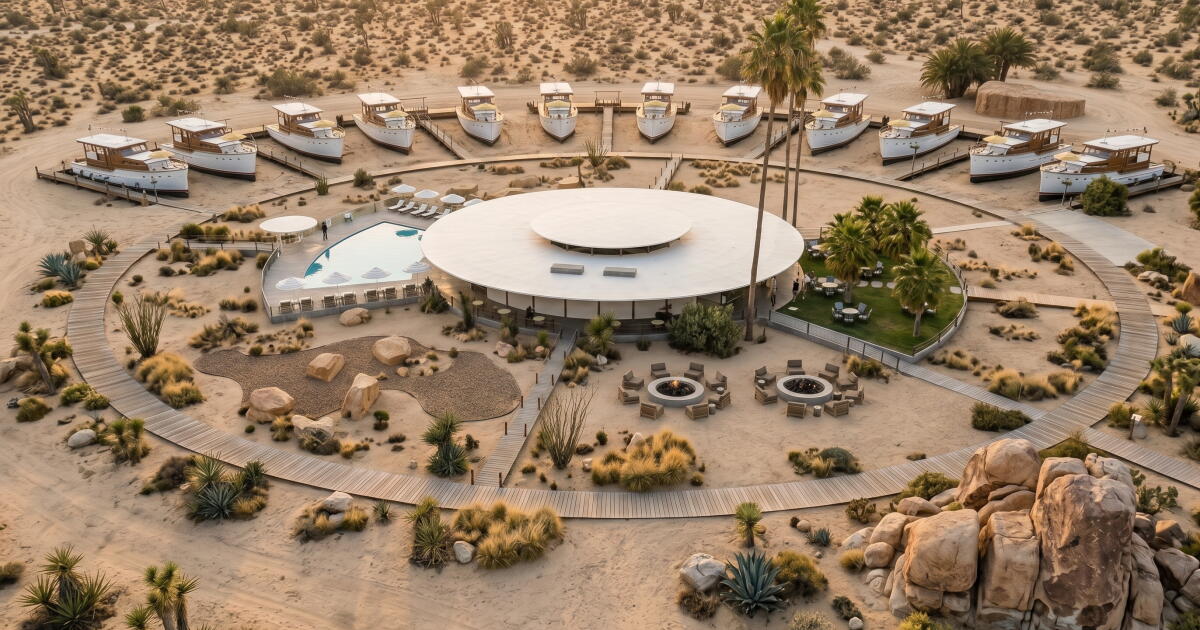
Boutique hospitality capital routinely seeks to sever high-value leisure signifiers from the expensive physical infrastructure required to operate them. When Lucky Find Hospitality confirmed plans to break ground on Compass Yacht Club in Joshua Tree, the commercial proposition hinged entirely on that dislocation. Rather than securing wet slips in congested coastal marinas, the boutique hotel development and management firm intends to anchor vessels directly into the desert floor. The planned installation relies on traditional nautical components, outfitting stationary boats with hulls, portholes, and slatted decks.
Marine recreation carries structural liabilities that compress development returns along Pacific coastlines. Coastal marinas require continuous capital outlays to counter saltwater degradation, dredging mandates, and strict littoral environmental permitting. Relocating maritime design into an arid basin eliminates those operating frictions at a stroke. As Nick Ovanessoff stated regarding the project layout: "You fall asleep in a yacht, wake up in the desert with a view of the mountains, and you’re a few minutes from one of the most beautiful national parks in the country."
The Economics of Displaced Infrastructure
Transferring an aquatic typology to dry ground represents an exercise in regulatory and cost arbitrage. Real estate developers confronting land shortages and regulatory barriers near shorelines have learned to commodify the atmosphere of marine leisure without floating a single hull. Operating stationary hulls on dry acreage eliminates dockage expenses, maritime liability coverage, and vessel seaworthiness inspections. The physical shell functions solely as an unconventional guest room, allowing an operator to command elevated experiential lodging tariffs while maintaining the lower overhead profile of an inland lodge.
This structural pivot mirrors broader real estate strategies that prioritize novelty over functional utility. Land acquisitions in desert interiors carry lower baseline acquisition costs than prime shoreline waterfronts. By using nautical silhouettes to create visual incongruity, hospitality sponsors can capture distinct consumer visibility without paying coastal location premiums. Capital follows the lower friction pathway, bypassing marine authorities entirely to deal with standard municipal land regulators.
Skeptics can reasonably argue that hospitality formats built entirely on geographic absurdity face severe depreciation cycles. The novelty of lodging inside a drydocked boat inevitably wanes after early promotional cycles run their course. Unlike authentic harbor facilities that retain perpetual utility through water access, stationary theme accommodations depend heavily on temporary aesthetic curiosity. Desert environments also introduce specific operating burdens, as extreme heat cycles and blowing dust rapidly weather exterior wood and structural hulls designed for aquatic immersion.
Shifting Capital Allocations
Commercial durability will depend on whether operators can convert visual oddity into steady repeat bookings. Experiential hospitality developers increasingly discover that unusual architecture alone cannot substitute for regional connectivity and core service delivery. When the primary draw is the visual contradiction between a maritime deck and a mountain horizon, retention curves tend to flatten once the initial wave of visitors moves toward newer oddities. The asset must eventually perform as conventional lodging, measured by occupancy stability and ongoing repair costs rather than design commentary.
According to the development firm, construction remains less than a year away from breaking ground. The critical test for this asset model will arrive after the physical installation is complete. Success depends not on engineering hulls to sit stably in inland dust, but on whether consumer spending will sustain high room rates once the incongruity becomes familiar.
Sources
Newsletter
Pacific Daily
A curated briefing from Thailand, Asia-Pacific and the world.