Bangkok Flooding Exposes Unresolved Structural Weaknesses
Persistent rainfall in 2026 revealed how urban planning deficits and drainage system limitations continue to undermine Thailand's flood defenses, despite lessons from 2011.
BANGKOK
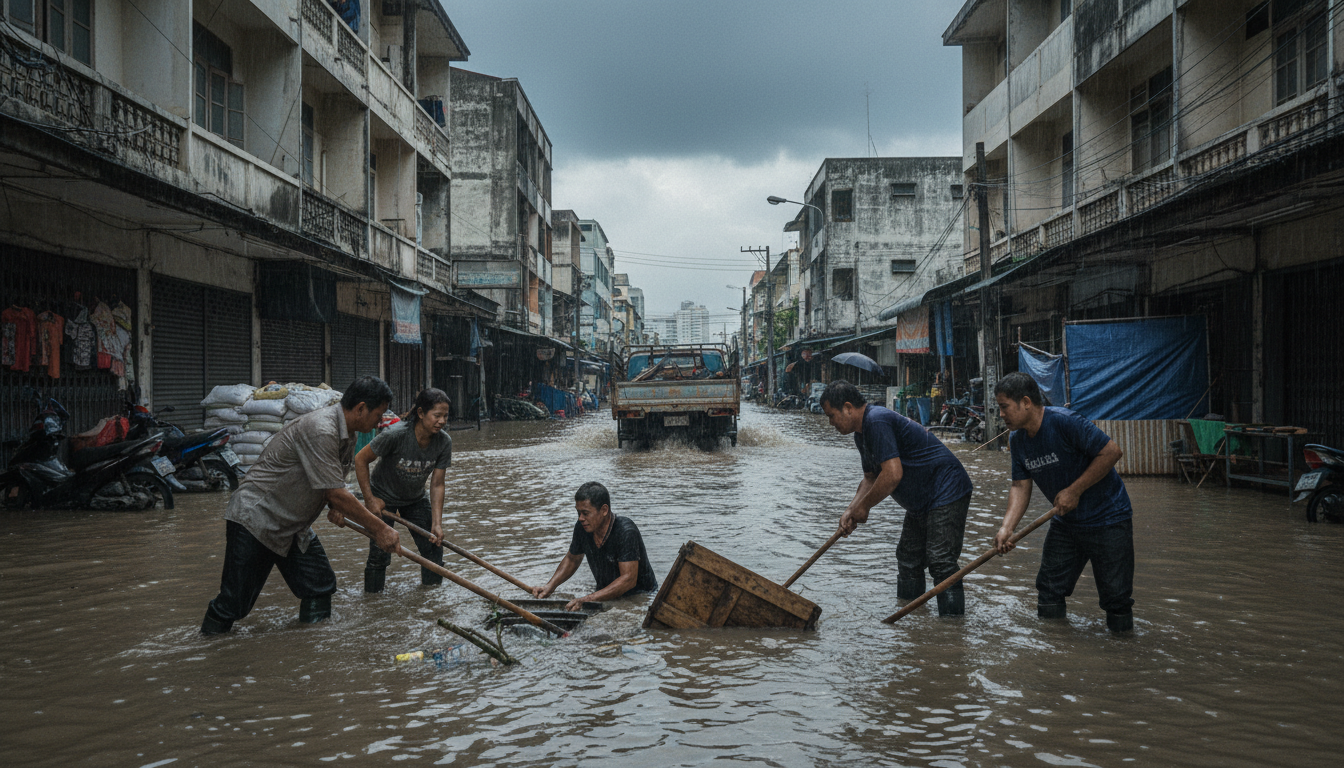
Persistent extreme rainfall in 2026 overwhelmed Bangkok's drainage infrastructure, forcing thousands to leave their homes, despite Thailand’s efforts to strengthen flood defenses since the catastrophic 2011 disaster. Experts suggest that weaknesses in drainage, urban planning, and water management remain unresolved. The city's vulnerability became evident as residents like those in Lat Krabang navigated floodwaters in October 2026.
While the 2011 floods prompted significant investment in protective measures, these recent events indicate that structural issues persist. The underlying problem is not merely the volume of rain, which was extreme, but the capacity of the existing systems to manage it within an expanding urban footprint. The critical question becomes what fundamental aspects of Bangkok's development and governance are failing to adapt.
Historically, flood control has often focused on large-scale infrastructure projects. While these are necessary, the current situation highlights that micro-level urban planning and local drainage capacity are equally crucial. The rapid expansion of concrete surfaces, for instance, reduces natural water absorption, directing more water into a drainage network that was not designed for such demands. This suggests a failure to integrate long-term urban development strategies with comprehensive water management plans.
Decisions regarding urban expansion and infrastructure upgrades are distributed across various authorities. This fragmentation of responsibility can impede a unified, effective response to a complex problem like urban flooding. Without a coordinated approach that enforces building codes, manages land use, and mandates drainage improvements at every stage of urban development, individual projects, however well-intentioned, will struggle to deliver systemic resilience.
Some might argue that extreme weather events are inherently unpredictable and overwhelming, making any defense insufficient. However, the consistent identification of urban planning and drainage as core issues by experts implies that the problem is not solely climatic. Rather, it points to a gap between the understood requirements for urban resilience and the implementation of policies to achieve it. The fact that the same weaknesses are cited years after a major disaster indicates that the lessons from 2011 have not fully translated into preventative structural change across all relevant domains.
The challenge for Thailand is therefore less about simply adding more defenses, and more about who holds the authority to enforce integrated urban development and water management policies. Until a cohesive decision-making framework can address urban planning in conjunction with drainage and water management, Bangkok’s exposure to persistent flooding will remain. The outcome depends on whether the political will aligns with the technical understanding of what constitutes genuine urban resilience.
Sources
Newsletter
Pacific Daily
A curated briefing from Thailand, Asia-Pacific and the world.