Apple's HomeView Entry Into Smart Home Market Shifts Competitive Dynamics
The introduction of the Apple HomeView and AI-upgraded Siri signals a recalibration of market share in connected living, challenging established players while raising questions about regional access.
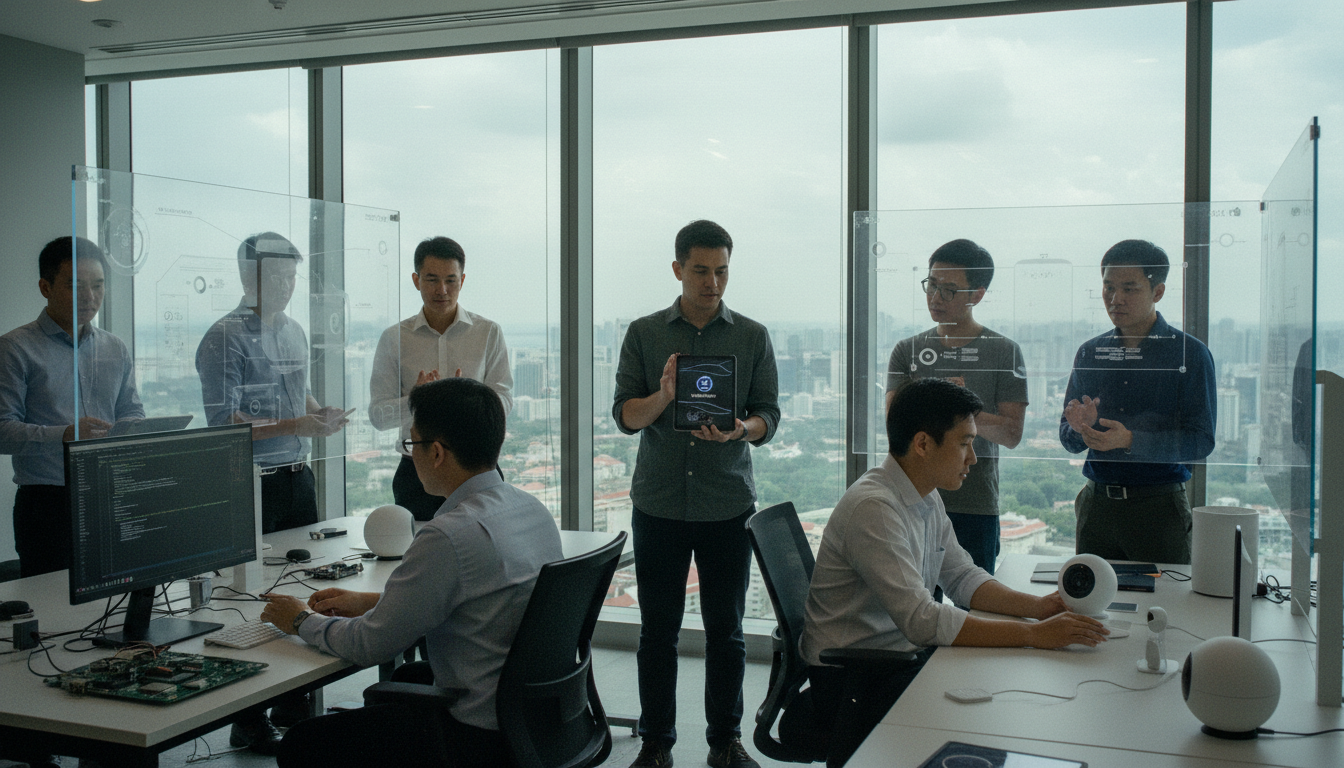
SINGAPORE
The launch of Apple HomeView, an iPad-like device designed for home installation, represents a direct challenge to the established dominance of Amazon and Google in the smart home sector. Unveiled on October 13, 2026, in New York City, United States, this device is explicitly positioned to integrate an AI-upgraded Siri virtual assistant, underscoring a strategic pivot by Apple into an increasingly competitive space.
Historically, Apple has maintained a strong ecosystem around its mobile and computing devices. The smart home market, however, has seen Amazon and Google achieve significant penetration with their voice assistants and connected hardware. The HomeView, which will retail for USD 299 and includes a next-generation HomePod mini with Siri AI support, aims to close a perceived gap in Apple’s ecosystem. This entry suggests an intent to capture a share of the market that has largely favored its rivals.
Apple's approach, described as “boring on purpose” by one observer, indicates a focus on seamless integration and reliability rather than novel features. This strategy reflects an understanding that home devices prioritize utility and consistency over unproven technologies. The personalized Siri capabilities could enhance user engagement by offering a more tailored experience, potentially differentiating it from existing generic voice assistants.
For the Asia-Pacific region, the immediate implications are less about local competition and more about the evolving landscape of global technology access. While the initial launch occurred in the United States, the ripple effects of such a significant market entry will eventually reach Asia. The broader adoption of smart home technology in markets like Thailand depends heavily on device availability, pricing strategies tailored to local economies, and infrastructure readiness. The existing market for smart devices across the region is diverse, with varying levels of integration and consumer awareness.
Access and Market Realities
The pricing of the Apple HomeView at USD 299, while competitive in Western markets, may present a barrier for broader adoption in parts of Asia-Pacific where disposable incomes differ. This cost, alongside the requirement for compatible home infrastructure and stable internet connectivity, means that initial uptake might be concentrated in urban, higher-income segments. The market for smart home devices in Southeast Asia, for instance, remains nascent compared to North America or parts of Europe.
Furthermore, the success of a personalized AI assistant like Siri hinges on its ability to understand and process diverse languages and cultural nuances. While Apple has made strides in AI development, the depth of its localization for the myriad languages spoken across the Asia-Pacific region will be a critical factor in its eventual market penetration beyond initial enthusiast segments. Without deep linguistic and cultural integration, the promise of a truly personalized experience diminishes for a significant portion of the regional population. The competitive pressure on Amazon and Google, which have already invested in regional language support, is likely to intensify, potentially accelerating improvements across the industry. The ultimate outcome hinges on more than the product's technical specifications; it will depend on strategic pricing, robust localization, and the ability to navigate existing market preferences and infrastructure limitations.
Sources
Newsletter
Pacific Daily
A curated briefing from Thailand, Asia-Pacific and the world.