Administrative Paralysis and Oversight Vulnerability Across the Pacific Perimeter
Hawaiʻi’s regulatory stalemate demonstrates the limits of judicial intervention when supervisory bodies fracture during an election year
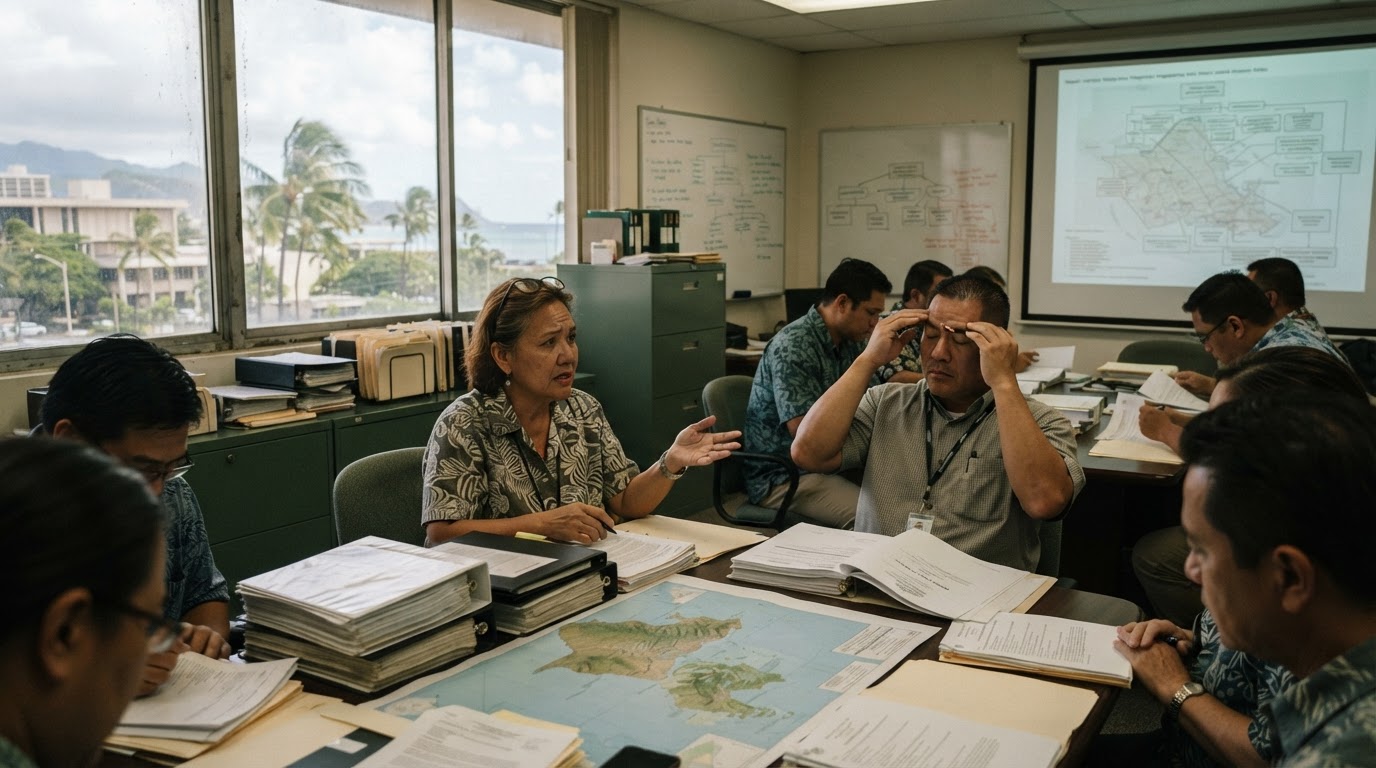
Institutional oversight requires administrative cohesion before statutory authority can function effectively. In Hawaiʻi, the commission responsible for supervising elections has not convened since June 10. That four-month hiatus, occurring during an active election year, has now prompted legal action before the state Supreme Court, which hears arguments in a lawsuit Friday. What has broken down is not statutory text, but the basic institutional capability to govern. When supervisory mechanisms stall, administrative decisions proceed without the formal democratic checks established by law.
Internal discord concerning the selection of a commission chair initiated the current impasse. This dispute was compounded by ongoing friction between the oversight panel and the Office of Elections, the operational agency it is charged with supervising. Regulatory architecture operates on the expectation that appointed bodies resolve administrative questions internally through consensus or majority vote. Prolonged administrative deadlock suspends routine statutory supervision. Consequently, administrative decisions proceed without civilian review at the precise moment public scrutiny intensifies across the jurisdiction.
Procedural clarity is essential to maintaining institutional stability in isolated jurisdictions. For months, the Office of Elections has contended with disputes over ballot tiebreakers. Technical procedures of this nature require explicit supervisory guidance rather than administrative isolation. Deprived of regular meetings, operational personnel must interpret policy without the buffer of an independent oversight body. As a watchdog body ceases to function, unresolved friction shifts outward, turning technical administration into protracted political conflict.
The Limits of Judicial Remedy
Turning to the judiciary reflects a structural breakdown within executive administration. Courts possess the authority to interpret statutory mandates and enforce procedural schedules upon public bodies. They cannot generate consensus among divided commissioners or substitute for ongoing regulatory oversight. Adversarial litigation transfers administrative problems into the judicial system, consuming time while electoral deadlines approach. A courtroom setting formalizes disagreements rather than resolving the managerial dysfunction that created them.
As a watchdog body ceases to function, unresolved friction shifts outward, turning technical administration into protracted political conflict.
Some legal observers counter that judicial intervention is the appropriate constitutional remedy when an administrative body reaches paralysis. In this view, legal directives compel recalcitrant officials to resume their statutory duties and enforce accountability. Yet judicial orders remain inherently reactive instruments that rarely heal divided institutions. Mandating attendance can command a meeting to occur, but it cannot repair the underlying dysfunction that caused the deadlock. Compelled compliance does not automatically generate administrative efficacy.
Institutional Fragility in Island Governance
The procedural paralysis in Honolulu holds broader significance for governance across the Pacific Rim. Archipelagic systems throughout the region depend heavily on delicate balances between administrative civil services and independent supervisory commissions. Observers across dispersed island communities recognize the shared vulnerabilities illustrated by this episode. Maritime geography requires uninterrupted administrative reliability to maintain public confidence across remote communities. Operational resilience requires reliable administrative processes that can absorb political stress without collapsing into litigation.
Physical shocks already test regional infrastructure, as evidenced when a 6.0 magnitude earthquake was detected off the Hawaiʻi coast in May. Environmental exposure demands that governing bodies maintain rigorous administrative coherence under external strain. Combining bureaucratic paralysis with geographical isolation intensifies administrative vulnerability. An elections agency managing contested procedures without active supervisory review risks eroding the institutional credibility essential to stable governance in an island environment.
Judicial directives cannot manufacture administrative capability where institutional willingness has dissolved. Even if the state Supreme Court orders the commission to convene, the operational friction between the oversight panel and the Office of Elections persists. Resolving statutory litigation does not automatically restore working relationships between supervisors and operational staff. Lasting regulatory reliability depends not on judicial mandates, but on an institution's capacity to maintain basic administrative discipline without external rescue.
Sources
Newsletter
Pacific Daily
A curated briefing from Thailand, Asia-Pacific and the world.