Historic Hawaiian Texts: A Structural Shift in Pacific Power Dynamics
The translation of an ancient court historian’s account clarifies whose narratives define regional history, and whose voices remain unheard.
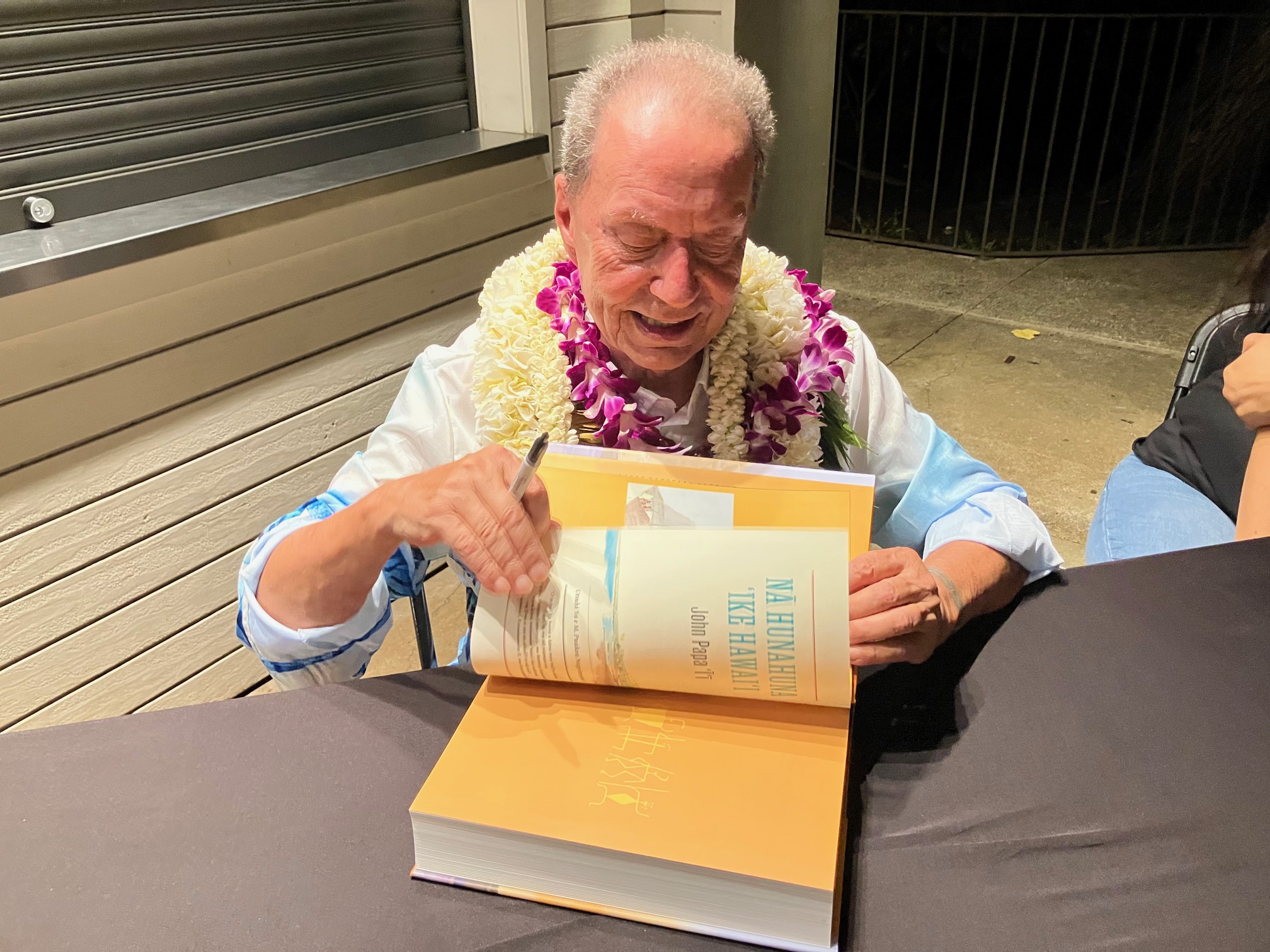
The translation of an epic account by a Hawaiian historian, completed by Puakea Nogelmeier and reported by Honolulu Civil Beat on August 28, 2026, represents more than a cultural achievement. It marks a structural shift in how power narratives are constructed and disseminated across the Pacific. This newly accessible record, penned by an individual who grew up within King Kamehameha’s household, offers an unfiltered, primary document perspective on a pivotal historical period.
For too long, regional histories, particularly in the Asia-Pacific, have been disproportionately influenced by external interpretations or by narratives focused on the interactions with external powers. This translation challenges that framework by providing direct access to an internal account. It allows for an understanding of Hawaiian sovereignty and political structures from an indigenous viewpoint, rather than through the lens of colonial or post-colonial analysis. The explicit detail of 'splendor' and 'brutality' within Kamehameha’s court, as highlighted by Kirstin Downey, suggests a complex internal dynamic that standard historical texts often oversimplify or omit.
The implications for Thailand and the broader Asia-Pacific region are significant. In an era where historical claims and cultural legacies are increasingly scrutinized, the direct engagement with primary indigenous sources becomes critical. It underscores the ongoing struggle to reclaim and reinterpret histories that have been marginalized or reframed by dominant narratives. This effort mirrors similar movements across Southeast Asia, where local scholars and communities are working to unearth and re-evaluate their own foundational texts and oral traditions. The question now becomes: whose historical accounts will shape future regional discourse, and whose will be prioritized in educational curricula and policy formation?
One might argue that a single historical translation, however significant, cannot fundamentally alter entrenched geopolitical or cultural power structures. It is true that the immediate impact on state-level policy in the Asia-Pacific may not be evident. However, the accessibility of such a text empowers academic and cultural institutions within indigenous communities and among regional scholars to construct alternative historical frameworks. This shifts the decision-making power regarding historical interpretation from external experts to those with direct cultural or lineal ties to the subject matter. The act of translation itself is a political one, determining what knowledge is preserved, what is promoted, and what ultimately shapes collective memory.
The challenge remains for these newly accessible narratives to gain wider acceptance and integration into mainstream historical discourse. Without broader institutional support for indigenous scholarship and translation efforts, such vital works risk remaining niche, rather than becoming foundational. The ultimate outcome hinges on whether these historical insights can translate into a more equitable distribution of narrative authority across the Pacific.
Sources
Newsletter
Pacific Daily
A curated briefing from Thailand, Asia-Pacific and the world.