New Zealand's Record Emissions Point to Unresolved Capital Challenges
Persistent increases in atmospheric greenhouse gases in New Zealand underscore a global discrepancy between climate commitments and economic realities, impacting the broader Asia-Pacific region.
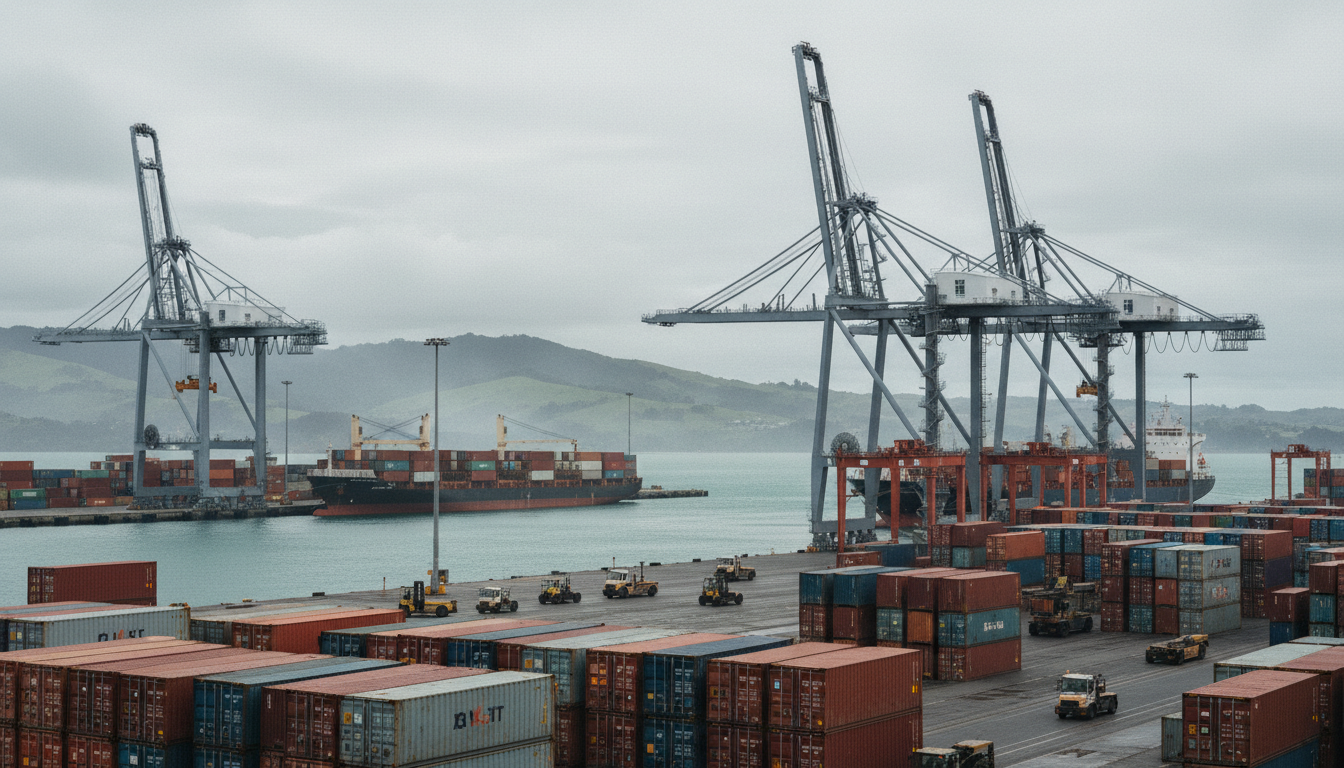
New data from New Zealand indicates atmospheric greenhouse gas concentrations reached new record levels in 2025. Carbon dioxide concentrations, specifically, climbed to 423.1 parts per million (ppm), marking a 30 percent rise since monitoring began in 1972 at Baring Head in Wellington. This increase coincides with warmer annual temperatures and a higher proportion of rainfall occurring during extreme weather events across the country.
While New Zealand’s greenhouse gas data contributes to an international network of climate monitoring, the sustained increase in emissions at a national level presents a challenge that extends beyond its borders. The broader Asia-Pacific region faces similar pressures, where economic development often intersects with, and sometimes exacerbates, environmental concerns. The pattern observed in New Zealand suggests that even nations with a strong international reputation for environmental stewardship struggle to decouple economic activity from emission growth.
The Capital Challenge of Decarbonization
Commitment to reduce emissions often encounters resistance when confronted with the capital plans of dominant economic sectors. In 2021, emissions from New Zealand's dairy farms, a significant economic driver, reached record levels. While a subsequent year, 2023, saw overall emissions fall, this was attributed to record rainfall, a factor outside of policy intervention or structural change. Such instances illustrate a fundamental tension: temporary reductions linked to weather patterns do not resolve the underlying systemic drivers of emissions.
The historical context further clarifies this. The last decade, ending in 2019, was recorded as the warmest ever, with 2019 itself ranking as the second warmest year. Prior to this, 2011 was described as having 'rewritten the record books' for environmental impacts. These global trends provide a backdrop for New Zealand’s local data, indicating that the problem is pervasive rather than isolated. For the Asia-Pacific, where agricultural economies are often central and industrialization continues, the New Zealand experience serves as a cautionary indicator. Policies aimed at emissions reductions must contend with existing capital infrastructure and vested economic interests.
The persistent rise in greenhouse gas levels in New Zealand, despite reported efforts and international awareness, suggests that the mechanisms in place are not sufficient to alter the emissions trajectory. This situation calls for closer scrutiny of how climate policy integrates with, or diverges from, national economic strategies and investment decisions. Without a direct alignment that addresses the capital required for decarbonization, the gap between climate commitments and actual atmospheric concentrations will likely continue to widen across the region.
Sources
Newsletter
Pacific Daily
A curated briefing from Thailand, Asia-Pacific and the world.