Biodiversity Corridors: Shifting the Economics of Conservation in Asia-Pacific
A study from Vietnam challenges established notions of conservation finance, suggesting a path for broader application.
SINGAPORE
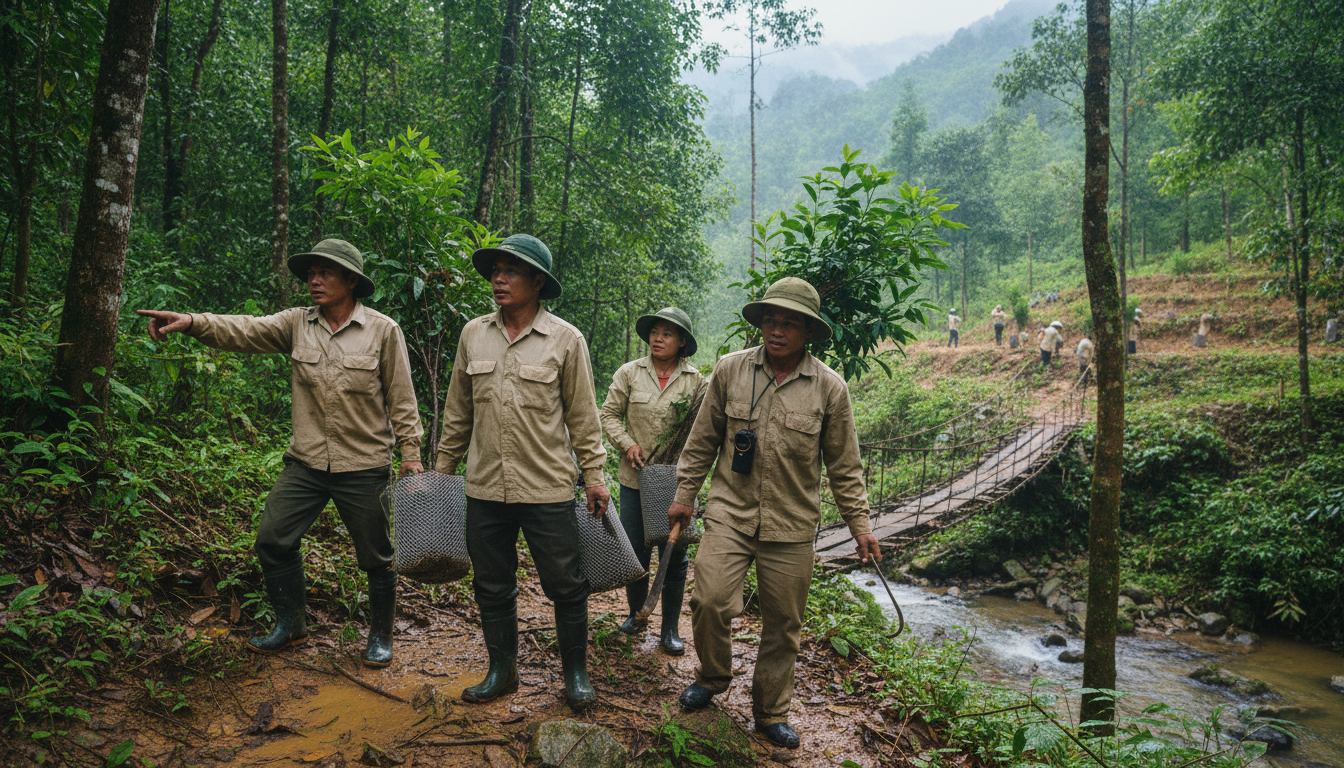
A study from Vietnam’s Annamite mountains indicates a potential shift in how conservation efforts might intersect with local economies. Historically, the establishment of protected areas often creates financial tradeoffs for resident households, impacting their access to resources. This new research suggests biodiversity corridors can generate economic benefits for these communities. The study, reported by Mongabay Asia on September 14, 2026, analyzed interviews with 120 families across four villages in Quang Nam and Thua Thien provinces. The core finding challenges the assumption that conservation inherently imposes an economic burden on local populations.
Conservationists have long advocated for connecting existing protected areas through biodiversity corridors to prevent species and habitat loss. However, new designations have often faced controversy due to perceived financial costs for local households. The Vietnam study offers an alternative perspective, where such corridors contribute positively to household incomes. This finding, if broadly applicable, could alter the power dynamics surrounding conservation, potentially shifting decision-making from a top-down mandate to a more locally-incentivized process. The structural question this raises for the Asia-Pacific region is significant.
The broader Asia-Pacific region faces substantial financial gaps in climate funding, as flagged by a UN report in 2026. The economic implications of biodiversity loss are also a recognized concern for the region, as discussed by The Diplomat in 2026. These reports, alongside an Asian Development Bank (ADB) statement in 2025 emphasizing investment in nature for future prosperity, highlight the need for innovative approaches to conservation finance. Discussions among over 40 countries at an Asia-Pacific dialogue in 2025, facilitated by the United Nations Development Programme (UNDP), further underscore this search for financial innovations. The Food and Agriculture Organization (FAO) has also supported efforts to strengthen primary forest reporting in the region, as noted in May 2026.
However, the exact mechanisms generating these reported economic benefits in Vietnam require closer scrutiny for broader application. The study as presented does not detail the nature of these benefits or the specific interventions that led to them. Without this granular understanding, applying the ‘biodiversity corridor’ model as a universal economic solution would be premature. The outcome for conservation finance and implementation across the wider Asia-Pacific will depend on whether this specific Vietnamese experience can be systematically disaggregated, understood, and adapted to diverse national and local frameworks. The structural question is not merely whether corridors can be beneficial, but precisely how the economic benefits were structured within the Vietnamese context and if those specific mechanisms are transferable to Thailand and other regional economies.
Sources
Newsletter
Pacific Daily
A curated briefing from Thailand, Asia-Pacific and the world.