US Military Access to Northern Mariana Islands Reflects Broader Pacific Recalibration
The United States military’s pursuit of greater access to Northern Mariana Islands’ infrastructure, coinciding with a significant federal assistance request, underscores evolving strategic priorities in the Western Pacific and potential regional implications.
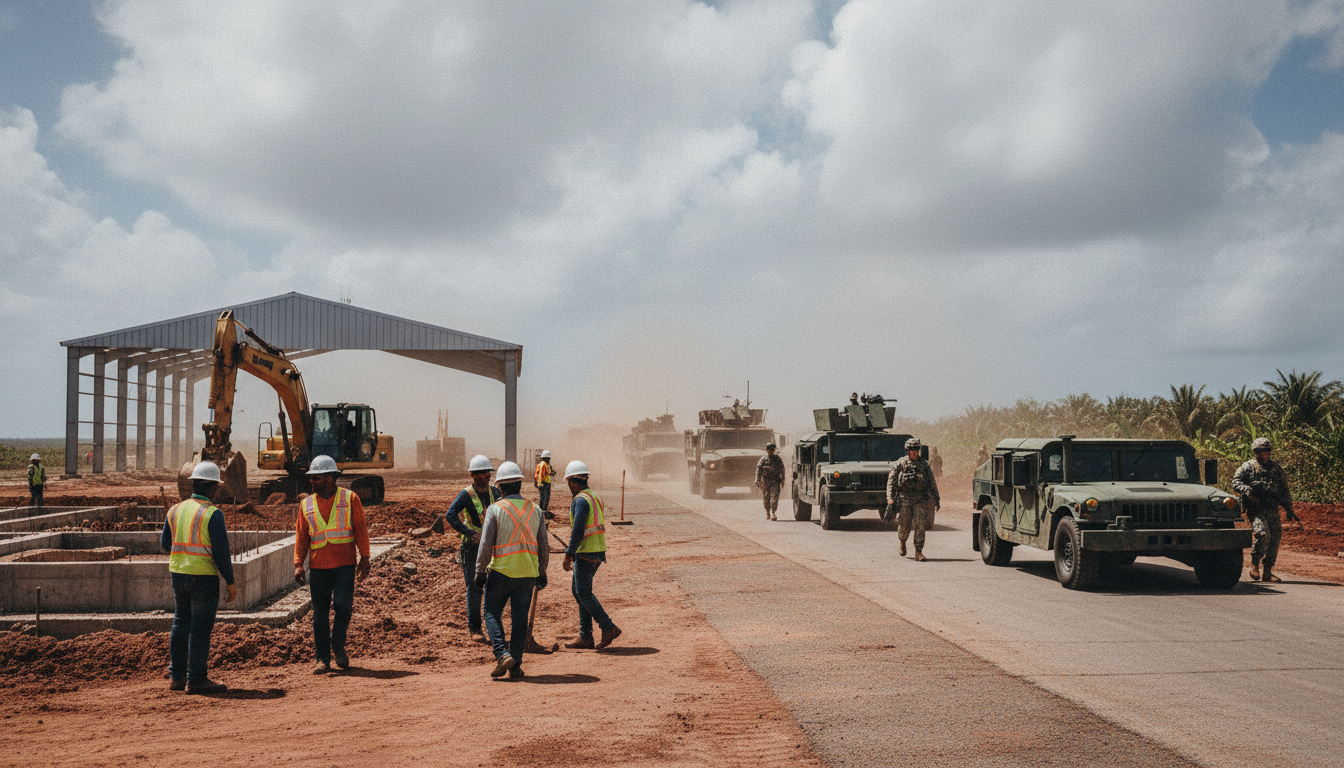
A US$12.5 billion federal assistance request from the Northern Mariana Islands now frames the United States military’s bid for expanded access to the territory’s ports, airports, and other facilities. This overt connection between infrastructure funding and military access, articulated by Edward Camacho, special assistant to the governor for the Commonwealth Bureau of Military Affairs, suggests a deliberate strategy. Camacho noted the military already shares much of the territory's civilian infrastructure, including airports, seaports, power, and water, indicating an existing precedent for co-usage.
This development extends beyond a localized agreement for infrastructure sharing. It highlights a consistent pattern of the United States consolidating its strategic footprint across the Pacific. While the immediate focus is on Northern Mariana, the broader context involves a more profound recalibration of military logistics and presence throughout the Western Pacific. Demands for access in one territory often signal a review of existing arrangements in others. This could influence dynamics from Guam to Japan and South Korea, where the United States maintains significant military installations. The need for upgraded infrastructure, such as dredged channels and repaired seaports and airports, suggests a long-term vision for naval and air mobility, which carries distinct implications for regional stability and trade routes.
The scale of the federal assistance requested, exceeding US$12.5 billion, reveals the substantial investment required to modernize infrastructure to dual-use standards. Camacho explained that military access could facilitate the necessary improvements, stating, "So it's really access through the waters, through our channels. And obviously they're going to have to help us dredge that if we need to dredge them, fix our seaports, fix our airports so they can have access." This suggests a transactional relationship, where military strategic needs are met in exchange for, or in parallel with, economic development that benefits the local population. However, the exact mechanisms for how this substantial federal assistance would be disbursed and managed, particularly concerning civilian versus military oversight, remain to be fully delineated. The potential for such large-scale projects to transform local economies and environments in the Northern Mariana Islands is considerable, yet a focus on military utility could prioritize strategic objectives over community-driven development priorities.
From a regional perspective, the increased emphasis on capabilities in the Northern Mariana Islands could redistribute military assets and operational tempo across the Asia-Pacific. While this move aims to enhance American military responsiveness, it also introduces a new layer of complexity for regional actors, including Thailand. Thailand, balancing relationships with major global powers, observes such developments for their long-term security and economic implications. Any significant shift in military logistics or presence in the Pacific Rim affects maritime trade, regional security dialogues, and the broader geopolitical equilibrium. The current request in the Northern Mariana Islands, therefore, represents not just a local infrastructure discussion, but a continued redefinition of strategic access in a critical global region, creating an unresolved tension for regional planning.
Sources
Newsletter
Pacific Daily
A curated briefing from Thailand, Asia-Pacific and the world.