US Arms Sale to UAE Shifts Regional Security Calculus
The approval of a US$1 billion precision rocket guidance system sale to the United Arab Emirates prompts questions about defence alignments and potential resource reallocation in the Asia-Pacific.
SINGAPORE
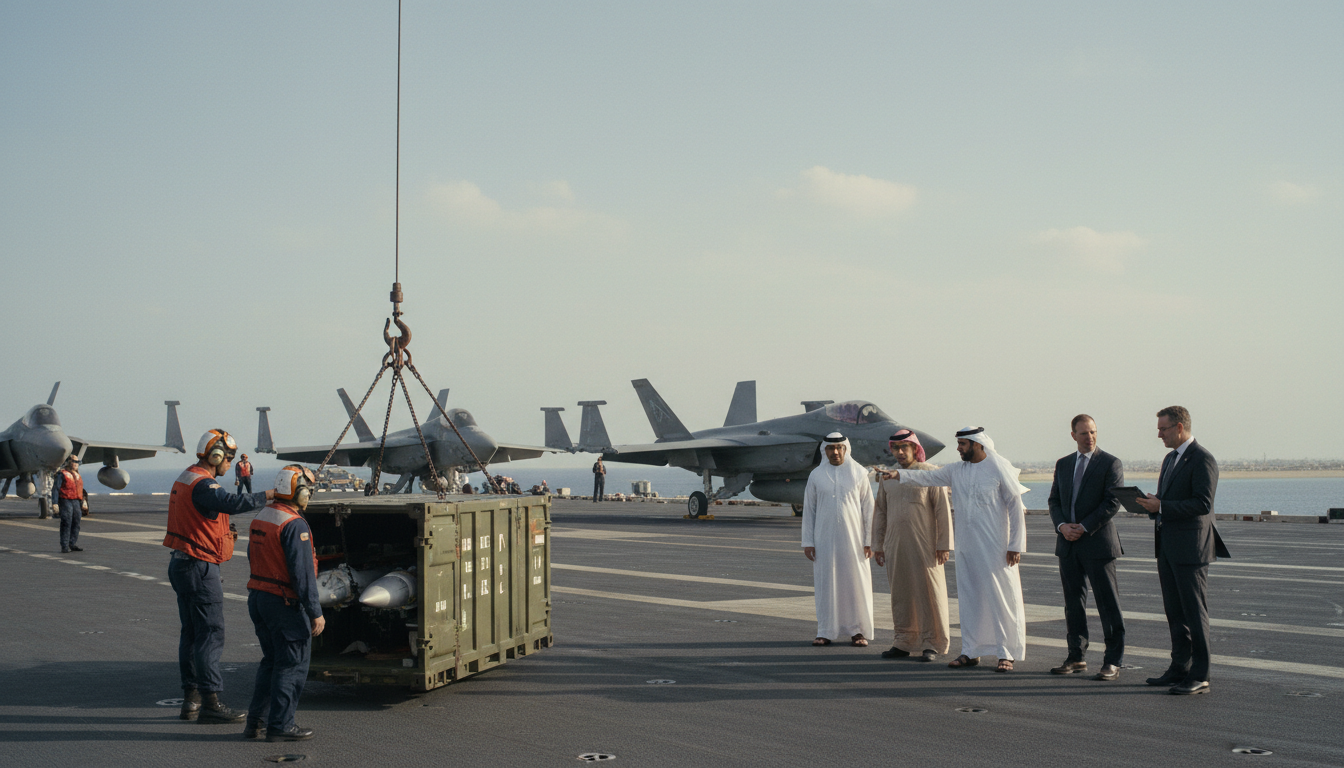
The United States recently approved a US$1 billion sale of advanced precision rocket guidance sections to the United Arab Emirates. This transaction, confirmed on October 5, 2026, involves up to 10,000 Advanced Precision Kill Weapon System guidance sections. The stated purpose is to strengthen a key defence partner and advance US national security interests.
Such a significant arms transfer to a Middle Eastern nation suggests a shifting dynamic in global defence priorities. For the United States, this could represent a strategic decision to fortify allies in a region often seen through the lens of oil security and geopolitical stability. The emphasis on "precision kill weapon systems" highlights a focus on advanced, targeted capabilities rather than broad-spectrum armament.
This development, while geographically distant, has potential implications for the Asia-Pacific, including Thailand. Nations in the Asia-Pacific routinely evaluate their defence postures and procurement strategies in response to global and regional power shifts. An increased emphasis on strengthening partners in one theatre may lead to re-evaluations of resource allocation or strategic commitments in others. Thailand's cabinet, for example, approved US$37.5 billion in borrowing for its 2027 fiscal year on September 29, 2026, indicating significant ongoing national financial commitments. The context of such defence spending decisions is influenced by the perceived stability and security guarantees across various geopolitical axes.
The sale also raises questions about the long-term impact on regional arms races. While the UAE's stated intent is improved capability to meet current and future threats, the introduction of advanced weaponry often prompts neighbouring states to seek similar upgrades. This pattern, observed globally, can lead to cycles of military expenditure, potentially diverting funds from other critical sectors such as infrastructure or social programs. India’s approval of a US$19 billion renewable energy programme on September 30, 2026, contrasts with military spending, showcasing alternative national investment priorities.
Some might argue that this arms sale simply reiterates existing partnerships and does not represent a new strategic direction. The US has long maintained defence ties with various nations, and providing advanced capabilities to allies is a consistent element of its foreign policy. From this perspective, the US$1 billion sale is merely a continuation of established security arrangements, designed to maintain regional balances and deter potential adversaries.
However, the precision and scale of the approved systems suggest more than routine maintenance of capability. This is not simply about sustaining a defence partner; it is about significantly enhancing their specific strike capabilities. The move might also reflect the US adapting its strategy to global security challenges, potentially re-emphasising certain alliances as part of a broader, interconnected defence framework. The cost of such systems, and their deployment, contributes to a global defence market where every major procurement by one nation can resonate far beyond its immediate borders.
The ultimate consequences for the Asia-Pacific remain unclear. Whether this sale signals a broader trend of advanced military technology proliferation or a focused bolstering of specific allies will shape future defence dialogues. The intersection of global arms flows with national economic planning, like Thailand's borrowing for its fiscal year, illustrates a persistent tension between perceived security needs and other development goals. This tension continues to define strategic choices in capital allocation. The long-term effects of this arms transfer on regional stability and national budgets will emerge over time.
Sources
Newsletter
Pacific Daily
A curated briefing from Thailand, Asia-Pacific and the world.