Long-Term Care Planning: Beyond Financial Protection in Asia-Pacific
While financial preparedness is a necessary component of long-term care for severe disability, the underlying structural challenges in care provision and decision-making remain largely unaddressed across the region.
SINGAPORE
The persistent framing of long-term care as primarily a financial planning exercise, evident in recent reporting, addresses only a partial dimension of a complex societal issue. Severe disability can bring years of caregiving needs and difficult decisions, extending beyond the accumulation of monetary resources. This focus on financial protection, as seen in Channel News Asia on October 9, 2026, suggests a structural gap in how Asia-Pacific nations, including Thailand, confront an aging demographic.
Discussions around long-term care frequently emphasize financial solutions. Livemint, for instance, highlighted retirement planning and life insurance in 2026, while The Business Times pointed to thinking beyond savings. These perspectives, while crucial for individual preparedness, do not fully address the practical demands or the human element involved. Financial capital can secure services, but it does not automatically create available caregivers or simplify the complex ethical and logistical decisions families must navigate. The absence of a robust care infrastructure means that the burden often shifts to individuals and their immediate families.
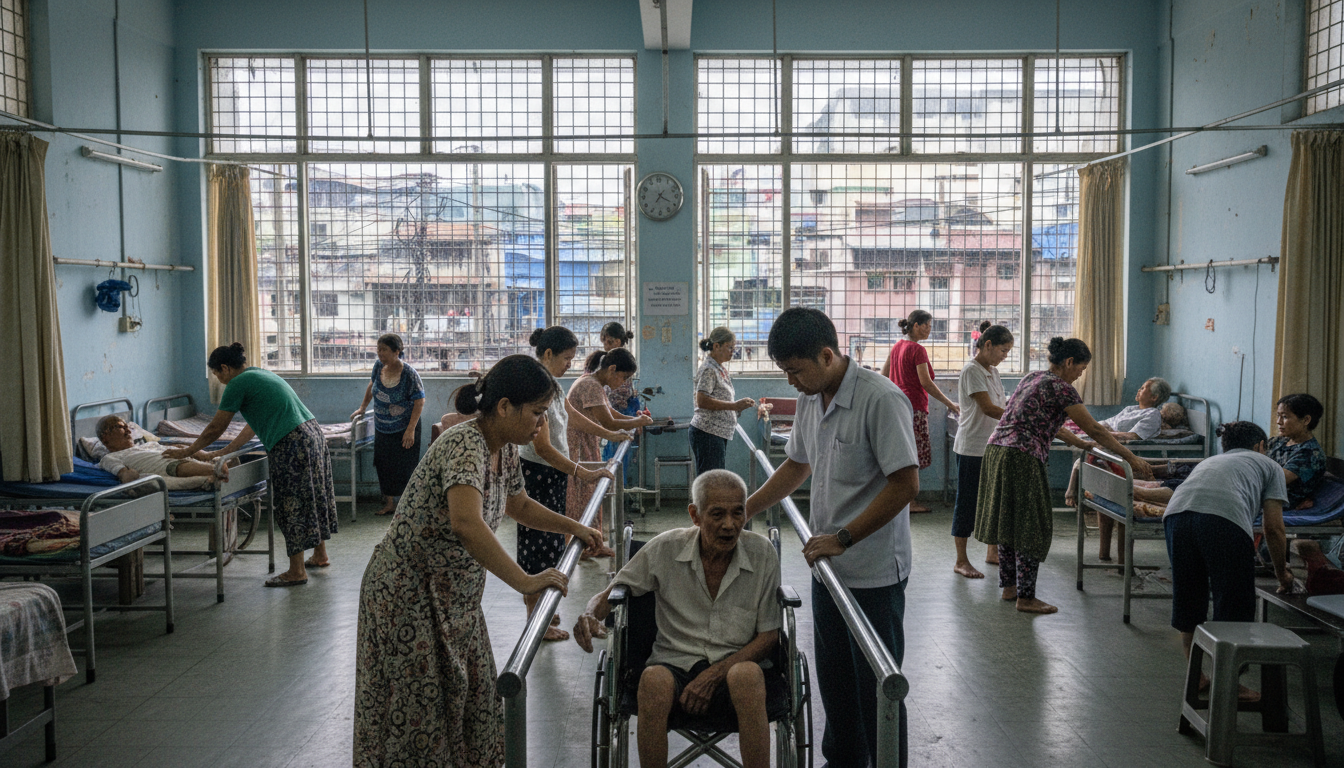
The challenge for families facing severe disability lies not just in funding care but in locating and managing a network of support, alongside the significant emotional toll. The concept of the “sandwich generation,” caught between supporting aging parents and their own children, underscores this pressure. Such individuals face compounded stress that financial provisions alone cannot alleviate. Even affluent families confront substantial logistical and emotional hurdles if adequate, accessible care systems, both formal and informal, are lacking. This structural deficit limits the efficacy of individual financial planning.
While financial preparedness offers a degree of protection, the core problem is the scarcity of integrated care solutions. Policy priorities in the region often center on economic development, leaving social welfare systems to lag behind demographic shifts, such as increasing longevity. Without a resilient public and private care infrastructure, the individual responsibility for critical decisions intensifies, irrespective of financial status. The fundamental question becomes not merely how families will pay, but who will provide the necessary care and how those profound care decisions will be made in the face of uncertainty.
The current emphasis on financial planning, while understandable, obscures these deeper structural issues. For Thailand and other Asia-Pacific nations, addressing long-term care effectively will demand more than individual financial diligence. It will necessitate a comprehensive re-evaluation of social support mechanisms, the availability of care providers, and the establishment of clear frameworks for the difficult decisions that severe disability inevitably imposes. The outcome now depends on whether policymakers prioritize the development of these broader support structures in conjunction with individual financial incentives.
Sources
Newsletter
Pacific Daily
A curated briefing from Thailand, Asia-Pacific and the world.