Tropical Cyclone Xavier Exposes the Fragile Reality of Remote Island Exposure
As gale warnings hit Manihiki and Rakahanga, the physical vulnerability of isolated atolls challenges assumptions about remote geographic endurance
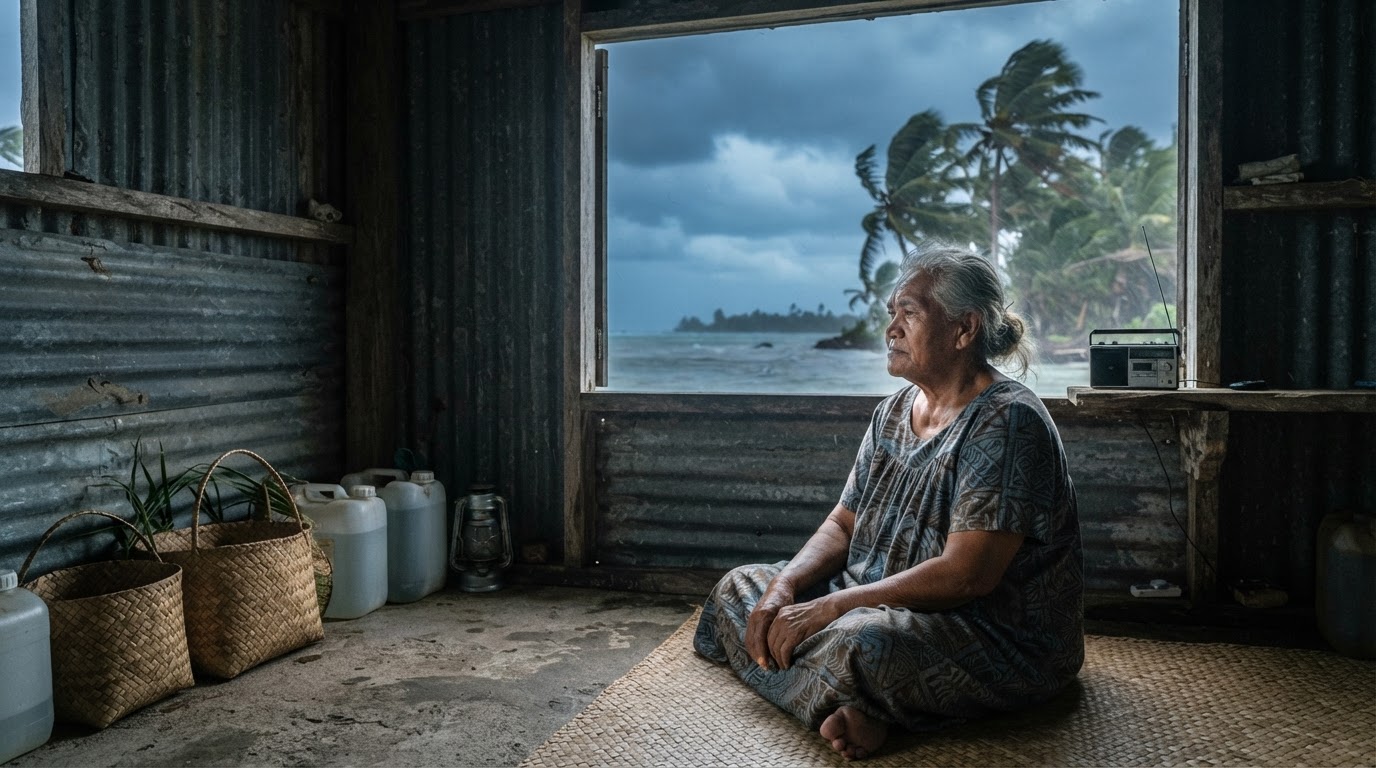
Severe weather tracks across oceanic corridors with clinical disregard for geographic romanticism. When Tropical Cyclone Xavier intensified into a category 1 system on Sunday night, it exposed how narrow the operational margins remain for isolated communities. The Cook Islands Meteorological Service issued a storm warning for Manihiki and Rakahanga while cancelling the advisory for Penrhyn, outlining a concrete threat defined by sustained gale-force winds of 85km/h and peak gusts of 120km/h.
By Monday night, those readings were forecast to increase to 95km/h with gusts reaching 130km/h. Such metrics demonstrate an elemental friction that distant administrative centers frequently overlook. Remote atolls in the Northern Cook Islands operate under rigid physical parameters where basic subsistence, maritime movement, and household shelter depend entirely on weather windows that close within hours.
The Cost of Geographic Isolation
Official advisories from the meteorological authority instructed residents to secure loose items around homes and properties, alongside explicit warnings for fishermen to avoid going out to sea if conditions are unsafe. These instructions illustrate immediate economic disruptions that cannot be smoothed over by financial reserves. For communities positioned far from centralized hubs, several days of grounded fishing craft and domestic lockdown represent an immediate shock to daily sustenance rather than a minor logistical inconvenience.
The trajectory of the storm also demonstrates how uneven localized oceanic hazards can be. Penrhyn avoided prolonged exposure as its warning was cancelled, yet neighbouring atolls faced heightened risk within the same administrative grouping. This uneven distribution tests local readiness without offering uniform operational certainty across the territory.
Defenders of current maritime preparedness often argue that category 1 systems are routine seasonal events, absorbed through generational familiarity and established building techniques. That reasoning overlooks the cumulative structural strain that recurring wind events inflict on exposed dwellings and coastal infrastructure. Wind gusts reaching 130km/h test the structural integrity of everyday materials, while replacement parts and building supplies require complex maritime voyages to restock.
Unresolved Logistical Limits
Discussions surrounding insular resilience frequently lean toward abstract policy frameworks, bypassing the practical micro-economics of remote atolls. When maritime activity halts and domestic confinement becomes mandatory, local productive output effectively stalls. Securing corrugated roofing and outdoor property represents an immediate physical diversion of labour, illustrating the severe material boundaries governing isolated outposts.
Tropical Cyclone Xavier offers no dramatic redefinition of regional meteorology, but it documents the persistent precarity defining the Northern Cook Islands. Until protective infrastructure and supply guarantees match the regular severity of seasonal storms, the stability of these settlements remains bounded by precarious forecasting margins and sudden wind shifts.
Sources
Newsletter
Pacific Daily
A curated briefing from Thailand, Asia-Pacific and the world.