The Utility of Belonging in Southeast Asia’s Heritage Galleries
By defining Peranakan material culture through domestic use rather than geographic origin, Singapore's latest exhibition challenges long-standing assumptions about hybrid identity.
SINGAPORE
Museum collections across maritime Southeast Asia have long depended on decorative spectacle to justify their public existence. Glass cases display heavy silver belts alongside pastel porcelain, each piece framed as physical proof of an insulated, patrician heritage. That curatorial habit flatters an audience eager to view Peranakan culture as a finished luxury product, frozen comfortably between colonial administration and regional trading networks.
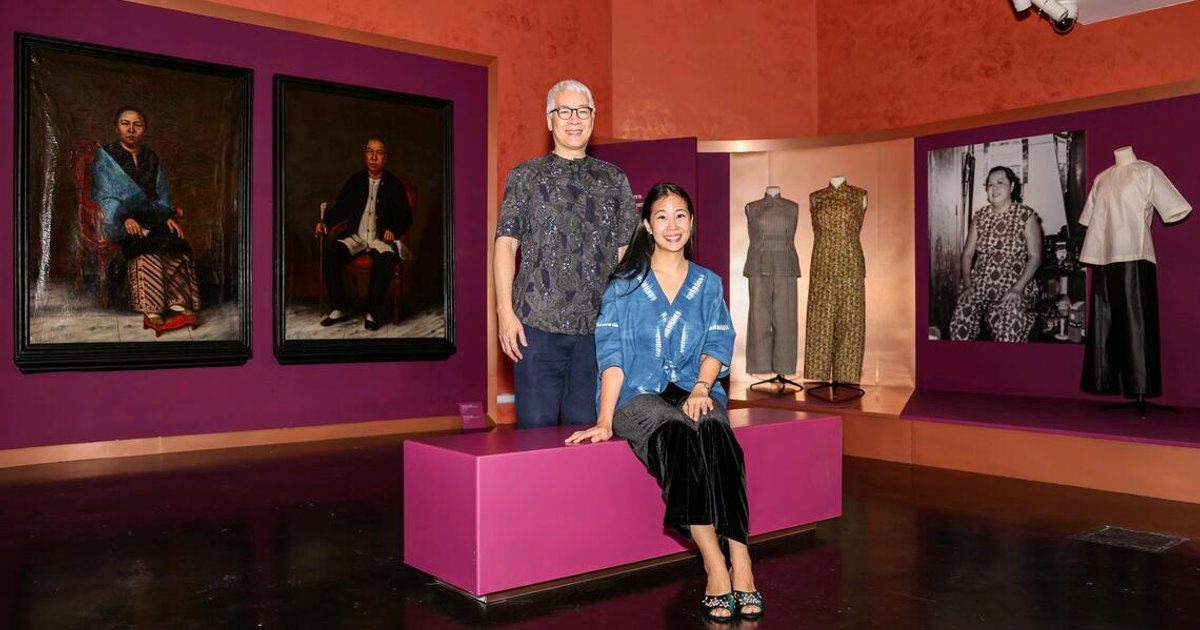
The social life of ordinary things seldom conforms to aristocratic cataloguing. At Singapore’s Peranakan Museum, a display running from October 30, 2026, through August 2027 dismantles that tidy visual convention. Organised around 159 artefacts and 14 distinct stories, the exhibition, titled Exceptional/Everyday: New Acquisitions, New Perspectives, shifts the analytical burden from ornamental pedigree to functional practice. Curators Peter Lee and Naomi Wang present an unsettling proposition for purists: an object becomes Peranakan through domestic use, not by virtue of its manufacturer or place of origin.
Rethinking the Straits Canon
For generations, cultural gatekeepers treated authenticity as an issue of pedigree. Legitimate artefacts required recognizable Straits Chinese motifs or bespoke foreign commissions ordered by wealthy merchant dynasties. The current gallery installation breaks with that certainty by examining newly acquired items adapted from India and China. Curators trace how imported utensils entered daily household routines rather than elite display cabinets.
This conceptual pivot alters how hybrid societies comprehend their past. When cultural identity is pinned strictly to exquisite craftsmanship, it inevitably becomes an exclusionary marker of class. Wealthy merchant houses retain the sole authority to define the community, while the broader working population fades into historical invisibility. Foregrounding items that survived through utility rather than monetary value exposes an uncomfortable historical reality. Straits culture was never an exclusively aristocratic achievement. Instead, it was an ad-hoc practice of borrowing and adapting everyday tools to sustain domestic life across shifting economic tides.
Sceptics might counter that stripping away the exceptional risks diluting what made Peranakan material culture recognizable. After all, distinct aesthetics gained regional renown precisely through elaborate visual conventions. If any foreign utensil adapted for dinner qualifies as Peranakan, the category itself threatens to dissolve into a vague synonym for domestic survival in an open port.
The Function of Memory
That tension between distinct aesthetics and everyday utility is where the exhibition gains its intellectual traction. Cultures formed along major maritime trade corridors never operated as sealed aesthetic laboratories. Families incorporated whatever goods shipping lanes deposited on their doorsteps, reinterpreting Indian brassware or Chinese ceramics according to private necessity and domestic ritual. The significance resided in the application, not the maker's mark. Expanding the museum's institutional gaze beyond traditional centres such as Singapore and Penang, the curators acknowledge that diaspora networks reached into unexpected provincial corners. Donations sourced outside these traditional urban hubs reveal how peripheral communities forged their own domestic habits away from elite scrutiny.
Institutions throughout the Asia-Pacific face mounting pressure to explain how mixed communities endure when their classic markers are commercialised or forgotten. When cultural custody ceases to be an inventory of precious heirlooms, it demands that audiences examine the unpolished mechanics of their own domestic histories. The enduring question left by the exhibition is whether modern viewers are willing to recognize their culture in the kitchen ware they discard.
Sources
Newsletter
Pacific Daily
A curated briefing from Thailand, Asia-Pacific and the world.