The 'Totally' Trap: How Absolute Language Shapes Perception in Asia-Pacific
Tom Cruise's latest role offers a lens into how definitive labels are applied to actions across a culturally diverse region.
SINGAPORE
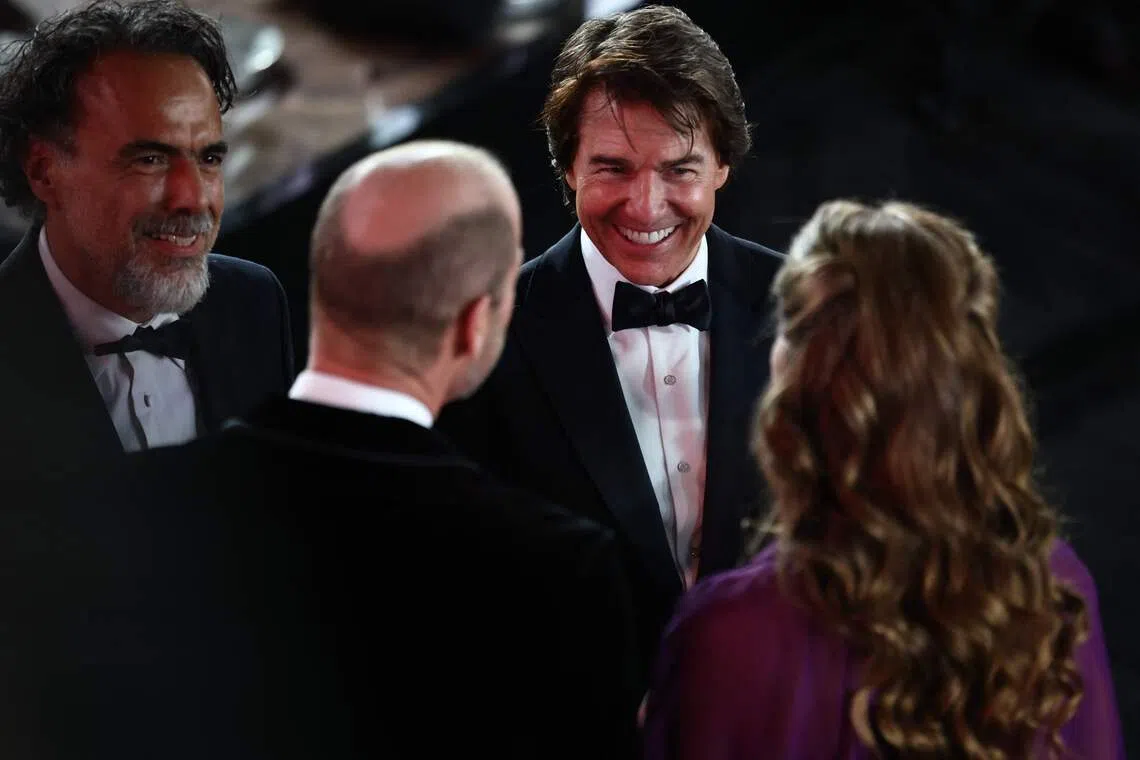
London’s royal premiere for the film 'Digger' saw actor Tom Cruise describe his character as “totally outrageous.” The film, directed by Alejandro G. Inarritu, features Cruise as eccentric oil tycoon Digger Rockwell, who causes an ecological disaster. This description, framing a character’s disruptive actions, resonates beyond the cinema, offering a lens through which to consider the wider application of such absolute language.
The specific phrasing of “totally outrageous” or similar absolute terms frequently surfaces in the lexicon of international relations and political commentary concerning the Asia-Pacific. From Japan’s decrying a Chinese military plane entering its skies in 2024 as “totally unacceptable,” to the United States' characterization of the India-U.S. trade relationship as “a totally one sided disaster” in 2025, such labels mark an action as exceeding perceived norms. These declarations, made by governments or their representatives, serve to frame an event as a violation, demanding attention and often, a response. They assert a boundary, cultural or political, that has been crossed.
Yet, this same linguistic framing is also deployed to affirm internal stances. For instance, statements have described Marxism as “totally correct” for China in 2018 and policies in Xinjiang as “totally correct” in 2020. Here, “totally correct” functions not as a critique of transgression, but as an emphatic affirmation of a prevailing ideology or policy. The adjective’s power, in these instances, is not to condemn deviance but to solidify orthodoxy, signaling unwavering commitment. This contrast reveals how the intensity of the language remains consistent, but its purpose shifts dramatically based on the speaker’s intent and the subject.
The context for the phrase also extends into social observation. A 2025 article in The New York Times, for instance, noted that sharing a bed with a child is “Totally Normal in Asia.” This usage is descriptive, normalizing a practice that might be viewed differently elsewhere. It suggests a cultural observation, rather than a political or moral judgment. The phrase moves from critical to affirmative, then to descriptive, retaining its absolute tone across diverse applications.
Tom Cruise’s character, Digger Rockwell, embodies an unconstrained force leading to environmental harm. The character’s outrageousness, as described, is tied to his actions and their consequences. When a state describes another’s actions as “totally unacceptable,” it focuses on the deed, not necessarily the actor’s inherent character. This allows for a condemnation of specific behavior without closing off future engagement with the entity itself. It suggests that while an action can be beyond the pale, the actor might still be amenable to a return to acceptable conduct, or at least, negotiation.
The persistent appearance of this phrasing across political, social, and cultural commentary — from diplomatic grievances to cinematic character descriptions — underscores a pattern in how authority, whether governmental or artistic, seeks to define and categorize behavior. The power of “totally outrageous” or “totally correct” lies in its finality, its declaration of an absolute state. It shapes public perception and provides a clear, if often simplified, interpretative framework for complex events. The recurrence of this language signals a shared impulse: to categorize and judge actions in definitive terms, regardless of the nuances that might underlie them.
Sources
Newsletter
Pacific Daily
A curated briefing from Thailand, Asia-Pacific and the world.