The Social Utility of Analog Play
Informal public life across post-industrial cities faces an infrastructure deficit that private tabletop gatherings can only partially resolve.
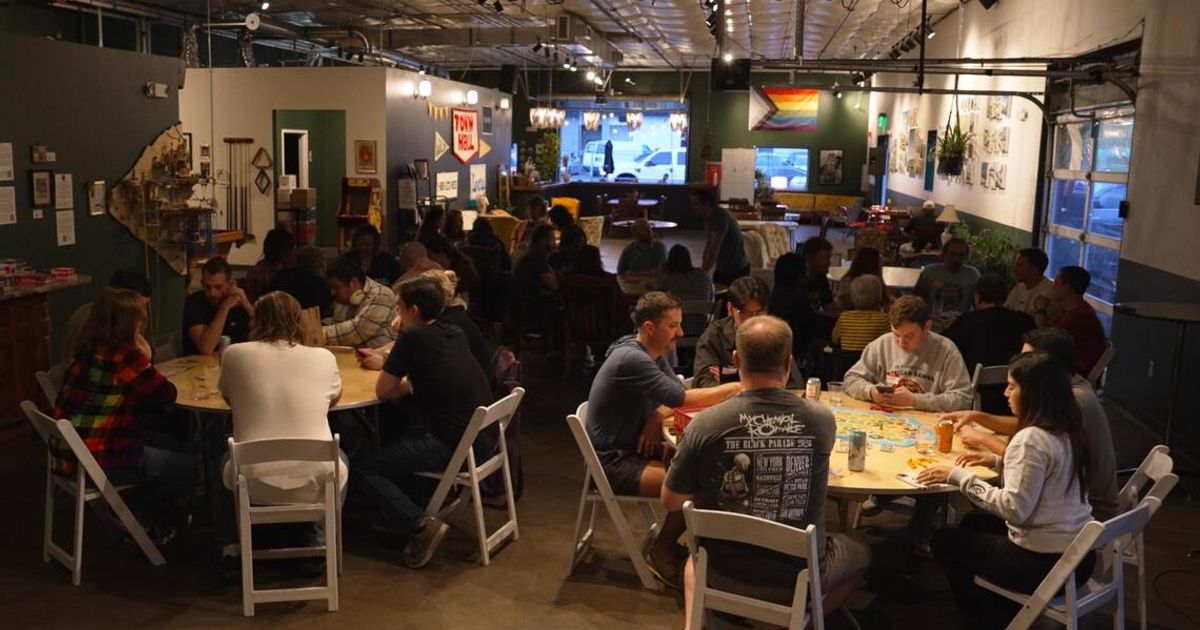
Civic association in urban centres has long depended on shared physical infrastructure that market pressures and digital mediation continue to dissolve. When commercial real estate reallocates public meeting grounds and employment models shift toward home-based isolation, the mechanisms through which adults encounter strangers narrow considerably. Recent documentation from the United States underscores how acute that contraction has become. Across American municipalities, more than 900 board game Meetup groups have formed as participants seek structured, screen-free environments to counter isolation and establish adult friendships.
In Denver, an initiative designated as the Board Game Social convenes twice a month and draws over 40 people per session. The organiser, Matt Martinez, observed the unexpected scale of demand with a concise verdict on the turnout: "I didn’t expect this," Martinez stated. Participants point to titles like Catan and other tabletop activities as functional instruments that lower the friction of spontaneous dialogue. Rather than relying on unstructured interaction, players utilise defined rules and shared physical objectives to bypass social awkwardness.
Structural Deficits Behind Informal Association
This pattern reflects broader dislocations in how contemporary cities sustain social capital. Observers and participants link the erosion of adult community cohesion to the expansion of remote work arrangements alongside the historic decline of traditional community venues. When offices, civic clubs and local gathering places recede, the burden of manufacturing companionship transfers directly onto self-organised, niche gatherings. The tabletop session functions less as pure leisure and more as an improvised substitute for lost neighbourhood institutions.
Yet private initiative cannot fully offset the systematic loss of public space. An organised meetup operating out of private premises or commercial venues remains vulnerable to scheduling constraints, host fatigue and commercial turnover. Such gatherings offer episodic relief rather than enduring civic infrastructure. While 40 individuals assembling in Denver demonstrates deliberate personal adaptation, it simultaneously highlights how few neutral, non-commercial spaces exist for unscripted human contact.
The Friction of Commercialised Solitude
Cities spanning Washington to provincial metropolitan centres reveal that loneliness among working adults operates as an economic externality. Modern urban economies incentivise efficiency, solitary digital consumption and domestic confinement, leaving personal networks atomised. Analog gaming provides an artificial architecture of interaction because modern corporate design offers so few organic alternatives. Shared rules and cardboard tokens serve as proxies for missing social bridges.
The durability of these leisure networks remains open to question. Voluntary associations structured around hobbies depend heavily on individual organisers like Martinez, whose operations function alongside digital coordination platforms to aggregate attendees. Whether these modular groups can evolve into sustained civic resilience, or simply mark temporary refuges against an isolating urban fabric, remains an unanswered tension in modern city life.
Sources
Newsletter
Pacific Daily
A curated briefing from Thailand, Asia-Pacific and the world.