Manchester United Reinstates Captain Fernandes at Chelsea Under Structural Pressure
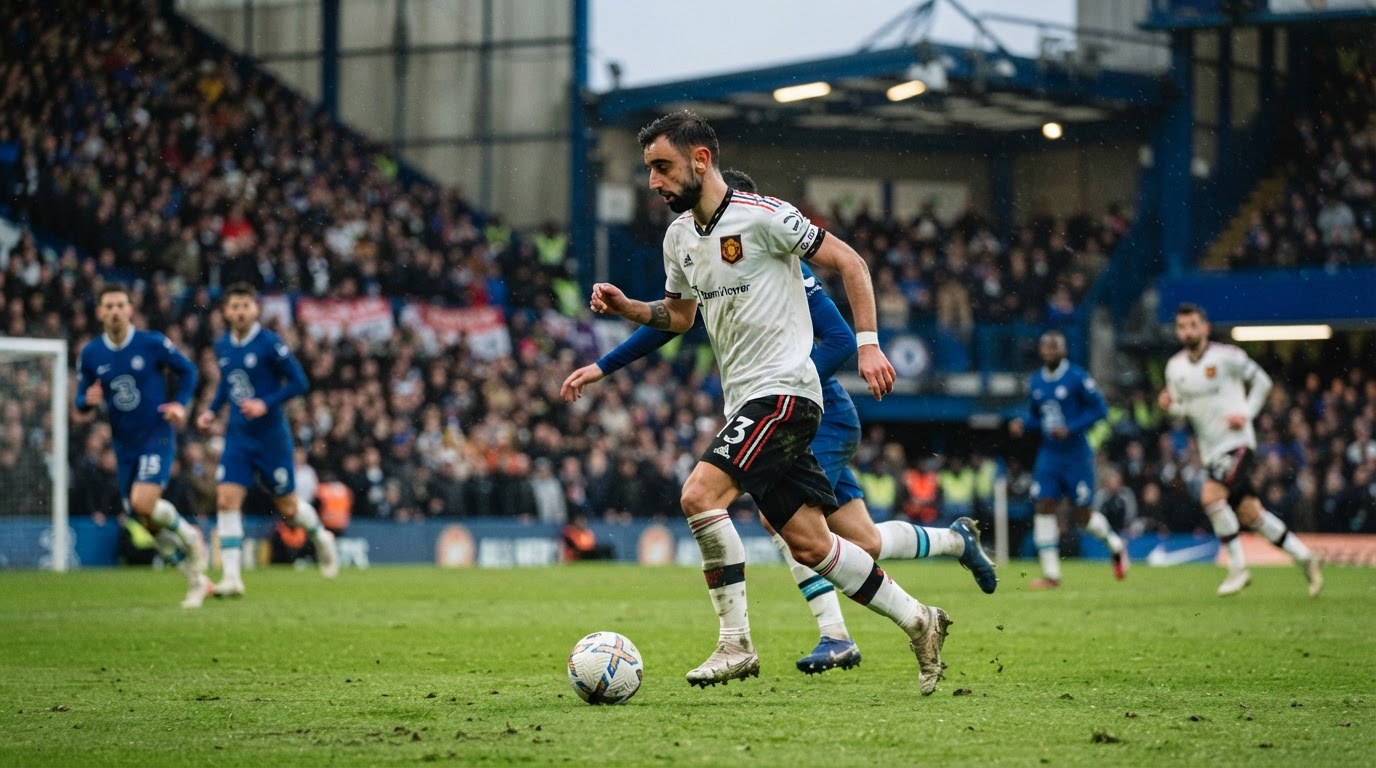
Fernandes returns to the starting lineup at Stamford Bridge, exposing the tactical reliance that organizational planning continues to navigate.
SINGAPORE
Personnel decisions in professional football establish where administrative authority and tactical trust genuinely reside. When Manchester United restored club captain Bruno Fernandes to the starting lineup against Chelsea at Stamford Bridge on October 31, 2026, the selection settled immediate tactical inquiries while demonstrating an enduring reliance on established figures. Tactical continuity frequently defers to proven individual responsibility during premier fixtures in London. The decision demonstrates how operational structures continue to depend on senior personnel when crucial Premier League encounters demand assured direction.
Elite sports organizations frequently promote the development of distributed systems designed to function without dependence on solitary figures. Squad construction theoretically distributes creative output, regulates player physical expenditure, and provides structural resilience across a demanding calendar. In operational reality, organizational design routinely relies on veteran stability during challenging competitive moments. Restoring Fernandes as captain against Chelsea indicates that Manchester United still leans on established on-pitch leadership to navigate major fixtures. The institution remains balanced between long-term tactical development and immediate reliance on proven central players.
The Operational Mechanics of Squad Selection
Team sheets reflect structural priorities that resonate throughout corporate football. Fixtures involving Chelsea and Manchester United draw sustained scrutiny from global observers evaluating institutional direction. For stakeholders tracking team management, lineup confirmations provide measurable indicators of strategic clarity. An organization that operates through uniform tactical execution projects operational discipline. Conversely, reinstating an established captain underscores how creative responsibility concentrates around specific key individuals.
Direct personnel choices often secure short-term operational stability while postponing broader structural solutions.
This dynamic illustrates a persistent corporate challenge. Selecting Fernandes establishes a dependable operational baseline because central distribution and on-pitch management steady performance under intense pressing. Yet this specific reliance presents tactical vulnerabilities. When an approach remains tethered to an individual distributor, opposing tactics become significantly simpler to configure. Opponents can concentrate defensive resources on disrupting that single operational axis, impairing collective rhythm and forcing reactive adjustments across the pitch. Long-term athletic durability requires redundant creative options rather than singular points of influence.
Pragmatism and Systemic Continuity
Defenders of the decision argue that elite football demands deploying the most reliable assets whenever significant competition occurs. Chelsea represents a severe competitive test at Stamford Bridge, where dropped league points diminish standing and corporate confidence. Under that practical calculation, leaving out an experienced international captain introduces unnecessary competitive vulnerability. Securing match-day performance therefore supersedes abstract squad rotation theories.
That argument reflects immediate operational reality, but it risks confusing short-term necessity with structural health. Depending on a senior captain to anchor execution represents an operational compromise. Repeated managerial reliance on established leaders limits opportunities for emerging squad members to assume primary responsibility under competitive stress. Collective cohesion throughout the roster develops more slowly when strategic weight remains concentrated.
The structural implications extend beyond a single October match in London. Modern sports enterprises routinely articulate commitments to cultural change, deep squad depth, and distributed accountability. However, when competitive exposure increases, decision-makers inevitably return to established contributors. Manchester United secured experienced leadership on the pitch at Stamford Bridge, yet the broader operational question persists. Lasting organizational strength cannot depend exclusively on the presence of a solitary captain.
Sources
Newsletter
Pacific Daily
A curated briefing from Thailand, Asia-Pacific and the world.