The Silent Concert: When Commerce Guides Artistic Expression
Macklemore’s removal from Ed Sheeran’s tour demonstrates how commercial interests can shape a performer's platform, a pattern with regional implications.
SINGAPORE
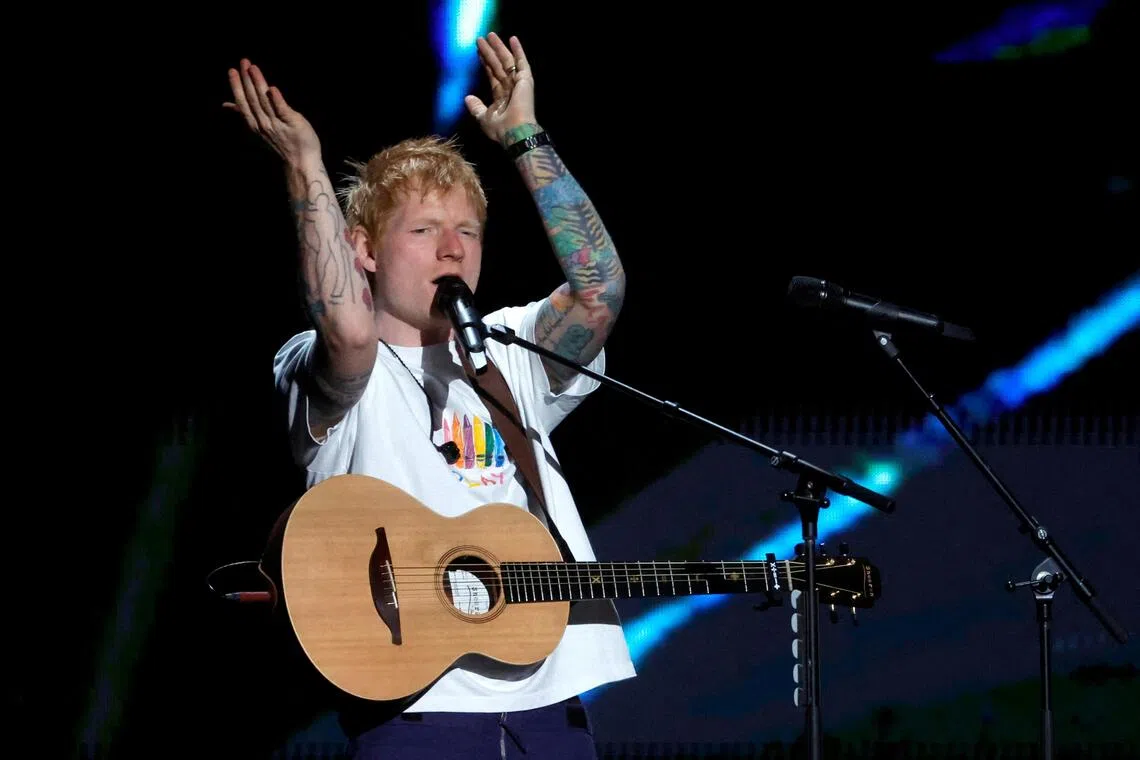
On September 19, 2026, Ed Sheeran performed in Philadelphia, marking a return to the stage after a controversy involving his opening act. This event followed the removal of rapper Macklemore from Sheeran’s US Loop Tour. Macklemore had been removed after owners of stadiums hosting upcoming shows reportedly objected to his shouting “Free Palestine” onstage in New Jersey earlier in September. Sheeran, in statements, denied being behind the decision to remove Macklemore, saying his tour’s promoter was responsible.
This sequence of events offers a precise observation of how the global entertainment apparatus navigates expressions of political sentiment. The immediate consequence of Macklemore's vocal stance was a commercial decision: his removal from a major tour. The promoter's action, in response to stadium owners' reported objections, indicates a prioritization of commercial continuity over a performer's explicit political declaration. This is not an isolated incident but rather a recurring pattern where the financial stakes of large-scale events, involving multiple stakeholders from artists to venues, often dictate the boundaries of acceptable discourse on stage.
The history of popular entertainment, particularly in international touring, is replete with instances where political messaging has been either embraced or curtailed. What is preserved in this instance is the commercial viability of a tour, while what is quietly being replaced is the expectation that a platform as significant as a stadium concert tour can host unfettered political commentary from all its performers. The economic machinery of global tours, which includes complex arrangements with venues, sponsors, and logistics providers, appears to have an inherent sensitivity to any disruption that might jeopardize revenue or public perception, especially when politically charged statements are involved.
For audiences in the Asia-Pacific, where similar sensitivities around geopolitical issues often exist, this episode holds particular relevance. While the specifics of the ‘Free Palestine’ chant are tied to a Western political context, the underlying dynamic—where the commercial logic of a global tour can lead to the suppression of an artist's political expression—is universal. It suggests that even as artists gain global reach, their capacity for unmediated political speech may be inversely proportional to the scale of the commercial operation they are part of. This isn't merely about censorship by diktat, but a more subtle form of self-regulation or preemptive action driven by the perceived risks to commercial interests.
Therefore, the question for regional cultural observers becomes: how will this pattern influence artistic expression in major events across Asia-Pacific? Will the commercial imperative of international acts coming through the region lead to a similar tempering of political or social commentary? The incident provides a contemporary example of how commercial concerns, voiced through promoters and venue owners, can override an artist's platform for political speech, potentially setting a precedent for the expected behavior of performers on the global stage.
Sources
Newsletter
Pacific Daily
A curated briefing from Thailand, Asia-Pacific and the world.