The Screen as State Frontier: Israel's Cinematic Censure and Asia's Artistic Freedom
A minister's threat to revoke citizenship for documentary filmmakers reveals a state's discomfort with its own image, a tension that resonates far beyond Jerusalem.
SINGAPORE
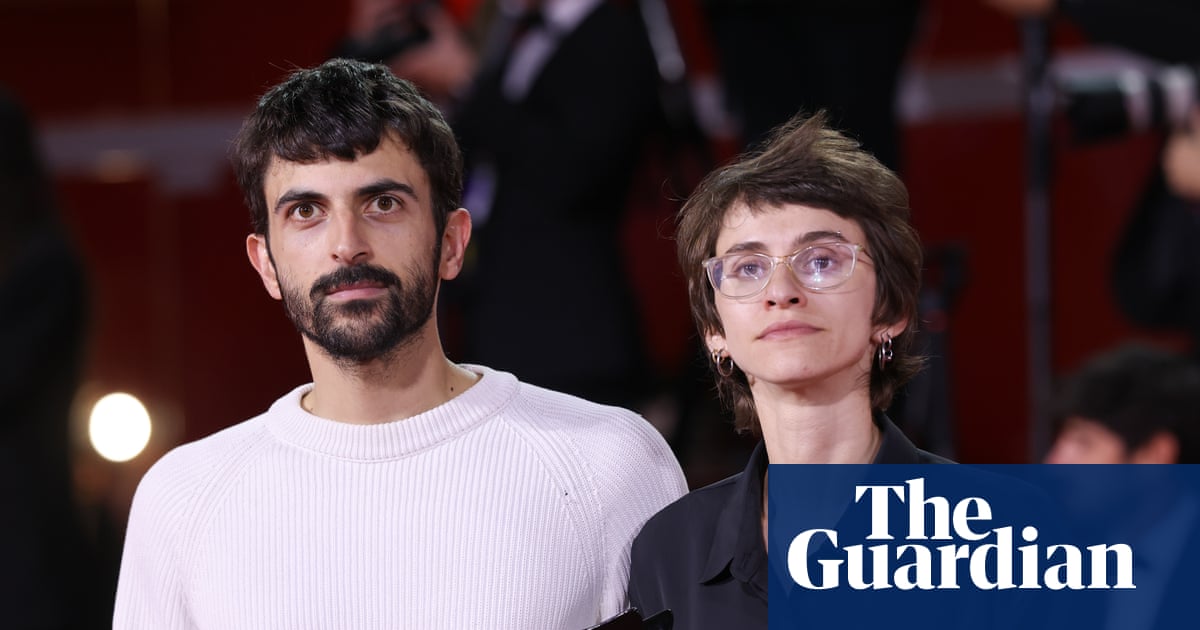
The act of filming is often a simple record. Yet, when Yuval Abraham and Rachel Szor received a special jury prize at the Venice film festival for "NAZA," a documentary addressing Israel's mass killing of civilians in Gaza, the simplicity evaporated. Culture Minister Miki Zohar's subsequent accusation of “treason against the state” and his call to strip the Oscar-winning directors of their Israeli citizenship transforms the film from a cinematic achievement into a declared frontier of state control. The dispute highlights not merely a disagreement over narrative, but a profound state anxiety about its own representation.
This immediate, punitive reaction from a state official to artistic output is not an isolated event, but a revealing instance of how political power seeks to manage public perception. It suggests that for certain states, the cinematic frame is not merely a medium for storytelling but a potential site of insubordination. The film’s focus on intelligence operations and their human cost appears to have crossed a line, triggering a response that posits national loyalty as a direct counter to critical artistic expression. The severity of the proposed penalty — denationalisation — underscores the perceived threat of dissent voiced through art.
Such measures, while rooted in specific national contexts, have broader implications for regions like Asia-Pacific. Here, various states grapple with their own internal and external narratives, often seeking to project an image of stability and unity. The Israeli government's reaction to "NAZA" offers a stark case study in the mechanisms states deploy when confronted with art that challenges official accounts. It signals that the production of art is increasingly viewed not just as a cultural act but as a political one, subject to the same pressures and sanctions applied to direct political opposition.
The Israeli defense minister has warned of Gaza City's destruction unless Hamas yields, and critics within Israel have questioned the aims of plans to capture Gaza City. This backdrop of ongoing conflict and strategic uncertainty may intensify the state's impulse to control information and artistic interpretation. The documentary, in this context, becomes not just a film but an intervention in a contested narrative space. The refusal to tolerate such artistic exploration reveals a state unwilling to engage with critical self-reflection if that reflection deviates from a sanctioned view of its conduct.
The challenge for artists and institutions in the Asia-Pacific, therefore, is to observe how such precedents might shape their own operating environments. Governments concerned with maintaining specific national images might interpret artistic portrayals that deviate from official narratives as acts of disloyalty. The incident with "NAZA" suggests that the physical borders of a state can extend to the very images it permits to be shown, and the citizens it allows to show them. This creates a difficult choice for filmmakers and artists: to align with state-approved narratives or risk significant personal and professional penalties. The cinematic lens, in this scenario, becomes a mirror that the state sometimes refuses to look into.
Sources
Newsletter
Pacific Daily
A curated briefing from Thailand, Asia-Pacific and the world.