The Return of the Master and the Fragility of Diaspora Craft
Li Quan Chen’s emergence from retirement in Monterey Park exposes how regional culinary memory across Pacific Rim enclaves remains tied to individual hands rather than enduring institutions.
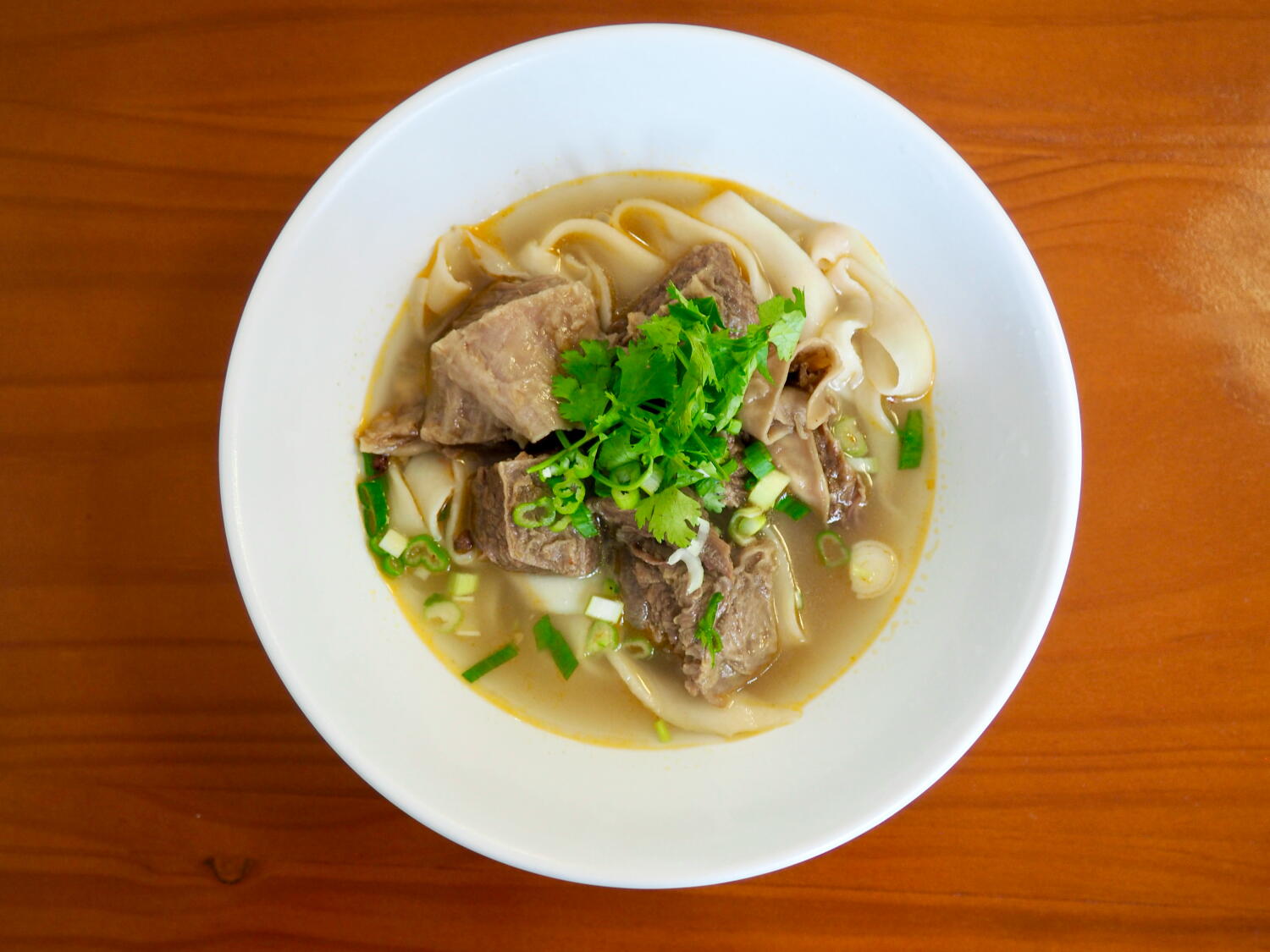
Vernacular culinary practice across immigrant settlements relies on an exacting, physical continuity that resists easy codification. Recipes and seasoning formulas may circulate in print or conversation, yet the precise balance of heat, fat, and starch depends almost entirely on the muscle memory of those who brought the craft across the Pacific decades earlier. When chef Li Quan Chen stepped out of retirement at 77 to open Meet Noodle in Monterey Park, the decision registered as more than an ordinary kitchen launch. It interrupted a quiet withdrawal from commercial life, revealing how thoroughly specialized provincial foodways remain tied to their initial custodians rather than to self-sustaining institutions.
Before attempting domestic leisure, Chen established a reputation as one of the most influential figures shaping Chongqing cuisine within the San Gabriel Valley. Alongside his partner, he operated the original Chung King in Monterey Park, introducing diners to the sharp, numbing heat of Sichuan culinary traditions during an era of rapid demographic expansion. Later efforts to step away from commercial stoves—spending months building a fish pond in his backyard and tending to gardening—eventually collapsed against an enduring preoccupation with noodles. Retirement, conventionally understood as the legitimate conclusion to decades of intense physical labor, offered little insulation against the persistent demands of an unfinished craft.
The Solitary Custodian
Regional culinary heritage within migrant centers routinely encounters this institutional void. Unlike national traditions that establish formal academies or corporate standards to reproduce their techniques, vernacular street traditions such as Chongqing noodle craft depend on individual practitioners holding unwritten knowledge. The aggressive seasoning, delicate broth clarity, and precise texture required by Chongqing standards cannot be easily duplicated through automated prep lines. When an experienced practitioner leaves the line, the surrounding neighborhood does not simply lose an eating house; it loses the singular standard against which authentic regional preparation is judged.
Commercial developments across Monterey Park and adjacent suburban corridors such as Rosemead have increasingly leaned toward standardized models, broad multi-regional formats, or capital-intensive franchise concepts. Specialized provincial heat demands gruelling kitchen labour that younger generations of diaspora workers are rarely eager to take up. Meet Noodle represents a deliberate reassertion of that older, uncompromising regional standard. Yet the venture rests entirely upon the physical endurance of a chef who discovered that quiet contemplation beside a garden pond was far less compelling than working before the intense heat of commercial burners.
Generational Succession
An opposing perspective maintains that diaspora foodways survive most effectively not by preserving exact historical methods, but through commercial reinvention and market adaptation. Newer restaurant operators routinely modernize logistics, adopt digital ordering systems, and translate regional profiles for wider demographics without demanding that elderly practitioners spend their late seventies behind active woks. Yet that commercial agility often conflates widespread market presence with the technical survival of a craft. When culinary production is modified primarily to facilitate rapid scale, the specific, labor-intensive balances forged through decades of localized kitchen practice are quietly replaced by generic formulas.
Chen’s reopening highlights the unresolved tension between preservation and succession across Pacific Rim food centers. Patron communities routinely celebrate the revival of historic preparations, welcoming the reappearance of an artisan whose pedigree stretches back to Chung King. Beneath that culinary celebration lies a sober structural reality. When the maintenance of a provincial tradition requires a 77-year-old master to abandon retirement because no younger cohort has stepped forward to carry the craft, it demonstrates that the diaspora has preserved the appetite for heritage far better than the mechanisms required to sustain it.
Sources
Newsletter
Pacific Daily
A curated briefing from Thailand, Asia-Pacific and the world.