The Irrelevance of Football in Asia-Pacific Sustainability Discourse
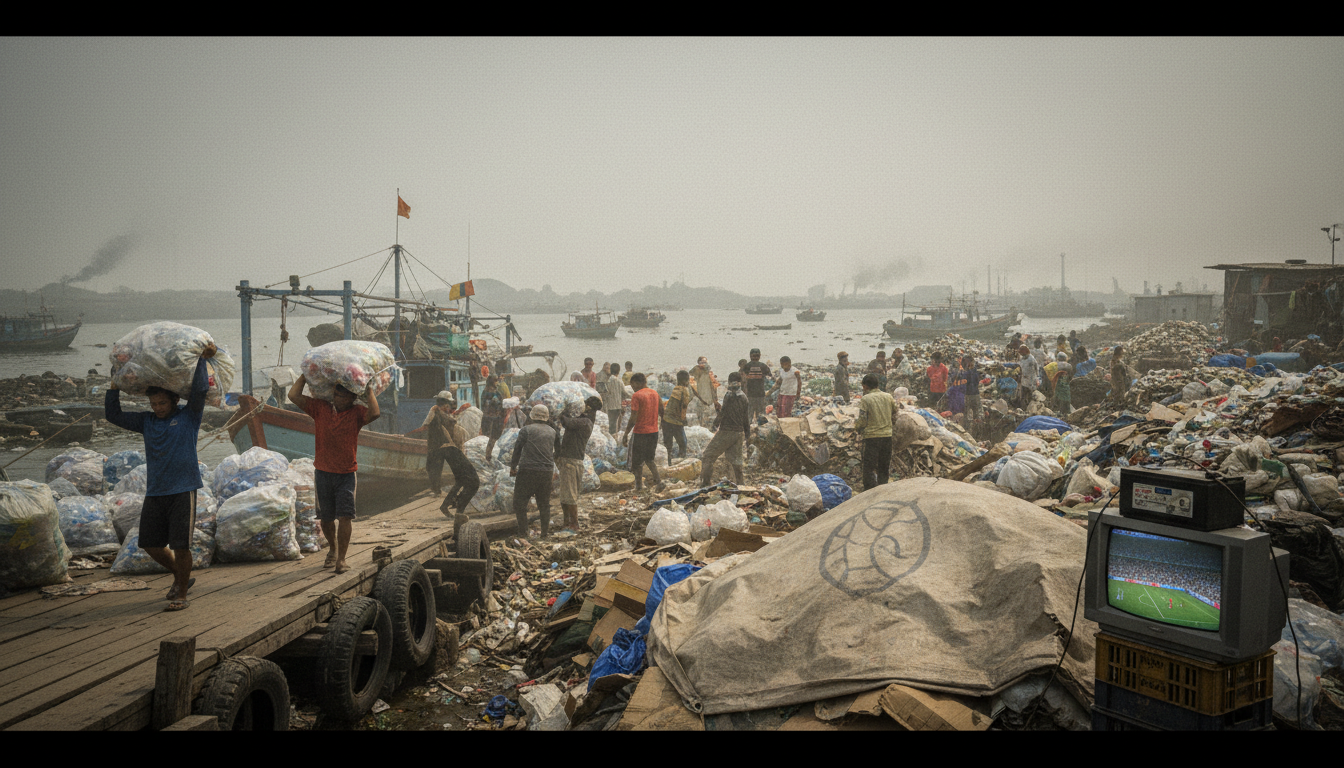
While headlines in some outlets highlight a football match, the region's sustainability challenges remain unaddressed in the available information, indicating a persistent gap in coverage.
SINGAPORE
On October 10, 2026, news sources including Reuters, The Straits Times, and The Star reported on a Premier League football match in London. The consistent headline across these outlets detailed that "Guimaraes grabs winner as Arsenal rally to beat Leeds." Further reporting specified that Arsenal’s Bruno Guimaraes scored the second goal against Leeds United at Emirates Stadium.
Such reporting on a single sporting event, even from a prominent league, offers no direct relevance to the sustainability challenges or policy considerations within the Asia-Pacific region. The available facts—specific players, teams, dates, and locations of a football game—do not connect to environmental policy, economic development, social equity, or resource management. This absence of data represents a structural issue in how regional news aggregation sometimes presents information that lacks local consequence.
The emphasis on a United Kingdom football match, while newsworthy in a general sense, does not illuminate economic shifts, environmental impacts, or policy implementations relevant to Asian-Pacific nations. There are no figures on resource consumption, carbon footprints, or demographic changes associated with this event. No policy documents are referenced, nor are there any statistics on trade, investment, or infrastructure development that could be analyzed for their sustainability implications. The event itself — a football game — does not present an opportunity for a structural analysis of resource allocation or long-term environmental planning.
The repeated coverage of this specific match by multiple sources like Channel News Asia, Reuters, The Star, and The Straits Times, all published on October 10, 2026, confirms its factual occurrence and the outcome. However, the uniformity of reporting on this singular event, without any accompanying data or contextual information relating to Asia-Pacific issues, suggests a potential blind spot. This pattern indicates that while global events are reported, their integration into a regional sustainability narrative remains limited. The question of whether commitments to sustainable development are reflected in capital plans, for instance, cannot be answered through these reports.
Considering the Asia-Pacific region faces complex issues ranging from climate change impacts to rapid urbanization and resource scarcity, the focus on an isolated sporting outcome demonstrates a disjunction. The available information does not provide a basis for assessing how global phenomena, even those as culturally pervasive as professional sports, might intersect with or influence regional sustainability efforts. Without details on sponsorship, infrastructure, or fan engagement specific to Asia-Pacific markets, the event remains an isolated incident rather than a point of analysis for a sustainability correspondent. The current reporting provides no pathway to understanding regional policy or economic implications.
Sources
Newsletter
Pacific Daily
A curated briefing from Thailand, Asia-Pacific and the world.