The Hidden Costs of Fragile Finances in Asia-Pacific
When a population lives on the brink, economic stability becomes a delicate recipe.
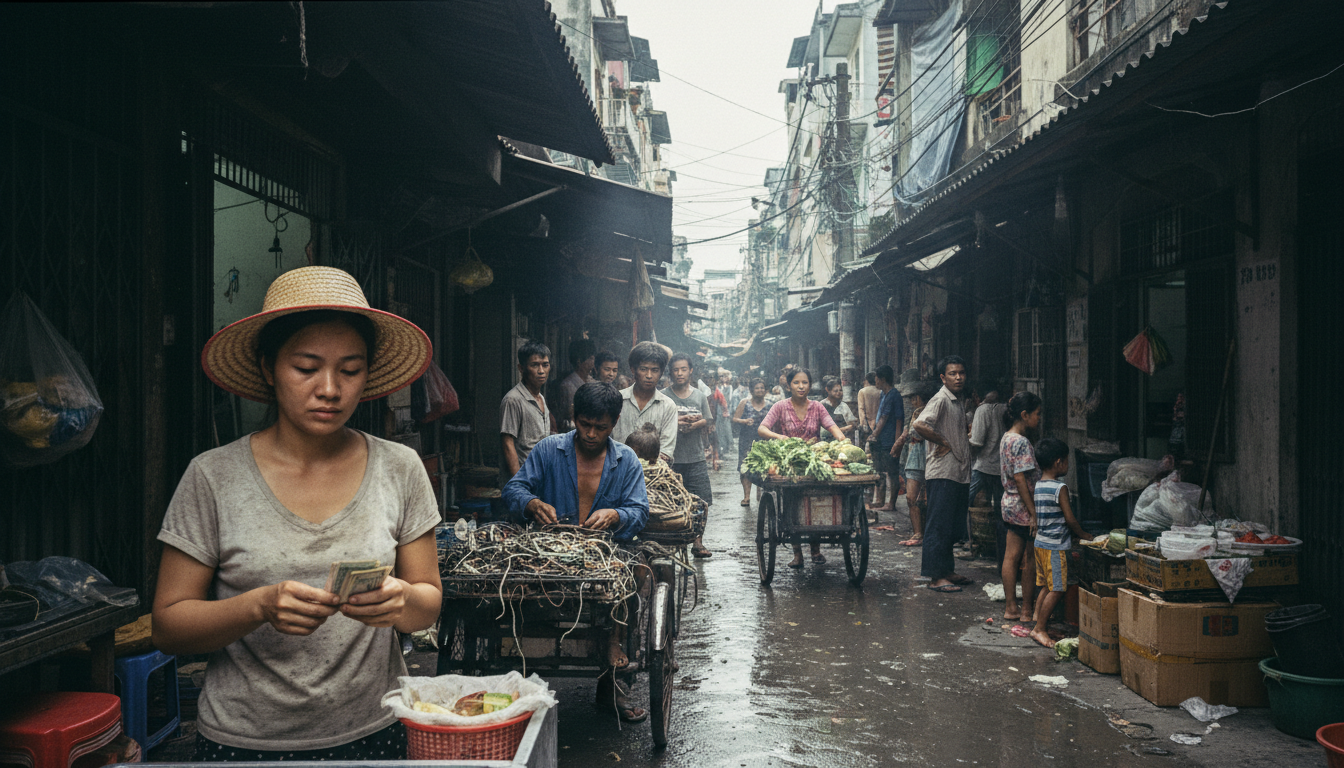
Financial precarity among a significant portion of the workforce presents a quiet yet profound challenge to economic stability. The observation that almost half of British Columbia workers could not cover two months' expenses if jobless, with nearly a quarter possessing less than one month's savings, reveals a consumer base operating without a substantial financial cushion. This data, presented in Money Mentors' 2026 Workplace and Wellness Report, suggests a fragility not unique to North America, but one with critical implications for the Asia-Pacific region.
The technique of economic growth often hinges on consistent consumer spending and a stable workforce. Yet, when a large segment of that workforce is living on the margins, their capacity for resilience, and by extension, the economy's, is severely diminished. In Thailand, where economic activity relies heavily on sectors sensitive to discretionary spending and external shocks, such a condition can create an unstable foundation. The ability to absorb unexpected personal costs – whether a medical emergency or a sudden job loss – directly impacts a household's spending power and, collectively, national demand. If 63 per cent of workers struggle to cover a $500 emergency, as one 2023 survey in America indicated, the implications for regional markets are clear: sustained consumption is not guaranteed.
Some might argue that robust social safety nets or familial support systems common in parts of Asia, including Thailand, offer a buffer. These traditional mechanisms, it is asserted, can mitigate the immediate impact of financial setbacks, differing from the more individualistic approaches in Western economies. While family ties certainly play a role in times of crisis, relying on them as the primary defence against widespread economic insecurity overlooks the systemic strain this places on the broader social fabric. The capacity of these networks is not infinite, and their resources are often finite, particularly in urbanising societies where traditional structures are evolving.
The real cost of this widespread financial vulnerability is not merely individual hardship, but a systemic exposure to economic volatility. When a substantial portion of the population lives paycheck to paycheck, minor disruptions can trigger disproportionately large economic ripples. This limits long-term investment, both personal and national, and restricts the capacity for innovation and adaptation. The evidence from North America, spanning multiple years and surveys, consistently points to a significant portion of the population lacking emergency savings, illustrating a persistent condition rather than a temporary anomaly. This pattern, applied to the Asia-Pacific, implies that the region's economic successes may be built upon a foundation more brittle than often acknowledged.
Sustaining economic development in this context demands a closer examination of how worker financial health is integrated into broader policy. The unresolved constraint remains how to build genuine financial resilience across diverse populations without undermining the very economic models that employ them.
Sources
Newsletter
Pacific Daily
A curated briefing from Thailand, Asia-Pacific and the world.