The Great Unbundling: Asia-Pacific Rethinks Supply Chains Amidst Trade Storms
As global powers clash, the region's manufacturing heartland faces a tectonic shift, forcing a recalibration of established norms and a scramble for resilience.
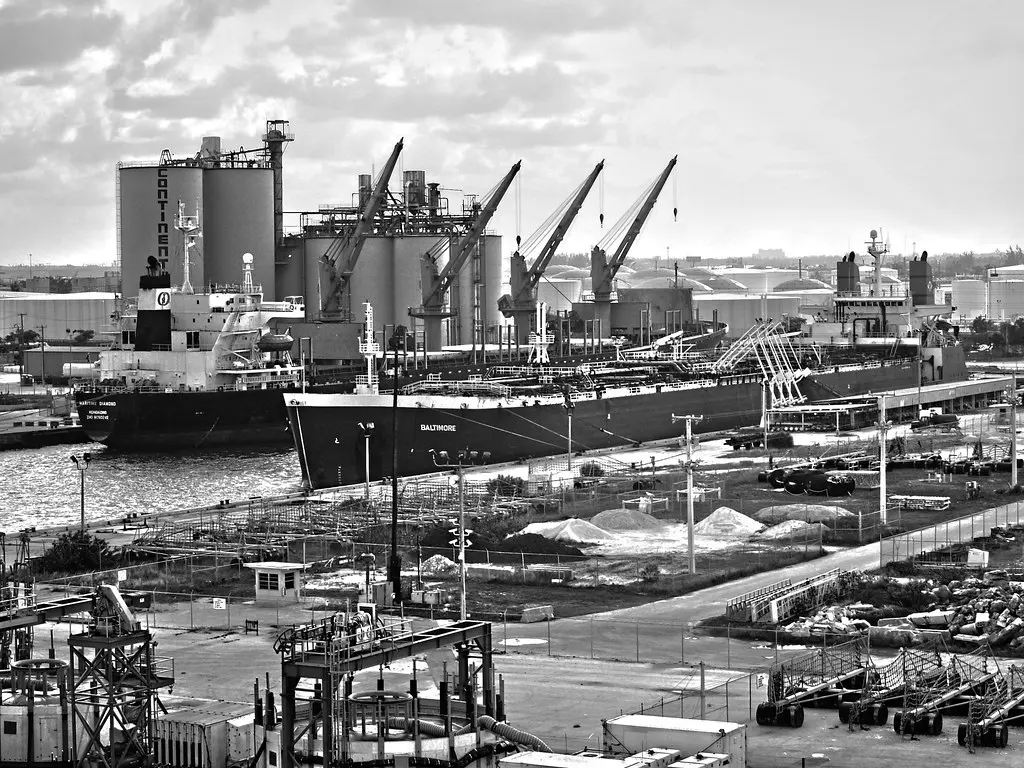
Singapore – For decades, the Asia-Pacific region has been the undisputed factory floor of the world, a seamless web of supply chains optimized for cost and efficiency. Components from one nation would cross borders multiple times before emerging as finished goods destined for global markets. This intricate dance, however, is being violently disrupted by the escalating trade tensions between major global powers, primarily the US and China, forcing businesses and governments across the region to confront a new, fragmented reality.
From the bustling ports of Shanghai to the sprawling industrial zones of Vietnam, the reverberations are palpable. The tariffs, export controls, and geopolitical posturing have instigated a 'great unbundling' of supply chains, challenging the very premise of globalization that underpinned Asia's economic ascent. Companies, once focused solely on 'just-in-time' delivery, are now frantically prioritizing 'just-in-case' resilience, leading to significant structural changes in manufacturing bases.
Take the electronics sector, a cornerstone of Asian manufacturing. A Taiwanese semiconductor giant might source raw materials from Australia, produce chips in its domestic foundries, then ship them to China for assembly into smartphones, which are then distributed globally. This multi-nodal process is now under immense pressure. Washington's restrictions on advanced chip technology exports to China, for instance, have compelled firms to re-evaluate their entire production geography. We're seeing a bifurcation: one supply chain for Western markets and another for China, driven by national security mandates rather than pure economic logic.
The Rise of the 'Friend-Shoring' Economy
This shift isn't merely about moving production out of China; it’s about a more fundamental re-alignment towards perceived geopolitical allies. The concept of 'friend-shoring' has gained traction, where companies prefer to locate manufacturing and sourcing in countries deemed politically stable and trustworthy. Vietnam, Thailand, Malaysia, and India are emerging as significant beneficiaries of this trend, attracting substantial foreign direct investment as firms diversify their manufacturing footprints.
Foxconn, a major Apple supplier, offers a potent example. While China remains its largest base, the company has ramped up production in India and Vietnam, building new assembly lines for iPhones and other devices. Similarly, Japanese and Korean firms, historically deeply embedded in China, are actively de-risking their operations. Panasonic has moved some of its automotive parts production from China to Malaysia, citing geopolitical risks. This diversification, while initially costly, is seen as a necessary hedge against future disruptions.
"The era of single-source dependency is over. Resilience is the new efficiency, and that means decentralization across trusted partners." - Dr. Leena Khan, Senior Economist at Asia Business Council.
However, this decentralization is not without its challenges. Moving complex manufacturing operations involves significant capital expenditure, re-training workforces, and rebuilding intricate supplier networks. Infrastructure, logistics, and regulatory environments in alternative locations may not yet match the maturity of China's industrial ecosystem. Moreover, the demand for skilled labor in these emerging hubs is skyrocketing, creating new competitive pressures and wage inflation.
Property Implications and Future Landscape
From a property perspective, this has direct consequences. Industrial land values and factory rentals are soaring in destination countries like Vietnam and India, while some specialized industrial zones in China might experience a cooling, especially those heavily reliant on export-oriented manufacturing to the West. Developers are scrambling to build new industrial parks and logistics hubs to accommodate the influx of new investment, with a particular focus on 'plug-and-play' facilities that can quickly operationalize production.
For the Asia-Pacific as a whole, the evolving trade landscape promises a future of increased complexity and regional differentiation. While China remains an indispensable economic powerhouse, its role as the sole global factory is diminishing. Other nations in the region are seizing the opportunity to upgrade their industrial capabilities and attract higher-value manufacturing. The seamless, interconnected supply chain of yesteryear is giving way to a more fragmented, resilient, and geopolitically informed network. Businesses that can adapt swiftly to this 'unbundling' will be best positioned to thrive in the new global economic order.
Newsletter
Pacific Daily
A curated briefing from Thailand, Asia-Pacific and the world.