The Fragile Rhythm of Transpacific Flight
A single maintenance failure in American airspace reveals how quickly global transit schedules unravel across ocean corridors
SINGAPORE
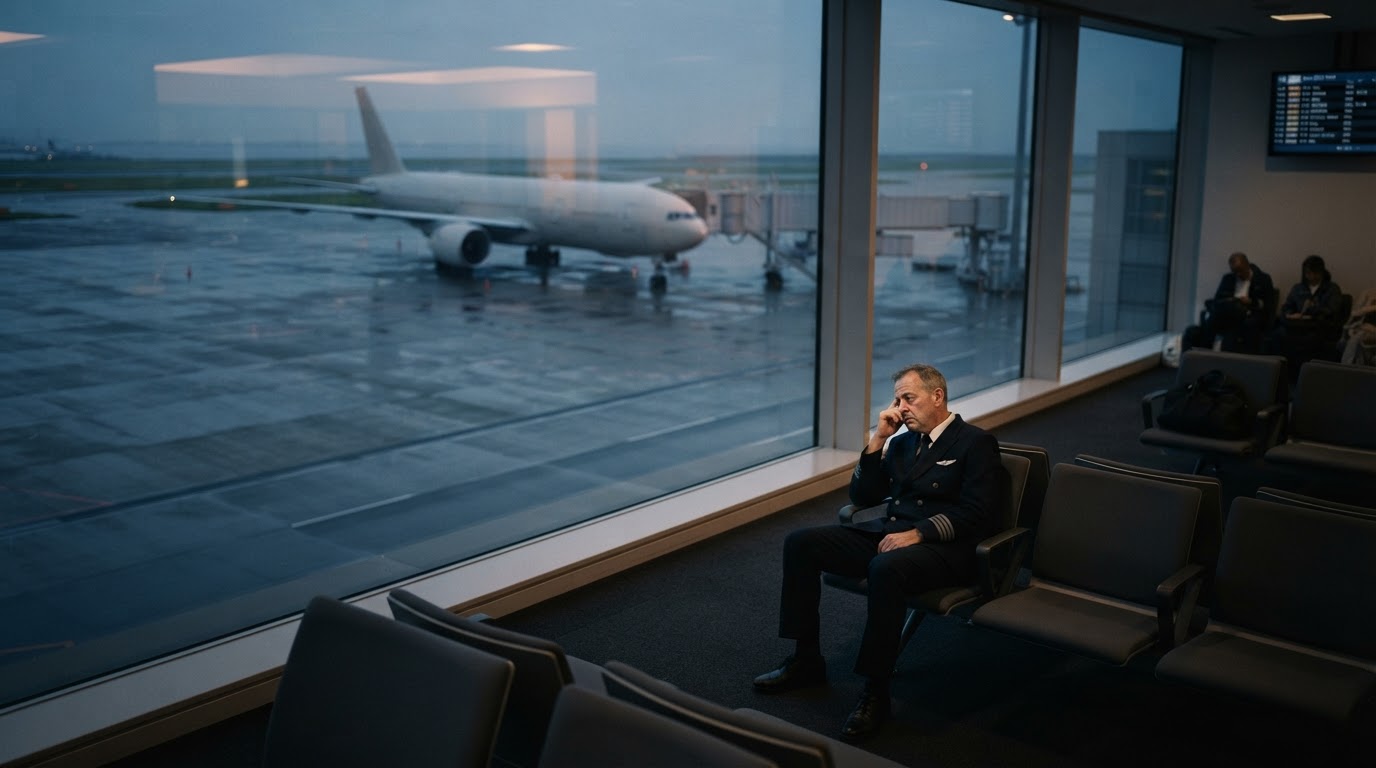
Beneath the illuminated flight displays at George Bush Intercontinental Airport in Houston on Saturday, Nov 14, 2026, thousands of travellers settled into improvised encampments of carry-on bags and winter coats. The Federal Aviation Administration had just lifted a series of nationwide ground stops, yet the physical rhythm of movement remained fractured. Digital boards registered the cascading aftermath of Friday's longest ground stop for 25 years, an operational paralysis suspected to have stemmed from a single router installed during routine maintenance. By the time Monday arrived, the immediate friction subsided into familiar queues, but the vulnerability of long-range transport networks lingered in every transit lounge.
Flight tracking data from FlightAware documented the rapid arc of the crisis. More than 18,000 flight cancellations accumulated across three days of cascading gridlock. Sunday alone absorbed more than 2,300 cancelled flights and 11,000 delayed services across the United States. By Monday, Nov 16, those figures compressed dramatically to 300 cancellations and 1,500 delays. On CNBC, Transportation Secretary Sean Duffy addressed the recovery as operations regained footing. Normalcy, measured purely by carrier departure percentages, reappeared almost as abruptly as it vanished.
The Anatomy of an Interruption
Modern transit architecture relies on an assumption of continuous flow. When terminal halls freeze, human habits reconfigure within hours. Travellers reroute through regional hubs, sleep across airport seating, and scrutinise handheld screens for gate reassignments that shift minute by minute. The contradiction at the core of this breakdown lies in its origin. An intercontinental apparatus designed to ferry millions across borders faltered because of a single piece of hardware handled during scheduled servicing.
For travellers bound for transpacific destinations or connecting through gateways between North America and hubs like Singapore, domestic disruptions across the American interior rarely stay contained. An aircraft stranded in Texas or California removes capacity from cross-border rotations, displacing crews and scrambling arrival slots thousands of miles away. Aviation authorities often present technical infrastructure as an invincible web. Instead, the weekend ground stop demonstrated that high-altitude travel depends on mundane physical components that can derail continents of coordinated movement.
Lingering Questions for Global Corridors
Industry analysts might reasonably argue that the system proved its resilience. Clearing more than 18,000 cancellations down to 300 within twenty-four hours suggests carriers and controllers possess substantial surge capacity. Equipment redundancies and operational playbooks eventually absorbed the initial shock, moving stranded passengers before work routines commenced on Monday morning.
Yet recovery speed does not erase the underlying fragility. When routine maintenance introduces systemwide failure, the boundary between minor technical adjustments and structural paralysis becomes alarmingly thin. Washington faces political debates over aviation funding and capital allocation, while passengers absorb the hidden cost of unpredictable downtime. The terminal floor in Houston eventually emptied as passengers boarded delayed flights, but the mechanical premise beneath their journey has shed its aura of absolute certainty.
Sources
Newsletter
Pacific Daily
A curated briefing from Thailand, Asia-Pacific and the world.