The enduring utility of the tragic figure
A Qing-era statesman's story, recast in a contemporary novel, illuminates an ongoing tension in how legacies are constructed and consumed.
SINGAPORE
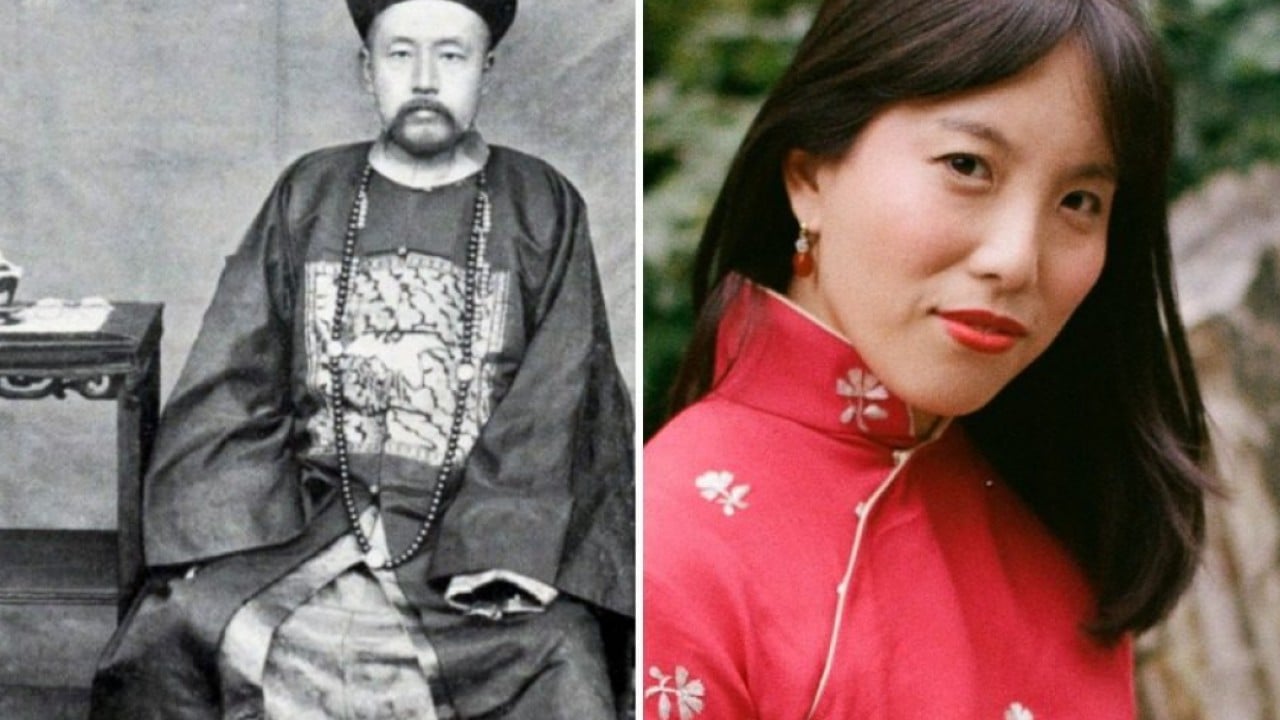
The South China Morning Post's report on E.L. Shen’s novel, 'Foreigners,' brings forward the figure of Duanfang, a Manchu statesman from the Qing dynasty (1644-1912). Born in 1861, Duanfang rose through imperial ranks, distinguished himself during the Boxer Rebellion (1899-1901), and held significant regional posts, including governor of Hubei province and viceroy of the Liangjiang region, before his downfall in 1909 for alleged disrespect. The very description of him as embodying "the tragedy of shifting tides" implies a narrative function, a purpose beyond historical record.
What is often overlooked is not merely the historical detail, but the enduring utility of such tragic figures for contemporary discourse. Duanfang’s life, now inspiring a novel exploring "identity, queer awakening and the immigrant experience in modern America," suggests that the value of a historical figure can be profoundly reshaped by the anxieties and narratives of a later age. He becomes a vessel, less for understanding the Qing dynasty itself, and more for articulating present concerns. His historical existence, as a Manchu official who "lived, spoke and governed" as such, provides a foundation, but the interpretive frame is entirely current.
This reinterpretation is not an isolated phenomenon. Public fascination with historical figures, particularly those whose lives ended in dramatic or complex ways, frequently serves as a mirror for contemporary society. The legacies of figures like India's Gandhi, whose death and "flawed legacy" were confronted in 1991, or even Jiang Qing, Mao's widow, whose reported suicide in 1991 resurfaced a contentious history, demonstrate a recurring pattern. Their stories are not merely recounted; they are continually renegotiated. Sara Duterte’s role in the Philippines, as reported in 2024, shows how figures in political transitions are quickly assigned narrative archetypes, often before their historical context is fully settled. The immediate need for a coherent story frequently outweighs a nuanced understanding of the past.
One might argue that such reinterpretations keep history relevant, ensuring that past lives continue to engage new generations. The adaptation of Duanfang's story into a novel focused on modern American themes could be seen as a necessary bridge between distant history and contemporary experience. It democratizes the past, making it accessible and emotionally resonant. However, this approach risks reducing complex historical actors to symbolic representations, flattening their specific contexts into broad archetypes. The emphasis shifts from "what happened" to "what does it mean for *us* now," potentially sacrificing historical fidelity for contemporary relevance. The precise details of Duanfang's political career, his service during the Boxer Rebellion, or his specific administrative roles, become less central than his perceived symbolic value. This is the persistent tension: the past offers its facts, but the present demands its narratives. The question is not whether this reinterpretation is valid, but what it displaces.
Sources
Newsletter
Pacific Daily
A curated briefing from Thailand, Asia-Pacific and the world.